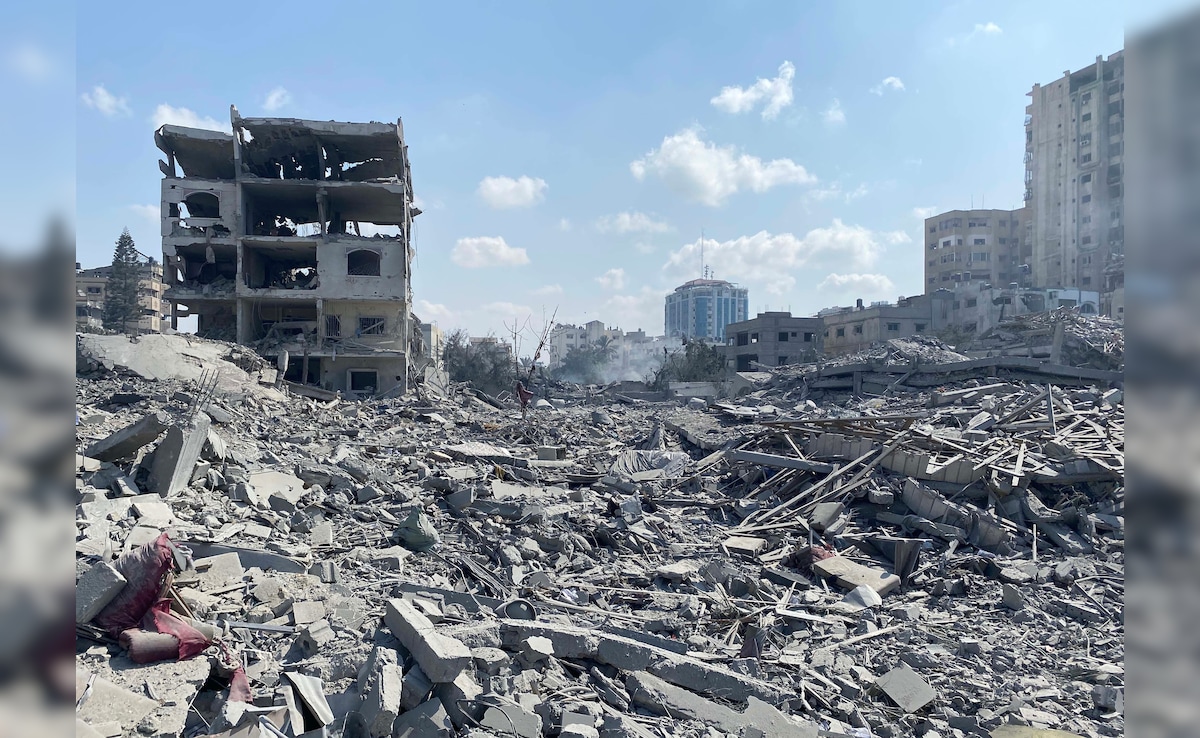
Satellite imagery suggests Israel is rapidly expanding military fortifications across Gaza while civilian rubble removal and reconstruction have largely stalled, especially in Rafah and Beit Hanoon. Al Jazeera also reports 48 Israeli military sites in Gaza, with 13 built after the October ceasefire, and says no meaningful construction has begun at the proposed U.S.-backed "New Rafah" site. The report raises major doubts about reconstruction plans and underscores that the ceasefire boundary is being redrawn on the ground amid continued attacks and rising casualties.
The satellite pattern implies the market should stop treating Gaza reconstruction as a near-term civil engineering story and start pricing it as a multi-year land-control problem. That matters because the first-order beneficiaries of “rebuild” headlines are likely to be wrong: logistics, materials, and modular-housing names tied to rapid remediation may see false starts, while defense-linked contractors and surveillance/infrastructure vendors tied to perimeter control and site hardening are better positioned to capture budget persistence.
The second-order effect is on political optionality. Once berms, roads, and fixed outposts are sunk into place, reversing them becomes a much higher-cost decision than negotiating around temporary positions; that raises the probability of a de facto partition even if formal ceasefire language remains intact. For public markets, the immediate read-through is not broad war escalation beta, but duration: every month reconstruction stays frozen increases the gap between advertised aid/real capex and pushes any large-scale civilian buildout further into 2026+.
The most mispriced variable is probably not conflict intensity but enforcement credibility. If boundary markers and patrol lines continue creeping, humanitarian pressure may rise without improving the investable path to reconstruction, which is toxic for anyone underwriting a “post-war housing rebound” in the region. In that setting, the upside for pure-play rebuild exposure is capped, while the downside for geopolitical risk proxies and defense-enabled perimeter systems is more durable.
A contrarian angle: the market may be overestimating how quickly reconstruction equities would respond even if a political agreement were announced. Physical clearance, permitting, security guarantees, and utility restoration are all gating items, so the time-to-revenue for construction beneficiaries is likely measured in quarters to years, not weeks. That makes any relief rally in reconstruction-sensitive names vulnerable to fade unless there is verifiable satellite evidence of sustained rubble removal and civilian access restoration.
AI-powered research, real-time alerts, and portfolio analytics for institutional investors.
Request DemoOverall Sentiment
strongly negative
Sentiment Score
-0.80
Ticker Sentiment
