
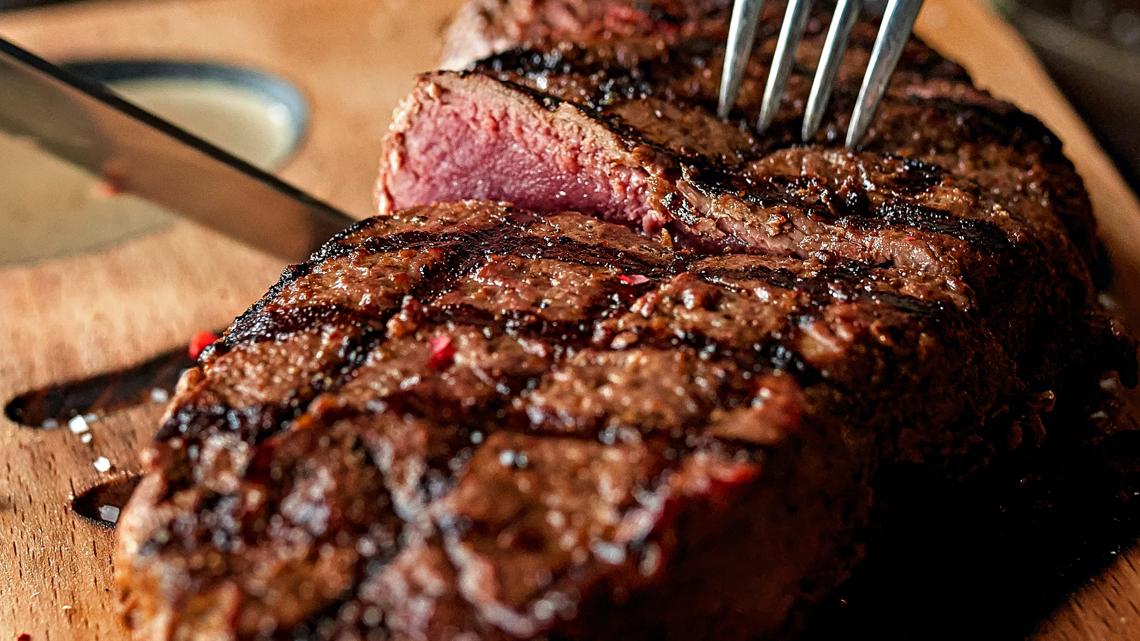
801 Restaurant Group, owner of 801 Chophouse, filed for Chapter 11 bankruptcy on April 10 amid surging beef costs and weakening demand for expensive sit-down dining. The chain operates eight 801 Chophouse locations across the Midwest and Mid-Atlantic and also owns 801 Fish, while one newer concept, 801 on Nicollet in Minneapolis, has already closed. The article highlights a 75-year low in the U.S. cattle herd and sharp beef price increases, with steak at $12.73 per pound and ground beef at $6.86 per pound as of March 2026.
This is less a one-off distress story than a signal that premium casual dining is entering a margin trap: when input inflation persists, the segment cannot reprice fast enough because the customer is already trading down on frequency. The second-order effect is that competitors with thinner food-cost pass-through and heavier mall/urban leases will see cash burn accelerate even if same-store traffic only softens modestly. In that setup, the weakest operators tend to close underperforming units before filing, which can temporarily flatter industry comps while masking a broader traffic erosion.
The cleanest winner is not another steakhouse, but the animal protein complex upstream and value-oriented dining concepts downstream. Beef inflation is now creating menu-engineering pressure across full-service restaurants, forcing either higher ticket prices or lower margin mix; both paths are bad for demand elasticity. Over 6-12 months, the more important implication is that restaurant lenders and landlords will likely get more selective, tightening refinancing availability for lower-quality casual dining names and increasing closure risk even for otherwise solvent chains.
For BLMN, the read-through is negative but not catastrophic: the market may already be pricing in some category fatigue, yet continued closures at peers reduce the odds of a broad sentiment reset. The larger risk is a multiple de-rating if investors conclude that outperformance in steak-heavy concepts is structurally impaired rather than cyclical. What could reverse this is a meaningful pullback in beef costs, but that is more likely a 2H26 story than a near-term catalyst; in the meantime, menu inflation remains a lagging rather than leading offset.
Contrarian angle: the bankruptcy may be an opportunity for surviving premium concepts with stronger balance sheets to capture share from liquidated locations and displaced local clientele. If they can preserve brand pricing power while using closures to reduce promotional intensity, the survivors may see unit economics stabilize faster than consensus expects. But that benefit accrues selectively; the industry as a whole still faces a weaker demand curve and structurally higher food-cost volatility.
AI-powered research, real-time alerts, and portfolio analytics for institutional investors.
Request TrialOverall Sentiment
strongly negative
Sentiment Score
-0.82
Ticker Sentiment
