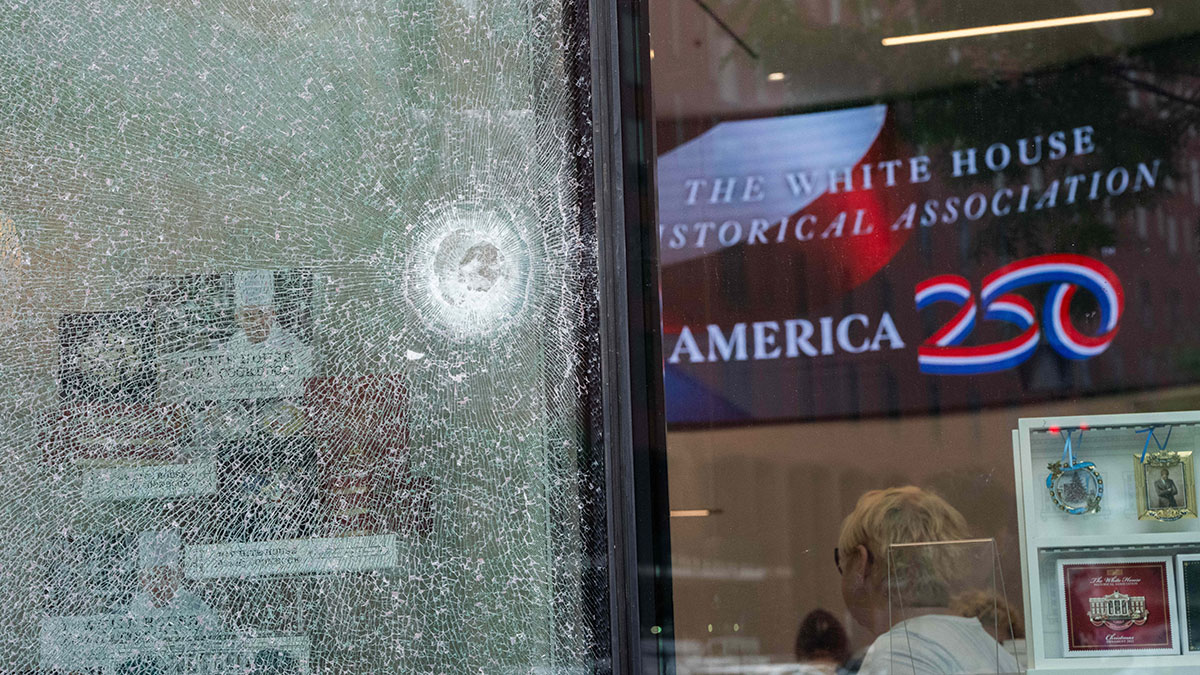
A shooting outside the White House left a bystander in serious but stable condition and the suspect, a 21-year-old Maryland man, was killed by Secret Service officers. President Trump was in the White House at the time, and the incident adds to a series of recent shootings near the president and the White House complex. Trump used the event to argue for expanded White House security spending, including a proposed $1 billion for campus security additions.
This is not an isolated security headline; it is another data point in a short-window cluster that increases the probability of a policy response, even if the base rate of a material legislative change remains low. The second-order effect is that security modernization at federally visible sites becomes politically easier to fund because the argument shifts from discretionary spending to operational resilience, which tends to compress the debate cycle and pull budget decisions forward.
The near-term beneficiary set is not obvious defense primes so much as the niche layer of contractors exposed to perimeter hardening, surveillance, access control, blast mitigation, and command-and-control integration. Those budgets are usually fragmented across agencies, but a high-visibility incident can force a more centralized procurement model over the next 1-3 quarters, favoring vendors with existing federal vehicles and rapid deployment capability. The risk is that headline urgency fades before appropriations convert into awards, creating a classic “policy headline / delayed cash flow” gap.
The broader market implication is that domestic political violence risk is now part of the 2026 election setup, which can support a bid for public-safety technology and security infrastructure while keeping a lid on event-driven tourism and DC-area discretionary spend. The contrarian view is that the market will overestimate the fiscal magnitude: a lot of this spend is reprogramming and incremental hardening, not a wholesale security capex supercycle. If Congress resists new money, the trade likely becomes a short-duration sentiment move rather than a durable earnings catalyst.
AI-powered research, real-time alerts, and portfolio analytics for institutional investors.
Request DemoOverall Sentiment
mildly negative
Sentiment Score
-0.20
