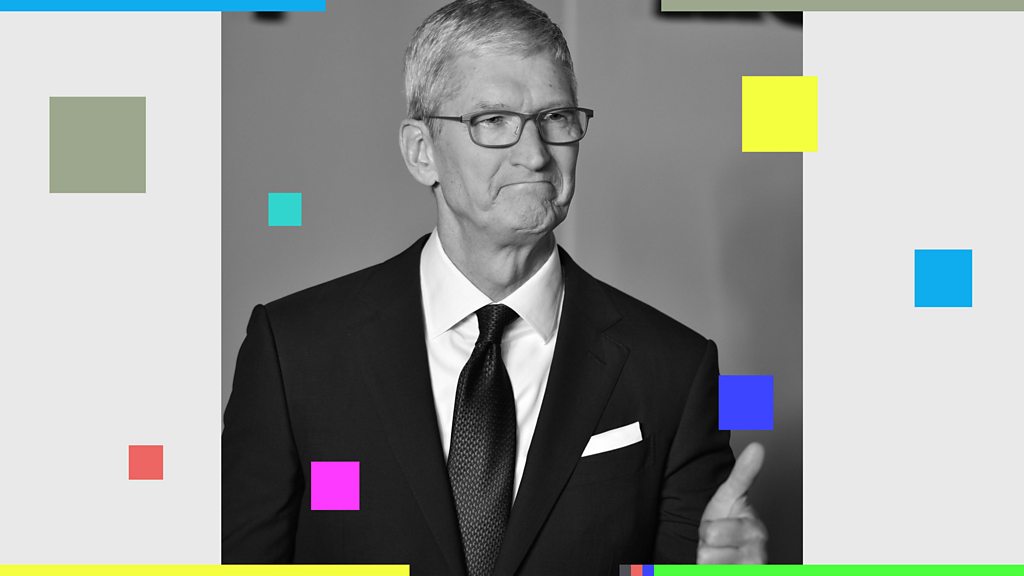
Apple CEO Tim Cook is stepping down later this year, with hardware chief John Ternus named as successor, raising questions about the company’s product priorities and iPhone design direction. The article also flags growing constraints around AI infrastructure, including Maine’s first statewide pause on large data centres, delayed or cancelled US capacity plans for 2026, OpenAI’s shutdown of its Sora app, and Allbirds’ pivot to AI compute infrastructure. Overall tone is cautious: the piece suggests AI growth may be running into energy, hardware, and regulatory limits.
Apple’s leadership transition matters less as a governance story than as a capital-allocation signal. A hardware-first CEO increases the odds of a longer product-refresh cycle centered on physical differentiation, which is usually bullish for premium ASPs and accessory attach rates but bearish for software-adjacent experiments that dilute the user experience or compress margins. The market should think in terms of a slower, more deliberate Apple: better for gross margin stability, but potentially a lower multiple if investors were paying for faster services growth and “AI-native” optionality.
For AAPL, the second-order issue is ecosystem control. If Apple doubles down on device-integrated AI while keeping computation on-device where possible, that reduces dependency on cloud partners and lowers recurring inference spend, but it also raises near-term silicon and R&D intensity. That shifts value toward chip suppliers with deep mobile IP and away from pure cloud AI beneficiaries; the key tell will be whether future product roadmaps emphasize hardware upgrades versus platform services monetization.
The more tradable signal is in the AI infrastructure backlash. Local power, permitting, and transformer constraints are turning compute expansion into a capex bottleneck, which means the “build it and they will come” phase is giving way to project-delivery risk and longer payback periods. That is negative for speculative infrastructure re-ratings and could force a repricing of names whose bull cases assume uninterrupted data-center growth; the first-order pain may show up in order deferrals before it shows up in revenue cuts.
The contrarian view is that the market may be over-reading the headline and under-reading timing. Apple leadership changes historically matter over 6-18 months, not days, and hardware-led strategy can be an advantage if consumer upgrade cycles re-accelerate. Conversely, the AI capex slowdown could be cyclical rather than structural if utilities and grid equipment normalize over the next two quarters; if so, the current skepticism could create a sharp bounce in the most punished infrastructure proxies.
AI-powered research, real-time alerts, and portfolio analytics for institutional investors.
Request DemoOverall Sentiment
neutral
Sentiment Score
-0.10
Ticker Sentiment
