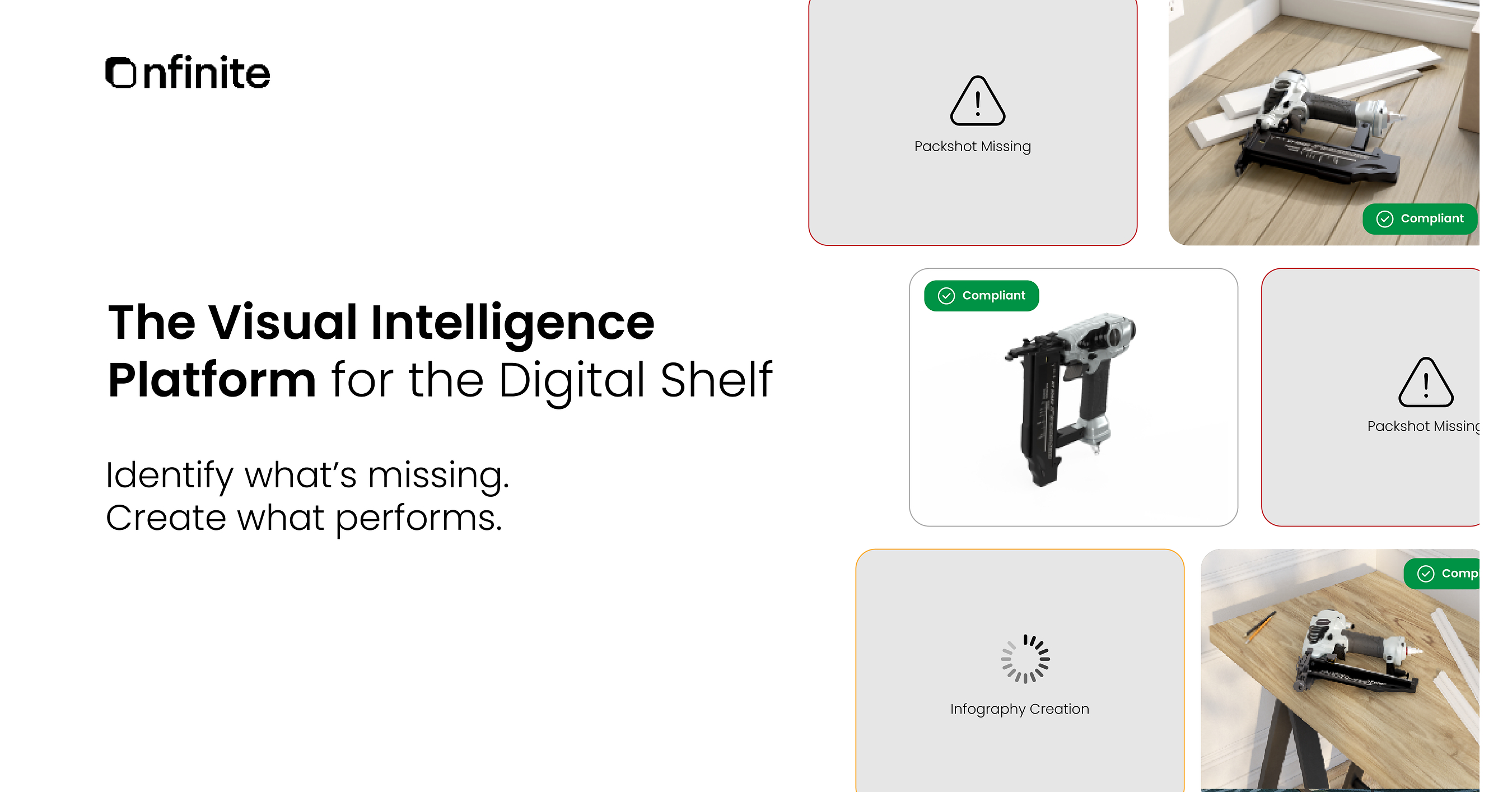
Nfinite lanzó la Plataforma de Inteligencia Visual para el Estante Digital para ayudar a marcas y minoristas a monitorear y corregir el cumplimiento visual de páginas de producto a gran escala. El artículo sostiene que las páginas que no cumplen estándares pueden costar 15%-25% de ingresos y que los equipos dedican ~40 horas por SKU/año a comprobaciones manuales, mientras que en un escaneo inicial se detectaron 897 deficiencias con un cumplimiento del 61% en el catálogo de una marca líder. Con flujos de IA/CGI, la plataforma genera imágenes faltantes y prioriza oportunidades por impacto, buscando mejorar conversión y consistencia entre canales.
The economically important shift here is not “better product images,” it is the migration of spend from labor-heavy creative ops to workflow/control layers. That tends to favor software with embedded catalog data and retailer integrations, while pressuring agencies, BPO-style content ops, and any vendor whose moat is production rather than governance. In home improvement, apparel, and other visually led categories, even a low-single-digit conversion lift can matter more than headline AI cost savings because it compounds through better ad efficiency and lower return rates.
The second-order winner set likely includes commerce platforms and enterprise stacks that already sit on merchant workflows: SHOP, AMZN, and to a lesser extent ADBE if AI content creation drives broader seat expansion. The hidden risk for smaller point solutions is bundling: PIM/DAM incumbents and retailer CMS teams can replicate the “monitor-prioritize-generate” narrative once the compliance layer becomes table stakes. That means the stand-alone opportunity is probably more about selling audits and integrations first, then expanding into creation, not vice versa.
Near term, the stock-market read-through is limited; the real catalyst would be proof that this kind of tooling is tied to measurable GMV, not just better merchandising hygiene. Over 1–3 months, watch for pilot conversions, expanded retailer standards databases, or mentions from major merchants; over 6–18 months, watch for embedded usage inside existing commerce stacks. The contrarian view is that the market may be overestimating how quickly retailers will pay for another layer of software when the ROI is diffuse and procurement cycles are long.
AI-powered research, real-time alerts, and portfolio analytics for institutional investors.
Request DemoOverall Sentiment
mildly positive
Sentiment Score
0.25
