





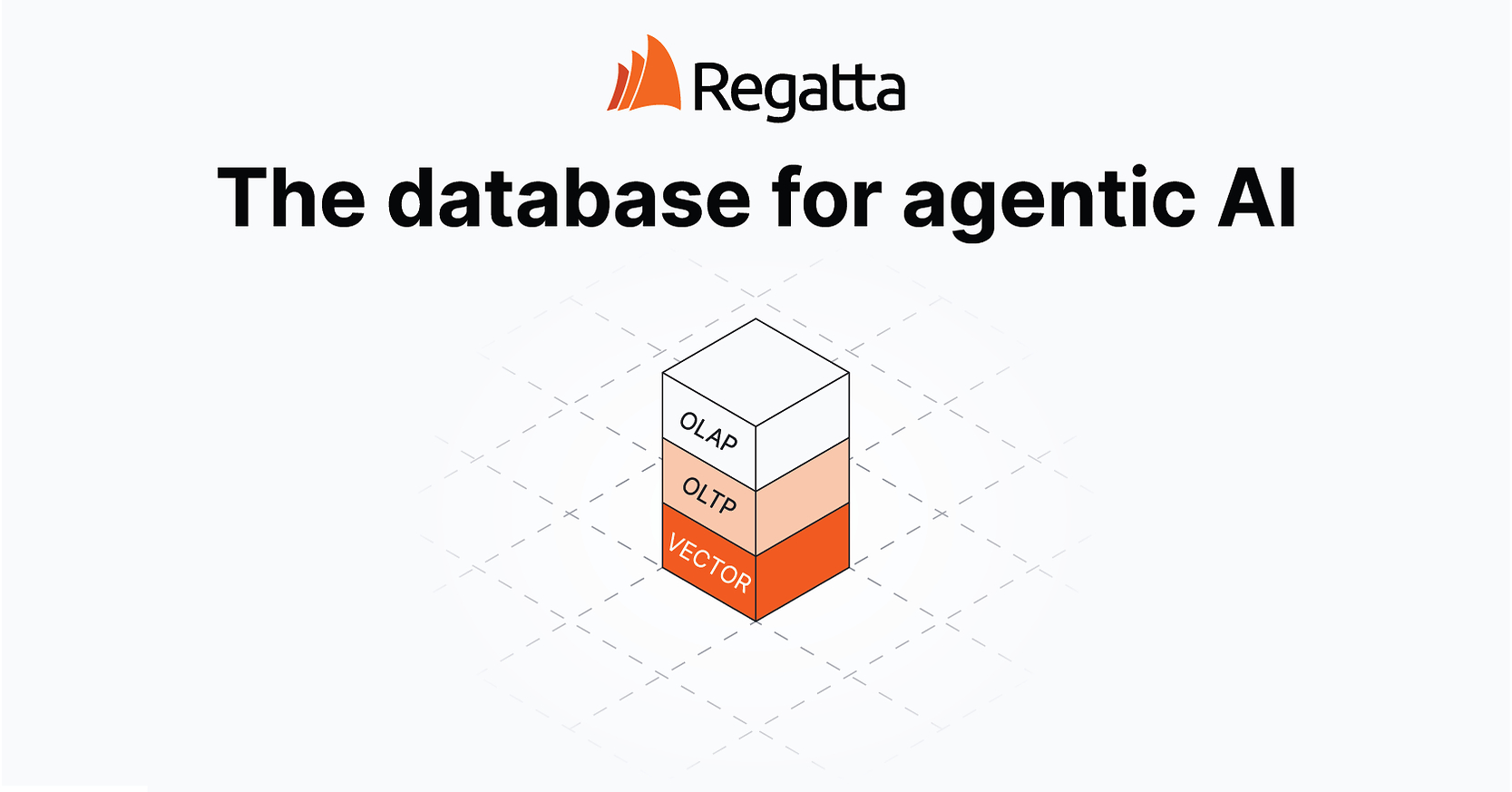
Regatta Data launched the general availability of RegattaDB, a distributed SQL database built to unify OLTP, OLAP, and vector search for AI agent systems. The company cites performance results of a distributed JOIN across 20B rows while sustaining 50,000 ACID transactions/sec in ~3 minutes, plus 20x performance per footprint versus other distributed SQL databases. RegattaDB also claims eliminating ~75% of hardware/power/cooling/space costs and raised $68M from Lightspeed Venture Partners and others, suggesting strong early traction, though the news is primarily product/company-specific rather than market-wide.
This is a category-level signal, not a near-term earnings event. The economic implication is that AI agent stacks will reward vendors that collapse data movement and context stitching, while punishing layers that monetize integration, ETL, and legacy modernization. If the architecture proves out, the first-order upside accrues to the application/orchestration layer; the second-order pressure lands on infrastructure spend per workload, which is where DELL and parts of the server/processor stack could see slower unit growth if density claims are real.
The market should be careful not to extrapolate one launch into broad displacement. Enterprises almost never re-platform their core data estate quickly; the adoption curve is more likely to start in narrow, latency-sensitive verticals like warehouse management, telco operations, and financial workflows, then expand over 6-18 months only if the economics are independently validated. That means the real catalyst path is customer reference velocity, not the press release itself. If production logos or usage metrics do not appear within 1-2 quarters, this stays a narrative, not a competitive threat.
Contrarian view: consensus may be overfocusing on the database layer and underfocusing on the control plane that sits above it. The winners are more likely to be the software platforms that own workflow distribution and agent governance than the underlying data store. In that frame, IBM is vulnerable on legacy-services mix if customers buy less integration labor, while NTNX may be less exposed than it looks because self-hosted deployment keeps it in the stack rather than out of it. The thesis is falsified if incumbent hyperscalers and database vendors quickly match the unified workload claims and customers treat this as incremental, not substitutive.
AI-powered research, real-time alerts, and portfolio analytics for institutional investors.
Request TrialOverall Sentiment
strongly positive
Sentiment Score
0.55
Ticker Sentiment
