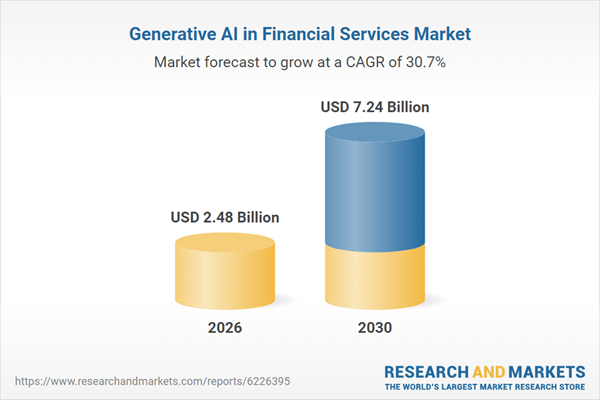
A new report (“Generative AI in Financial Services Market Report 2026”) estimates the generative AI in financial services market will grow from $1.89B in 2025 to over $2B (projection text truncated). The article is promotional/indicative and does not provide company-specific financials or policy changes, implying limited near-term tradable impact.
This is not a tradable catalyst by itself; it is a lagging market-sizing exercise that mostly confirms an existing budgeting trend. The useful signal is that financial institutions are still in the experimentation-to-early-production phase, which means revenue upside for infrastructure vendors is likely to show up first in cloud consumption and model-training spend, not in a clean line item called “generative AI.” That favors the picks-and-shovels stack over application-layer fintechs, where monetization tends to be slower and more easily commoditized.
Second-order, the bigger impact may be cost pressure on legacy software and outsourcing vendors. If banks internalize more workflows, the first displacement risk is for narrow analytics, document-processing, call-center, and compliance workflow providers, while large platforms with embedded distribution should absorb demand. The market usually overestimates near-term margin expansion from AI in regulated industries: implementation, model-risk, data-governance, and legal review costs tend to front-load spend, so efficiency benefits often arrive 2-4 quarters later than the stock narrative assumes.
Contrarian view: the consensus may be mistaking forecasted market growth for incremental earnings power. In financial services, procurement is slow and budgets are finite; one AI project often cannibalizes another line item rather than expanding total tech spend. The real falsifier is not another optimistic report, but evidence in upcoming bank/processor earnings that AI is producing measurable opex leverage or higher cross-sell conversion; absent that, the move remains more theme support than investable news.
AI-powered research, real-time alerts, and portfolio analytics for institutional investors.
Overall Sentiment
neutral
Sentiment Score
0.10
