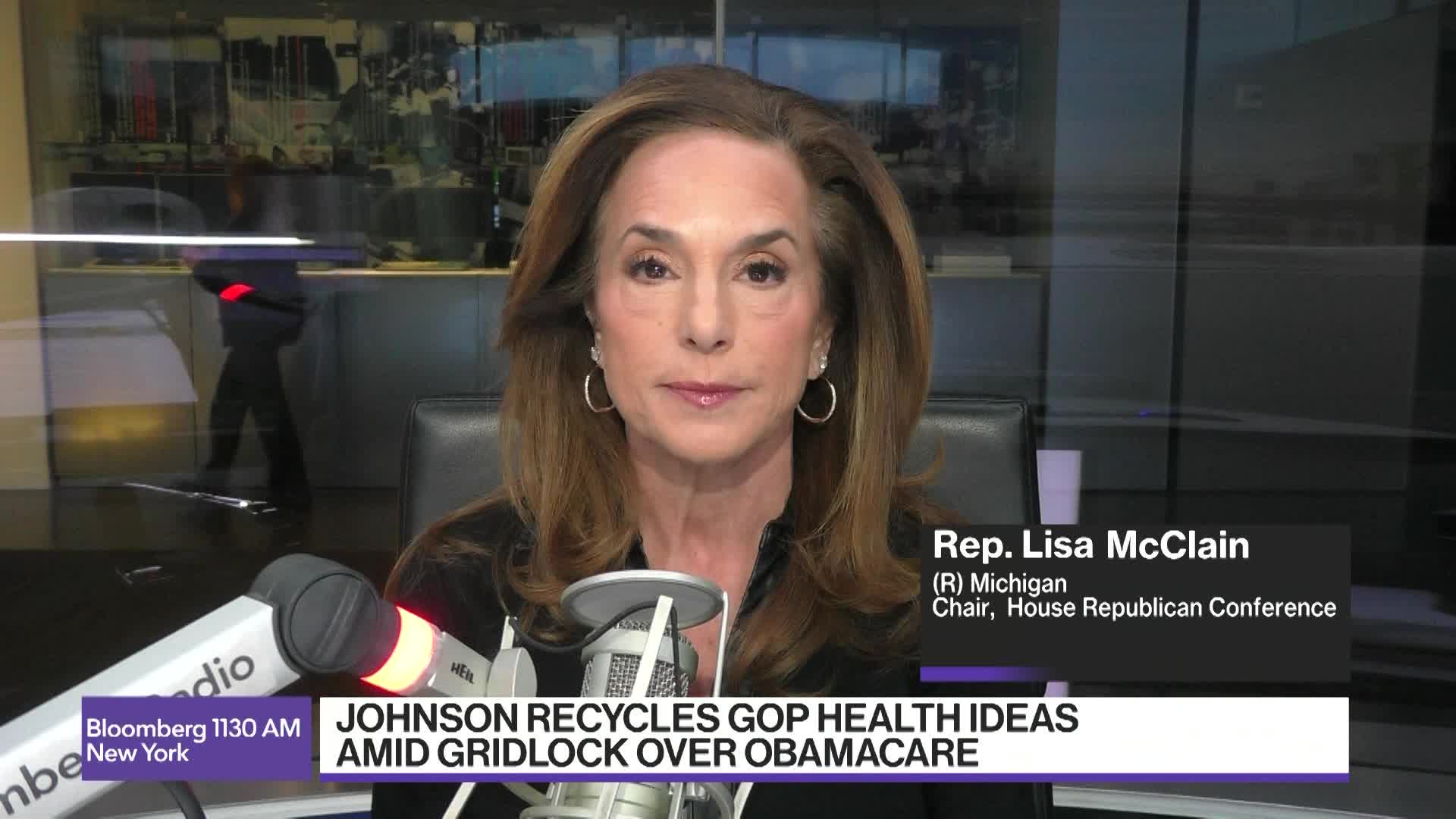
Republican leaders outline an alternative to Democratic proposals on healthcare that would prioritize reducing actual premiums and targeting subsidies away from high earners (cited threshold: ~$600,000) versus Democrats’ approach of expanding ACA credits; a bipartisan Gottheimer-Higgins bill would extend Obamacare subsidies for one year while reforms are debated. The speaker attributes past inflation (peaking around 9%) to recent federal policy and credits progress toward sub-3% inflation, lower gas and heating costs, and falling mortgage rates, while the administration is loosening CAFE fuel-economy rules—measures automakers say could cut roughly $16k–$17k in regulatory costs per employee and lower vehicle prices, including enabling small gas/electric/hybrid cars. These policy shifts could meaningfully affect insurers, auto manufacturers and consumer spending, but outcomes and legislative specifics remain uncertain.
Market structure: Easing CAFE standards and rhetoric to roll back oil/gas restrictions is a clear positive for legacy automakers (GM, F) and upstream E&P (XOM, CVX, OXY) because it reduces compliance capex and unit costs; expect near-term margin tailwind of ~100–500bp for OEMs on high-SUV/mid-size truck mixes over 12–24 months and 2–5% EPS upside consensus in 2025–26 if rules are finalized. Conversely, a reform that shifts ACA support from open-ended subsidies toward premium-reduction measures increases pricing pressure on large insurers (UNH, ANTM, CI, CVS), potentially compressing combined ratios by 100–300bp and dragging sector EPS 5–10% over 12 months if implemented.
Risk assessment: Tail risks include a sudden bipartisan short-term subsidy extension (Gottheimer-Higgins) that delays insurer margin impact for 6–12 months, or a court reversal of regulatory rollbacks that revives compliance costs; both are low-probability but 20–40% impact events on targeted sectors. Time horizons split: immediate (days): political headlines drive 3–8% intraday moves; short-term (weeks–months): legislative text and CBO scoring will reprice equities; long-term (quarters–years): structural demand shifts in vehicle mix and health subsidy design change secular cash flows.
Trade implications: Direct plays — favor 2–4% long in F (or 3–5% long in supplier APTV/BWA) for 3–12 months to capture regulatory relief and mix tailwind; trim or hedge 2–4% positions in UNH/ANTM anticipating policy-driven price pressure. Use options: buy 3-month UNH 5–10% OTM puts and sell 3–6 month F vertical call spreads to fund cost; consider pair trade long XOM short UNH (equal notional) to express energy/upstream vs healthcare-insurer rotation.
Contrarian angles: Consensus underprices temporal lag — insurers may front-run rate increases for 2025 enrollee cohorts, offsetting some subsidy losses; EV pure-plays (TSLA, RIVN) may be oversold if relaxed CAFE implies slower regulatory-driven ICE-to-EV demand shift, creating 6–18 month mean-reversion opportunities. Watch CBO scoring, bill text, and automaker capex reallocation over next 30–90 days as catalysts that could make these trades asymmetric.
AI-powered research, real-time alerts, and portfolio analytics for institutional investors.
Request DemoOverall Sentiment
mixed
Sentiment Score
0.05
