
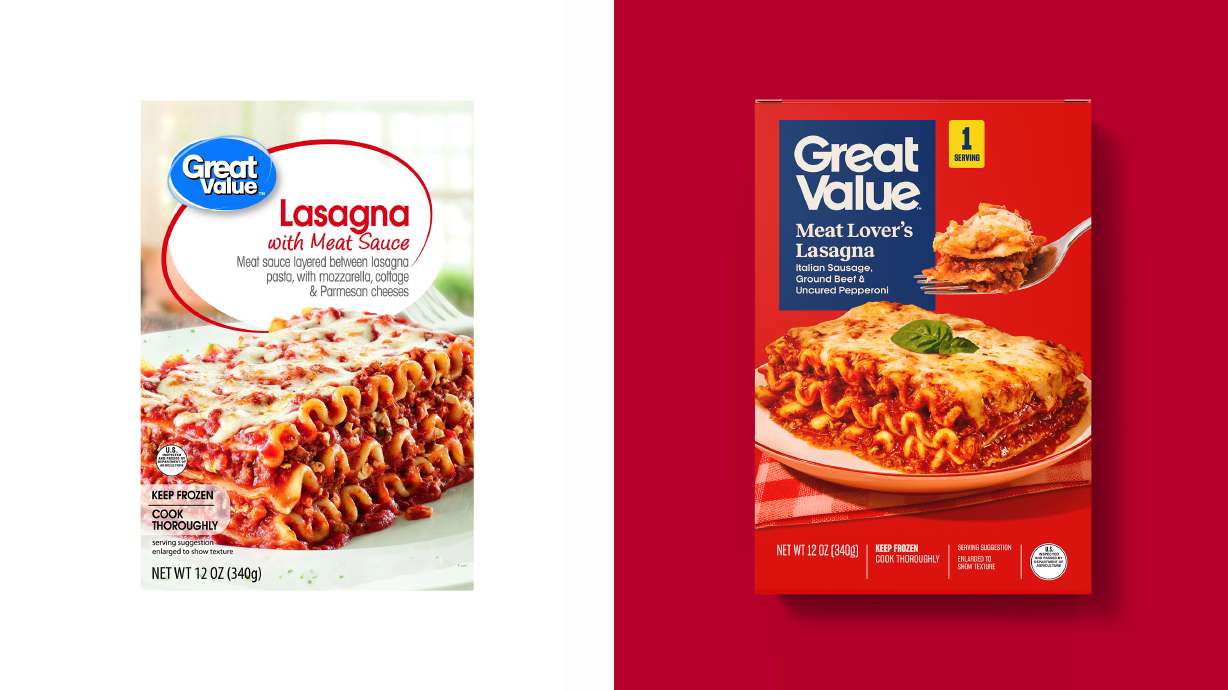
Walmart is rolling out a full redesign of its Great Value packaging across 10,000 products, with new cartons, boxes and bags starting to appear next month. The update is aimed at making nutrition and ingredient information easier to spot and at making store brands feel more premium, with no changes to the products themselves. The move supports Walmart's private-label strategy as consumers continue to shift toward store brands.
This is less a cosmetic refresh than a margin-defense and data-layer move. By standardizing claim placement and making value/health cues instantly legible, Walmart is trying to compress the shopper decision cycle and raise conversion on private label without having to fund a price cut; that is especially valuable in omnichannel baskets where pickers and app scanners increasingly act as the first customer. The second-order effect is that better packaging can quietly increase basket attachment and reduce substitution back to branded names when shoppers are under time pressure.
The key competitive implication is not for other grocers so much as for branded CPGs that rely on visual inertia. If Walmart succeeds in making Great Value feel more “premium-functional,” national brands lose one of their last soft advantages: trust conveyed through shelf presence and package recognition. That pressure should be most visible in categories where consumers use a single attribute as a shortcut—protein, gluten-free, no artificial colors—because packaging becomes a de facto merchandising algorithm.
The market is probably underestimating the operating leverage. Packaging redesign alone is not a revenue catalyst, but it can incrementally lift private-label mix, which matters because private brands carry better economics and are easier to defend in a value-conscious consumer environment. The longer-term risk is brand dilution if the new design makes low-price products look more premium than the underlying assortment can support; if quality perception slips, Walmart could create a higher expectation ceiling without the product changes to match it.
Near term, this is a months-long story rather than a days-long event. The main reversal catalyst would be any indication that the redesign fails to improve mix, or that Walmart’s own store-brand expansion starts cannibalizing higher-margin branded traffic in ways that invite vendor pushback or promotional retaliation. A more subtle watch item is whether competitors copy the design language quickly, which would flatten the advantage but still validate the thesis that package-level information architecture is becoming a retail battleground.
AI-powered research, real-time alerts, and portfolio analytics for institutional investors.
Request TrialOverall Sentiment
mildly positive
Sentiment Score
0.15
Ticker Sentiment
