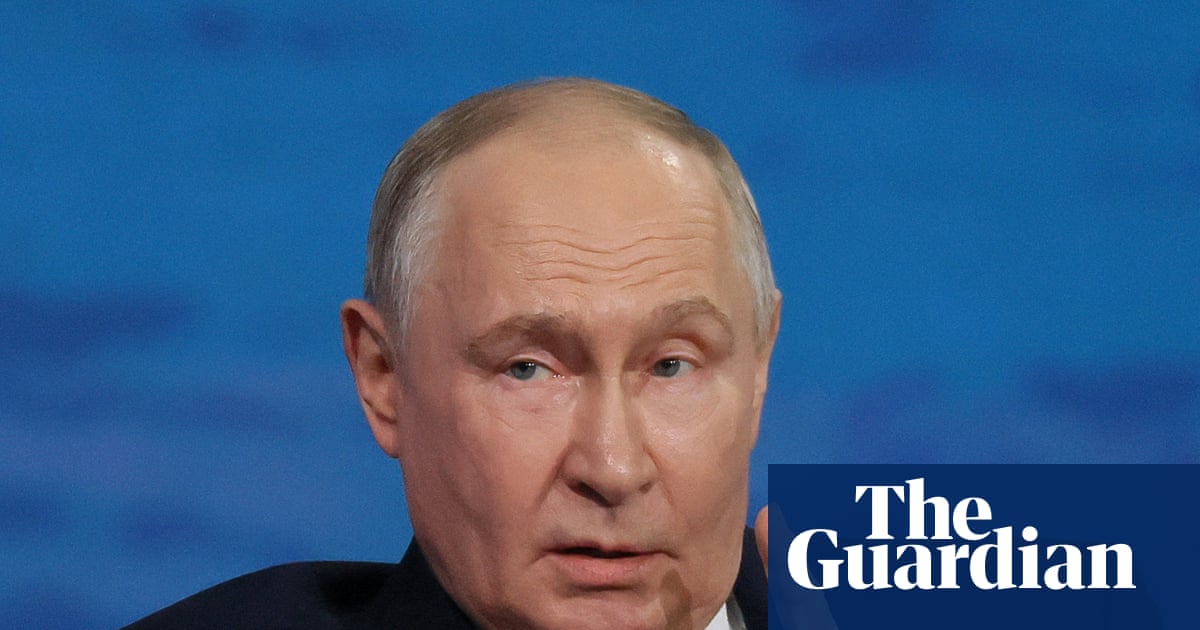
Putin rejected Zelenskyy’s offer for direct peace talks and reiterated Russia’s war aims, including full control of Donbas plus Kherson and Zaporizhzhia, while Ukraine escalated drone strikes on St Petersburg’s oil terminal and five Russian cargo ships in the Sea of Azov. The article also highlights mounting strain on Russia’s economy, including a 0.2% GDP contraction in Q1 2026, rising prices, tax hikes, and high borrowing costs. Putin warned that Western freezing of Russian reserves has undermined trust in the dollar and euro, reinforcing broader geopolitical and sanctions risk.
The market implication is not a generic “war goes on” headline; it is a higher-probability regime of prolonged attrition, which tends to be more inflationary than a breakthrough settlement but less immediately explosive than an outright supply shock. The key second-order effect is on Russia’s fiscal and logistics capacity: continued degradation of energy transport and military support assets raises the marginal cost of sustaining the front, while also increasing the probability of more asymmetric retaliation against infrastructure nodes. That keeps a floor under European defense spending, sanctions enforcement, and security-premium pricing across energy and shipping-adjacent assets.
The more important medium-term signal is that diplomatic optionality is being reduced rather than expanded. When both sides posture for maximal claims while continuing strike escalation, the base case shifts toward a months-long negotiation theater with no ceasefire, which is usually bullish for defense primes and bearish for any asset sensitive to a clean de-escalation premium. In FX, the argument that reserve asset trust is being damaged is not just rhetoric: it reinforces the trend toward incremental reserve diversification and higher structural demand for non-dollar settlement rails, though that plays out over years rather than weeks.
The immediate market risk is energy volatility, but the more subtle catalyst is a further tightening in Russian export reliability rather than headline supply loss. Repeated hits to logistics, refining, and port infrastructure can create localized bottlenecks and wider spreads without necessarily moving Brent in a straight line, which favors volatility strategies over outright directional commodity bets. Contrarian takeaway: the consensus may be underestimating how much of the “bad news” is already in prices for European equities, while still underpricing the tail risk of a retaliatory strike that hits a genuinely systemically important energy node.
For positioning, the cleanest expression is to own defense and energy volatility while fading low-quality European cyclicals on any relief rally. The risk/reward skew improves if the conflict remains unresolved into the next 4-8 weeks of diplomacy headlines, because that is when sentiment tends to overreact on each failed meeting attempt while fundamentals continue to deteriorate underneath.
AI-powered research, real-time alerts, and portfolio analytics for institutional investors.
Request DemoOverall Sentiment
strongly negative
Sentiment Score
-0.65
