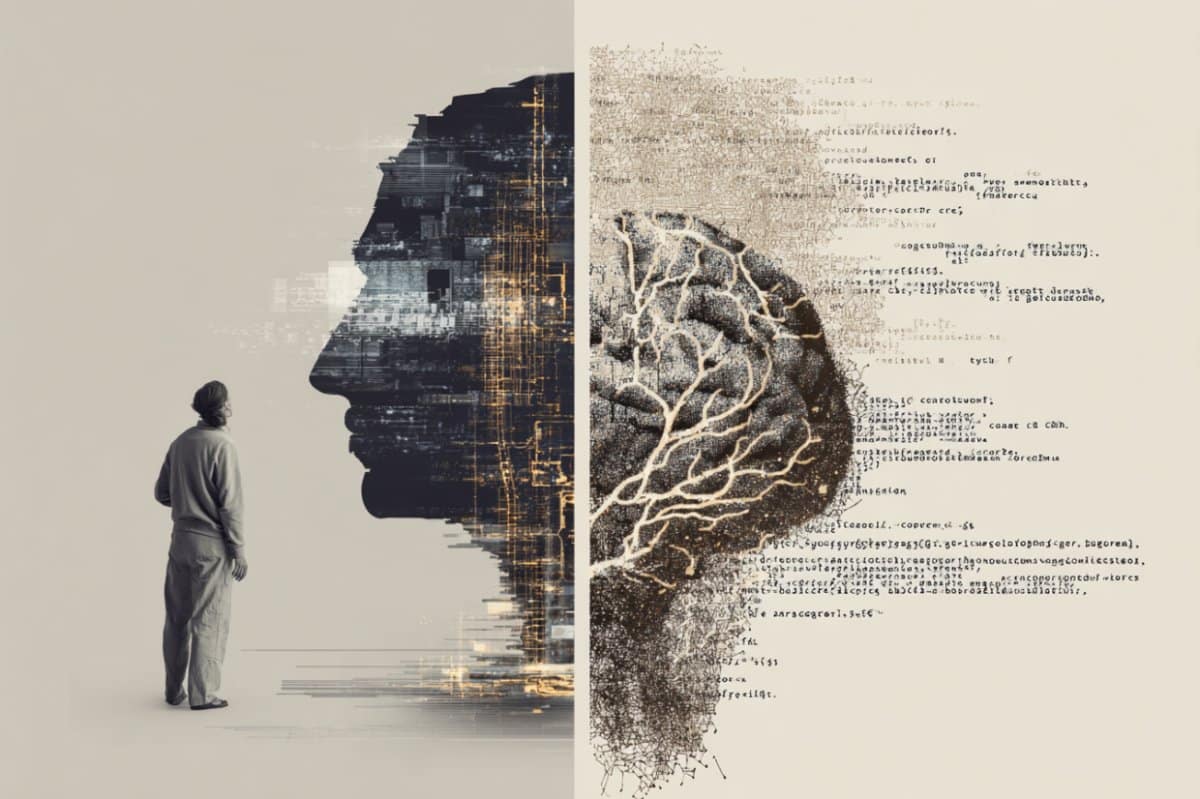
Researchers have developed "mind captioning," a novel brain decoding method that translates visual and semantic brain activity into structured text, even from recalled memories, without relying on the brain's language centers. This breakthrough, leveraging deep learning, holds significant implications for advanced assistive communication technologies for individuals with severe impairments and could transform brain-machine interfaces, enabling complex mental content to be converted into text for digital systems and virtual assistants, thereby signaling future investment potential in neurotech and AI sectors.
The "mind captioning" method marks a significant neurotech advancement, translating visual and semantic brain activity into structured text without relying on traditional language centers. This deep learning-powered system accurately describes perceived or recalled content, notably achieving nearly 40% accuracy in identifying specific remembered videos in some individuals. Its ability to decode relational meaning, not just object labels, signifies a deeper understanding of thought processes.
This breakthrough carries substantial implications for assistive communication, potentially enabling individuals with severe impairments like aphasia or locked-in syndrome to communicate. It expands the scope of brain-machine interfaces by interpreting complex, subjective experiences directly from non-linguistic brain activity. The technology's independence from language centers also suggests adaptability across different linguistic backgrounds.
While currently dependent on fMRI and intensive data collection, this research signals considerable long-term investment potential across Artificial Intelligence, Technology & Innovation, and Healthcare & Biotech sectors. The optimistic sentiment highlights a future where advanced neural decoding could revolutionize human-computer interaction and medical communication. Ethical considerations regarding mental privacy will be paramount as these tools develop.
AI-powered research, real-time alerts, and portfolio analytics for institutional investors.
Request DemoOverall Sentiment
strongly positive
Sentiment Score
0.85
