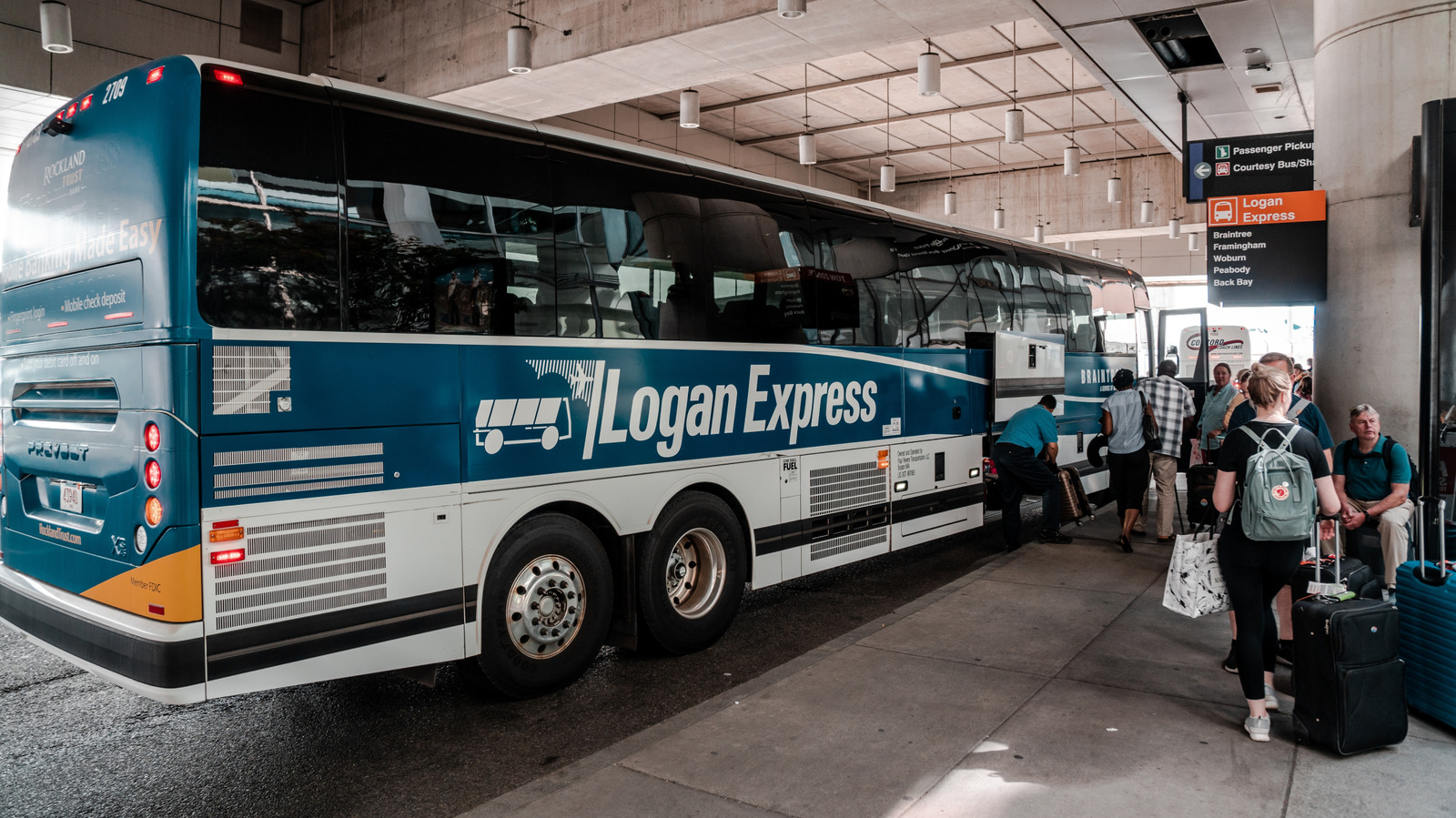
Boston Logan will launch a pilot on June 1 allowing Delta and JetBlue passengers to clear TSA security at a remote Framingham facility 22 miles from the airport and then ride a bus directly to the terminal. The program includes bag check and PreCheck acceptance, potentially easing congestion at Logan and on surrounding roadways. The pilot runs through the end of August and is a modest operational improvement rather than a major market-moving event.
This is a modestly positive micro-capacity story for DAL, but the real signal is about latent pricing power in constrained hubs. If remote screening meaningfully reduces the perceived friction of Boston-origin travel, the first-order gain is not just incremental convenience; it is higher willingness to pay for nonstop and premium itineraries out of Logan, where schedule quality already matters more than fare alone. That tends to favor the incumbent with the deepest local footprint and loyalty base, while pressuring smaller carriers that compete primarily on price and have less ability to monetize a smoother departure experience.
Second-order, the pilot is a test of whether airports can turn ground-side congestion into a product feature. If Boston sees enough uptake, similar off-airport processing could emerge at other slot-constrained, road-constrained airports, which would be a structural positive for airlines with fortress hubs and a negative for airport parking, ride-hail, and short-stay terminal-adjacent commerce. The beneficiaries extend to shuttle operators and airport infrastructure vendors that can monetize passenger flow management, but the biggest equity implication is that convenience innovation can support yield resilience even if passenger growth slows.
The key risk is execution and habit formation: a few bad operational days can kill adoption quickly, especially when the value proposition is time certainty rather than pure speed. The pilot window is short, so the market will likely overreact to anecdotal customer feedback before the data are meaningful. If throughput is poor or baggage handling becomes a bottleneck, the initiative reverts to a PR experiment rather than a scalable demand lever.
Consensus may be underestimating how much business travelers value de-bottlenecked departure experience relative to absolute flight price, particularly during peak summer travel. That said, the move is not large enough on its own to change DAL earnings; the trade is about narrative support and hub defensiveness, not a near-term EPS upgrade. The best risk/reward is to own the carrier most likely to convert better customer experience into higher mix and less churn, while fading any broad airport-infrastructure enthusiasm that assumes immediate national rollout.
AI-powered research, real-time alerts, and portfolio analytics for institutional investors.
Request DemoOverall Sentiment
mildly positive
Sentiment Score
0.20
Ticker Sentiment
