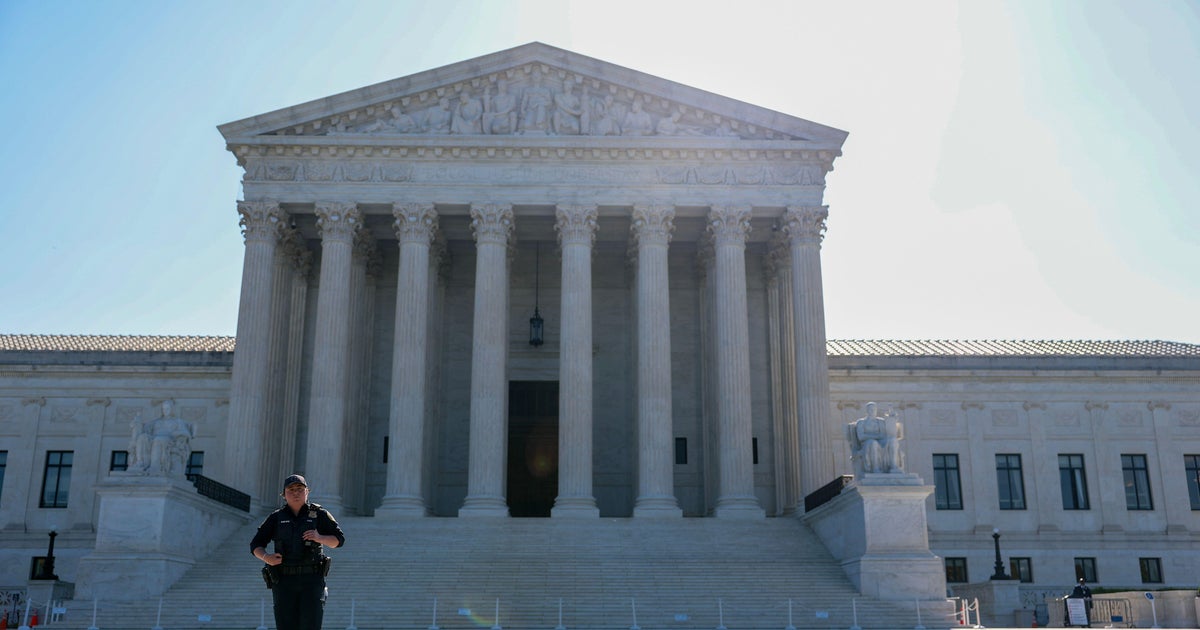
The Supreme Court is weighing the Trump administration's attempt to revoke Temporary Protected Status for more than 6,000 Syrians and 350,000 Haitians, after lower courts blocked the move. The case centers on whether DHS properly consulted other agencies and whether courts can review TPS terminations under federal law. The ruling could affect deportation policy and administrative authority, but it is primarily a legal and immigration-policy matter rather than a direct market driver.
The investable issue is not immigration policy itself but whether the Court narrows judicial review in a way that broadens executive discretion across other administratively granted benefits. A ruling that blesses a highly deferential standard would create a template for faster, less litigable changes in any program where agencies rely on interagency consultation and country-condition assessments, which is incrementally negative for rule-of-law-sensitive sectors and positive for policy-flexible issuers that can benefit from faster enforcement. The market impact is mostly second-order: not direct revenue exposure, but a repricing of legal optionality for government-dependent assets.
The biggest second-order winner is the enforcement ecosystem: detention operators, private transport, and immigration-tech vendors can see multi-quarter demand tailwinds if the administration gets a cleaner path to scale removals. The main loser is labor-intensive services and select housing/consumer-facing businesses in metros with high TPS concentration, where even partial status disruption can tighten labor supply and lift wage pressure over a 6-18 month horizon. That said, the immediate earnings impact is likely modest because any actual removals are operationally constrained and politically noisy, so the first reaction is usually in sentiment-sensitive names rather than fundamentals.
The tail risk is a Supreme Court decision that does not just allow termination, but effectively immunizes the administrative process from review; that would encourage broader use of TPS-like levers and increase policy volatility into the 2026 cycle. Conversely, if the Court preserves process review, the administration’s next move is likely narrower re-papering rather than retreat, so the equity read-through should fade after the headline. The market is probably underpricing how much a procedural loss for plaintiffs would strengthen the executive branch’s hand on adjacent immigration and asylum actions.
Contrarian view: the consensus may be overestimating the near-term labor shock and underestimating the legal precedent. This is a medium-dated volatility event, not an immediate macro shock, but it can expand the probability distribution around enforcement intensity and thus around staffing, detention, and low-wage labor costs. The cleaner trade is to position for policy optionality rather than a binary headline reaction.
AI-powered research, real-time alerts, and portfolio analytics for institutional investors.
Request DemoOverall Sentiment
neutral
Sentiment Score
-0.10
