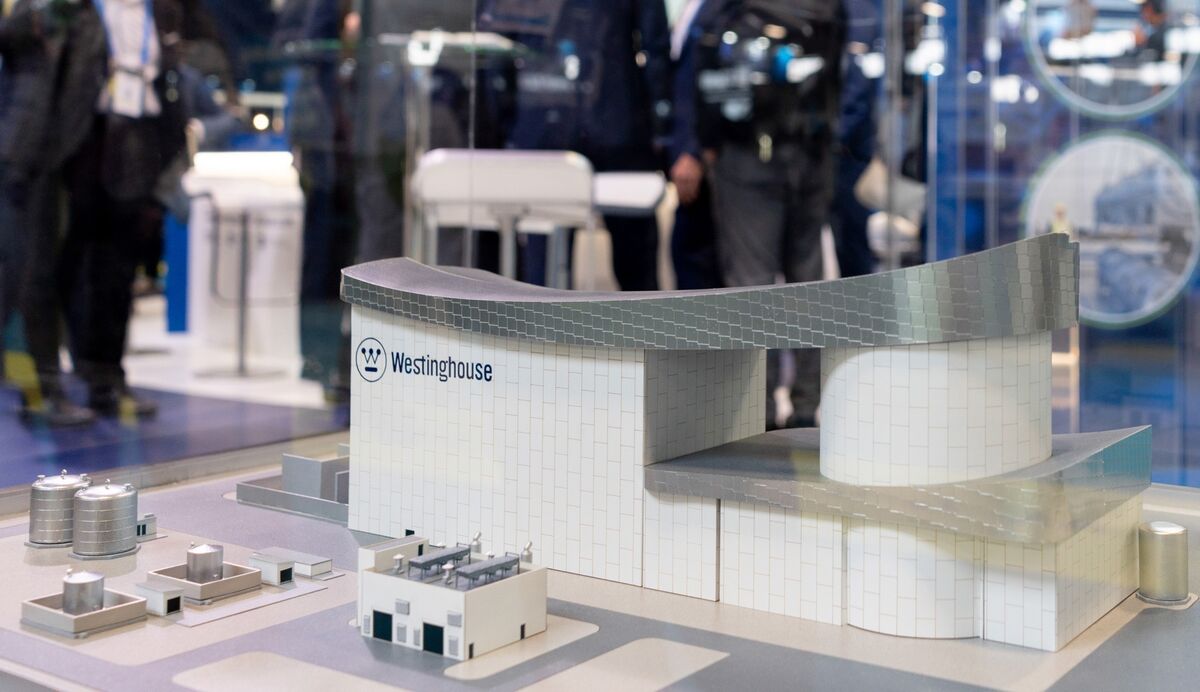
The US Department of the Air Force selected three companies—Radiant Industries, Antares Nuclear and Westinghouse Electric—to develop and operate nuclear microreactors for military sites in Colorado, Texas and Montana. Radiant expects first delivery by 2028, with Antares following by 2029. The move signals growing defense demand for fission-based power as electricity needs rise, modestly positive for the microreactor ecosystem.
This is less a clean revenue signal for the named developers than an underwriting signal for the broader nuclear supply chain. The immediate market read-through is that defense-backed off-take can de-risk financing and compress cost of capital for modular nuclear, which should lift sentiment for uranium conversion/enrichment, specialty metals, high-spec manufacturing, and nuclear services before it translates into meaningful reactor orders. The second-order winner is likely the “picks and shovels” basket, because base power demand creates a long-duration reference customer that can unlock follow-on deployments at other federal sites if the first installations meet reliability and security thresholds.
The biggest competitive implication is for incumbent power providers and gas peakers serving remote or mission-critical loads: microreactors are not a near-term grid-scale threat, but they are a credible wedge into off-grid, resilient power markets where diesel logistics are expensive and politically unattractive. That means the first displacement is in defense, mining, and isolated industrial sites rather than utility-scale generation. The key timing issue is that the next 12-24 months are mostly permitting, fabrication, and financing; the actual macro impact on generation mix is a 2028-2029 story, so the trade is more about option value than near-term earnings.
The main risk is execution failure or schedule slippage, which would likely re-rate the entire category lower because the market is implicitly pricing a de-risking event, not a technology breakthrough. Another risk is procurement creep: if the Air Force treats these as bespoke demonstrations rather than a repeatable template, the addressable market stays narrow and multiples should compress. Contrarian angle: this may be more bullish for regulated nuclear incumbents and fuel cycle names than for the smaller reactor startups, because the winners in first deployments are often the firms with manufacturing depth, licensing muscle, and balance-sheet capacity to absorb overruns.
If the first installations proceed on time, expect a wave of state-level and federal interest in resilient microgrids over the next 6-12 months, which could extend the trade into adjacent electrification and grid-security names. But if there is any safety, insurance, or scheduling issue, this will likely become a headline-driven risk-off event for the whole advanced nuclear complex, with the sharpest drawdown in the smallest, least capitalized developers.
AI-powered research, real-time alerts, and portfolio analytics for institutional investors.
Request TrialOverall Sentiment
mildly positive
Sentiment Score
0.20
