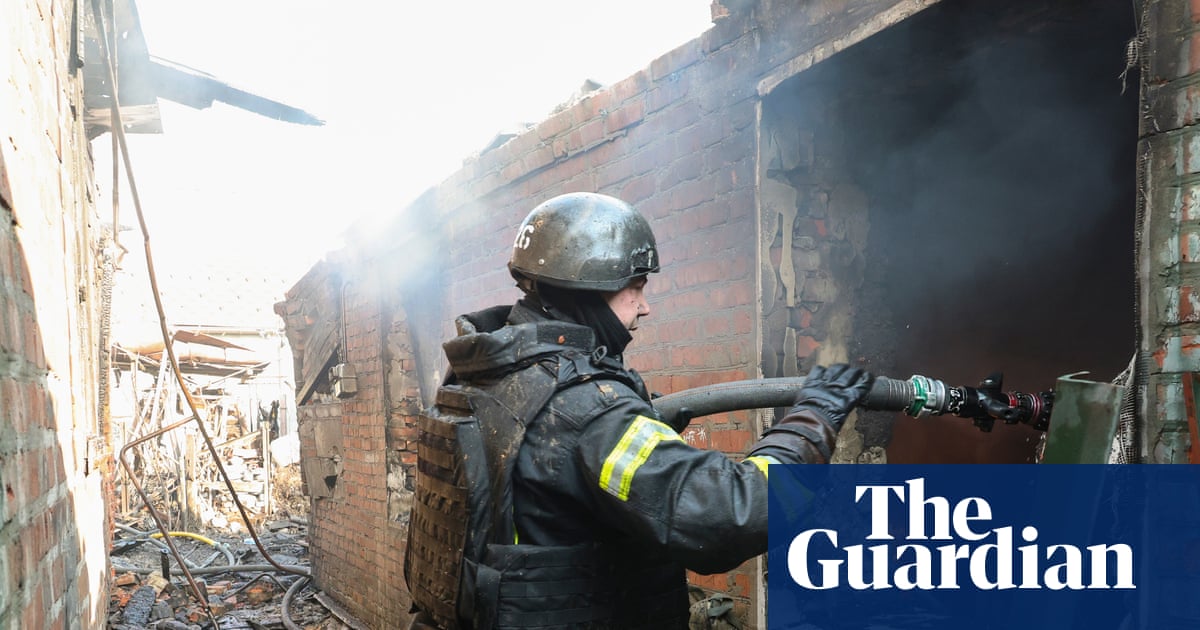
Russia launched more than 100 combat drones and 3 missiles overnight against Ukrainian cities despite a unilateral 24-hour ceasefire declared by President Zelenskyy. The attacks killed 28 civilians on Tuesday across the Donetsk, Poltava and Dnipro regions, while Ukraine’s foreign minister said the strikes on Kharkiv and Zaporizhzhia show Moscow rejects peace and warrant new sanctions and stronger support for Ukraine. With Moscow also tightening security for its May 9 military parade and the war showing little progress toward negotiations, the news reinforces elevated geopolitical risk.
The market implication is less about the headline strike count and more about regime persistence: if Moscow is willing to escalate during a politically sensitive ceasefire window, then any near-term de-escalation premium in European assets is likely overstated. That keeps a floor under defense spending expectations and raises the probability that air-defense, EW, drone-interception, and munitions replenishment orders stay front-loaded into 2H24/2025 budgets rather than slipping into later procurement cycles.
Second-order effects favor companies with exposed European rearmament pipelines and those tied to infrastructure hardening. The most asymmetric beneficiaries are not the obvious prime contractors alone, but the picks-and-shovels across radar, missile interceptors, secure comms, and power resilience where order books can re-rate before revenue does. On the loser side, any near-term European cyclicals betting on a negotiated drawdown face a higher discount rate for capex recovery, especially transport, utilities, and industrials with direct CEE exposure.
The bigger catalyst is policy, not battlefield data: repeated violations make additional sanctions and enforcement more likely, but the marginal impact depends on whether Europe moves from symbolic listings to actual export-control tightening and secondary-sanctions enforcement. That matters for defense supply chains too, because tighter controls can delay some subsystems while simultaneously improving pricing power for compliant Western vendors. The contrarian risk is that investors are already long the defense theme; the better trade may be relative value into earnings revisions rather than outright beta.
Near term, the highest-volatility window is the next several days around the parade/security period, where any Ukrainian disruption attempt or Russian overreaction could spike European gas, power, and defense names in tandem. Over 1-3 months, the key question is whether the current pause in Russian battlefield gains translates into a slower war of attrition or simply a shift toward higher-intensity strikes on infrastructure. If infrastructure attacks broaden, the winners extend beyond defense into grid equipment, generators, and hardened communications.
AI-powered research, real-time alerts, and portfolio analytics for institutional investors.
Request DemoOverall Sentiment
strongly negative
Sentiment Score
-0.78
