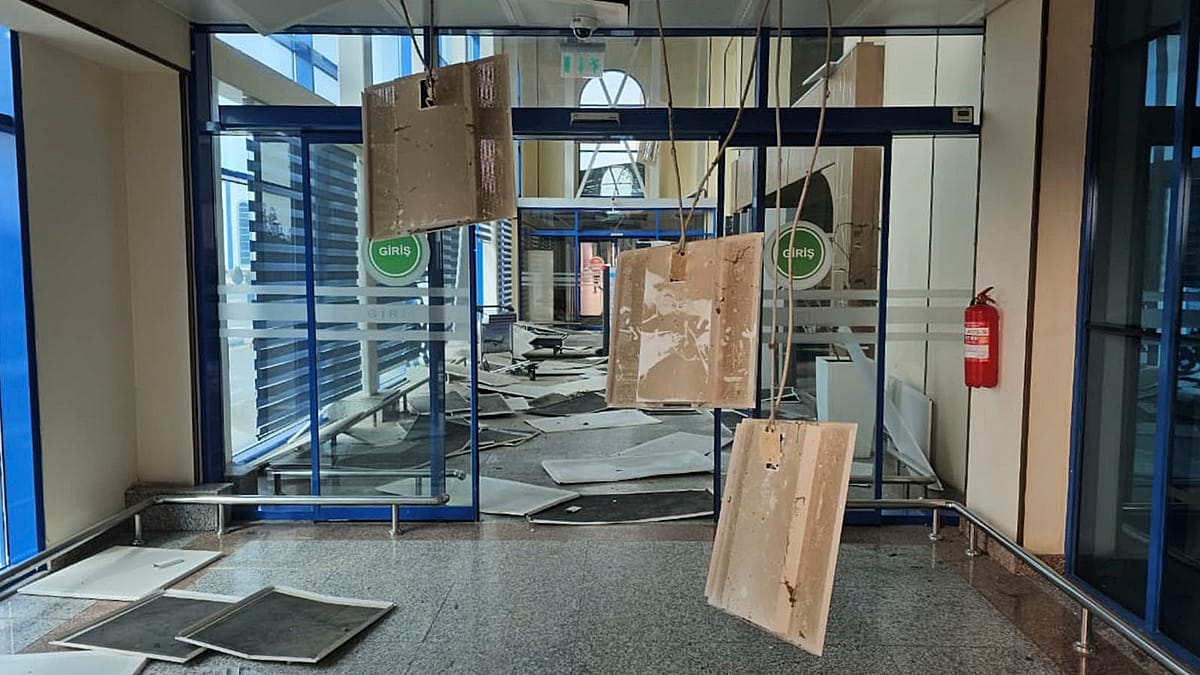
Iranian-launched drones reportedly struck the passenger terminal at Nakhchivan International Airport and exploded near a school in the border village of Shakarabad, injuring at least two civilians and damaging the airport terminal; Azerbaijan has summoned Iran's ambassador and demanded an explanation. Tehran denies responsibility. The incident increases regional geopolitical risk and could disrupt air traffic and investor sentiment for Azerbaijani and nearby markets, warranting monitoring for spillovers into regional travel, logistics and risk premia.
Market structure: Immediate winners are defense primes and security-equipment suppliers (Lockheed Martin LMT, Northrop Grumman NOC, General Dynamics GD) which see higher short-term order probability and risk-premium; losers are regional aviation, airports and travel operators (Azerbaijani carriers, JETS ETF) and local infrastructure owners. Pricing power shifts modestly toward defense contractors with potential 3–8% upside in a 1–3 month risk-on move if the conflict escalates; aviation faces margin pressure from higher insurance and route disruption for 4–12 weeks.
Risk assessment: Tail risks include rapid expansion (low-probability) that disrupts Caspian/Gulf energy flows and spikes Brent >15% within days, or direct NATO/Turkish involvement; immediate window is 0–14 days, short-term 1–3 months, structural rebalancing 3–12 months. Hidden dependencies: Russia/Turkey diplomatic posture, sanctions cascade, and insurance/reinsurance re-pricing could materially amplify costs; catalysts are confirmed cross-border strikes, shipping/pipeline hits, or formal military escalations.
Trade implications: Tactical allocations should favor small, explicit defense exposure (2% portfolio) and hedged oil exposure (1%–2%) alongside a short in travel (1%–2% via JETS) for 1–3 month horizons. Use option structures to limit downside: 3-month call spreads on LMT/NOC and Brent call spreads via BNO for defined risk; maintain a 1–2% safe-haven allocation to USD/short-duration Treasuries (SHY) to offset risk-off flows.
Contrarian angles: Market reaction may be overdone—historical skirmishes (2019–2020) produced 4%–12% oil spikes that faded in 3–6 weeks; if no escalation within 30 days, defense equities can mean-revert 5%–10%. Mispricings: buy tight call spreads not outright equities; unintended consequence of aggressive energy longs is loss if Iran denial and rapid de-escalation occur, so tranche sizing and reversion triggers matter (remove incremental exposure if Brent falls >6% in 5 trading days).
AI-powered research, real-time alerts, and portfolio analytics for institutional investors.
Request TrialOverall Sentiment
moderately negative
Sentiment Score
-0.50
