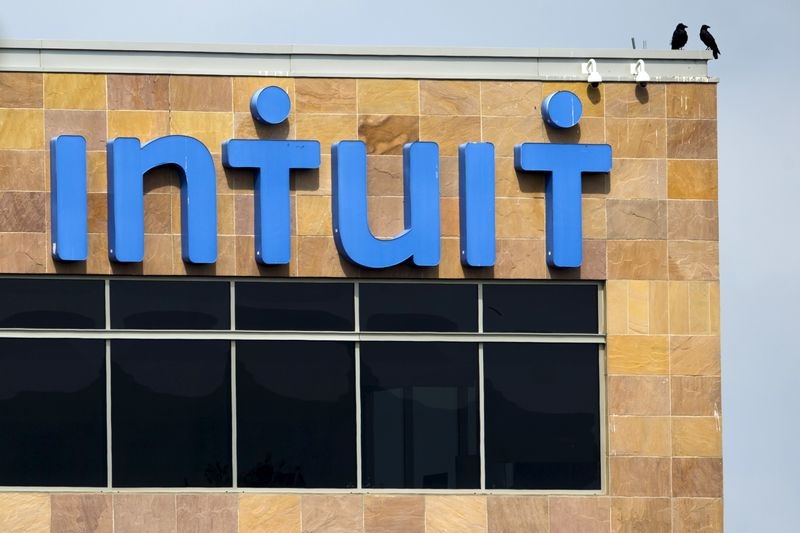
Key event: Intuit accelerated share repurchases by up to $3.5B and halted pre-scheduled insider stock sales. Shares are down ~35% over the past six months and trade at a GAAP P/E of 29.14 with a PEG of 0.65; Morgan Stanley reiterates Overweight with a $580 PT (TD Cowen $633, Barclays $540, Wolfe $550; BNP Paribas Exane moved to Neutral). Analysts point to two product cycles, improving web traffic and upcoming Q3 fiscal earnings as catalysts for revenue acceleration and potential estimate revisions.
Accelerated buybacks plus a temporary halt to insider sales have created a one-two supply shock that can materially amplify EPS trajectory even before revenue inflection. For a high-margin SaaS business, a mid-single-digit reduction in share count—if executed over 6–12 months—translates into a low-double-digit boost to reported EPS power, which can force multiple re-rating absent new top-line disappointments. That mechanical leverage elevates the importance of flow dynamics (short interest, dealer hedging) — a smaller float combined with positive positioning can produce outsized moves on limited fundamental news.
The key operational cross-cut is conversion efficiency: rising traffic or usage signals are necessary but not sufficient; the marginal unit economics of converting free or search-driven users to recurring paid customers will determine sustainable upside. If conversion improves by a few percentage points over two quarters, ARR growth can re-accelerate and justify valuation expansion; conversely, any meaningful mix shift toward lower-margin channels (promotional crediting, channel subsidies) would materially compress operating leverage. Macro sensitivity is non-trivial — a soft hiring/SMB environment could slow cross-sell velocity within 3–6 months and reverse sentiment rapidly.
Second-order competitive effects favor firms that can marshal free cash to defend pricing or buy market share; smaller niche tax and financial software vendors are at risk of share loss as buybacks and visible management conviction reduce headline downside. Catalysts to watch on a 1–12 month cadence are: cadence of repurchase execution (quantity/timing disclosures), paid-conversion metrics from digital channels, and analyst estimate revision breadth. The asymmetric opportunity window is short — flow and perception change faster than underlying product cycles, so execution and positioning timing are paramount.
AI-powered research, real-time alerts, and portfolio analytics for institutional investors.
Request DemoOverall Sentiment
moderately positive
Sentiment Score
0.40
Ticker Sentiment
