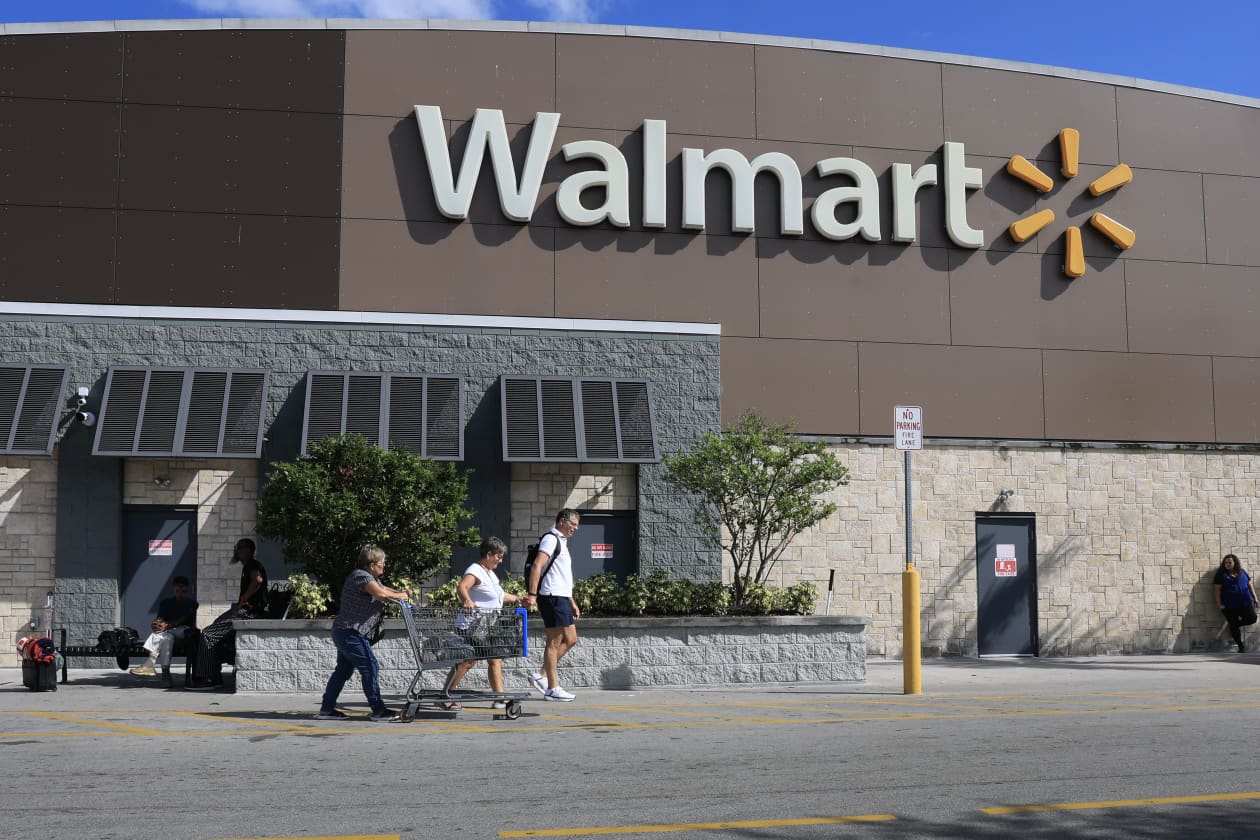
Walmart said the average gallons pumped per customer fell below 10 in the latest quarter, the first sub-10 reading since 2022, signaling pressure on consumer budgets as U.S. gas prices approach $4.60 a gallon. CFO John David Rainey framed the decline as an indication of stress tied to higher fuel costs and the Iran war’s impact on energy prices. The update is a modest negative read-through for consumer spending and fuel-sensitive retail demand.
This is less a one-off Walmart datapoint than a high-frequency read on household liquidity. A sub-10-gallon fill-up suggests consumers are responding to price shock by rationing miles immediately, which is a classic early-stage demand compression signal before it shows up in discretionary baskets. The first-order winner is anyone exposed to lower per-trip spending and fewer impulse purchases; the second-order loser is the broad middle of retail, where traffic can hold up while ticket size silently deteriorates.
The bigger macro implication is that energy inflation is now feeding back into non-energy demand with a lag of days to weeks, not quarters. If gasoline stays in the mid-$4s, expect elevated pressure on lower-income households first, then gradual spillover into mass market categories, private label mix, and automotive-related categories. That tends to favor defensive retailers with superior unit economics, but even they can face margin dilution if customers trade down harder than expected.
The contrarian point is that this may be a threshold effect rather than a linear deterioration: consumers often absorb fuel pain until it forces route optimization, carpooling, and trip consolidation, after which demand can stabilize even if prices remain high. That means the near-term earnings risk is more about mix than outright sales collapse. For the market, the key question is whether this is a short-lived shock tied to geopolitics or the start of a broader consumer confidence reset; if gas rolls over, the signal fades quickly, but if it stays elevated for 1-2 months, second-order damage to retail comps and margins can compound.
AI-powered research, real-time alerts, and portfolio analytics for institutional investors.
Overall Sentiment
mildly negative
Sentiment Score
-0.25
Ticker Sentiment
