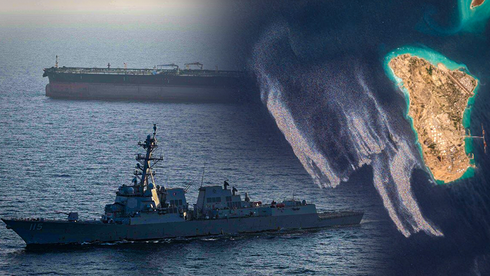
The U.S. military said Iranian forces attacked three U.S. destroyers in the Strait of Hormuz, while the U.S. struck Iranian missile, drone, command-and-control, and ISR sites in response. Satellite imagery also showed fresh oil slicks near Kharg Island, Iran’s main export hub, raising concerns about a spill or disruption tied to the blockade. The situation remains highly fluid, with Iran threatening further retaliation and later state TV reporting a return to routine.
The market is underpricing how quickly a localized maritime clash can morph into a shipping-insurance and inventory problem. Even without a sustained closure of Hormuz, a credible threat premium can widen tanker rates, raise war-risk coverage, and force refiners to pre-buy barrels, which is more important for prices over the next 1-3 weeks than the physical damage itself. The fresh oil slick near the export hub is a second-order signal: whether leak or intentional discharge, it raises the probability of environmental scrutiny, temporary loading interruptions, and reputational pressure on counterparties handling Iranian crude.
Defense beneficiaries are less about the destroyers involved and more about the broader U.S. naval posture and magazine depletion dynamics. If this becomes a recurring tit-for-tat, the economically relevant question is not ship survivability but interceptor burn rates: every additional engagement supports demand for Aegis-related upgrades, point-defense systems, and munitions replenishment over a multi-quarter window. That tends to favor primes with missile-defense exposure more than platform-only names, and it also strengthens the case for accelerated procurement budgets if regional partners perceive U.S. guarantees as more expensive to maintain.
Energy is the clearest near-term transmission channel. The biggest loser is not just Iranian export capacity; it is marginal Asian importers and refined-product consumers who are forced to source replacement barrels from longer-haul suppliers, tightening freight and widening product cracks. If the slick reflects storage overflow or forced disposal, that suggests Iranian logistics are already stressed, which means the next leg of disruption could come from operating bottlenecks rather than direct attacks — a more persistent problem because it is harder to reverse quickly.
The contrarian view is that this may be a volatility event, not a structural supply shock. If Saudi messaging and the reported ‘return to routine’ are genuine de-escalation signals, risk premium can collapse fast, especially if no follow-on damage emerges within 48-72 hours. That creates a tradeable asymmetry: long energy beta into the first headline-driven spike, but fade it aggressively if shipping routes normalize and there is no evidence of sustained export disruption.
AI-powered research, real-time alerts, and portfolio analytics for institutional investors.
Request DemoOverall Sentiment
strongly negative
Sentiment Score
-0.55
Ticker Sentiment
