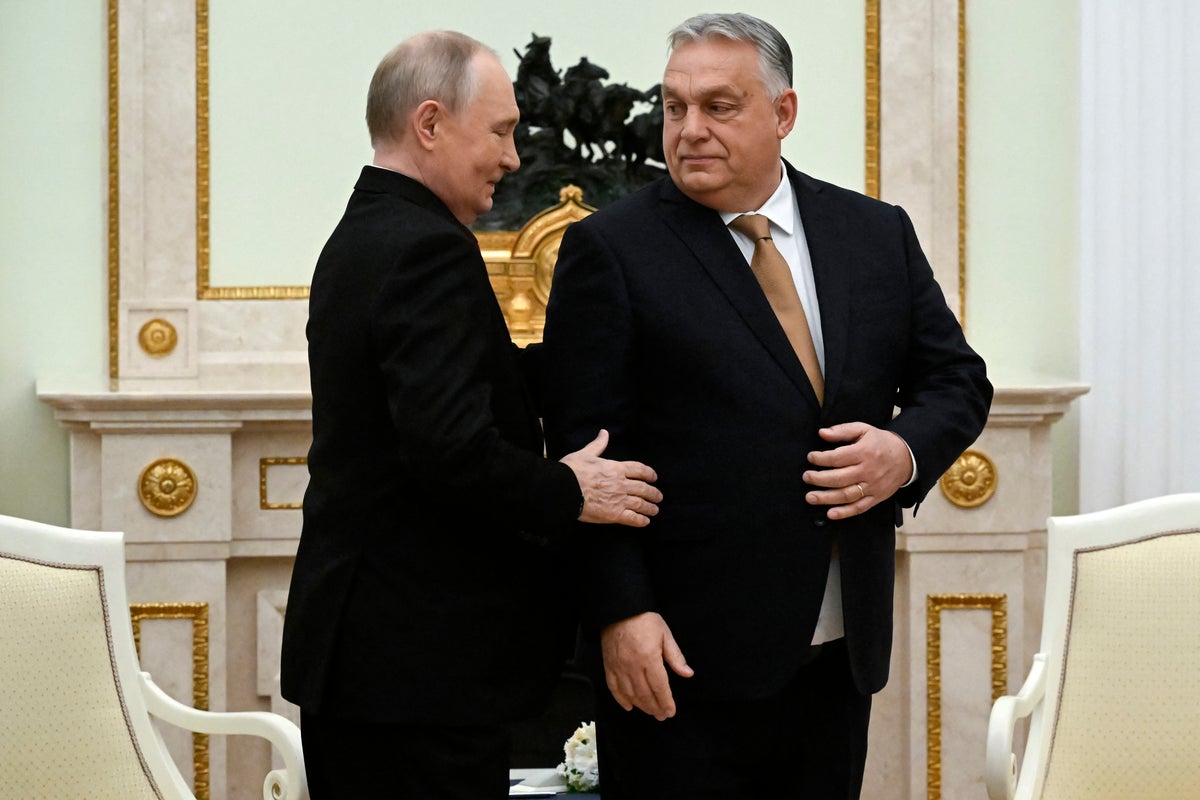
The Kremlin signaled it is distancing itself from Hungary after Viktor Orban’s landslide election defeat, saying it was "never friends" with him and that Hungary remains an "unfriendly country." Moscow said it will seek pragmatic ties with Peter Magyar’s new government, but the outlook is uncertain given Hungary’s role on Russia sanctions, EU support for Ukraine, and continued reliance on Russian oil and gas.
The immediate market read is not about a regime shift in Hungary so much as a reduction in one of Moscow’s few usable EU veto vectors. The first-order effect is a modest improvement in the probability distribution for incremental EU support mechanisms for Ukraine, but the second-order effect is more important: Russia’s leverage inside the bloc becomes less about formal obstruction and more about energy and price sensitivity in member states that still depend on Russian molecules. That makes this a gradual catalyst, not a binary one; the market should think in quarters, not days.
The biggest beneficiary is European sovereign and defense optionality, not Hungarian assets per se. If Budapest’s new leadership is less willing to act as a blocking minority, then over the next 3-9 months Brussels has slightly better odds of extending financing, sanctions renewal, and procurement coordination, which supports EU defense primes and select Eastern European infrastructure names. The loser set is broader than Russia: any company whose thesis depends on a soft EU posture toward energy sanctions or fiscal support for Ukraine should see lower odds of policy reversal.
The contrarian point is that the transition may preserve more continuity than headlines imply. Hungary still has economic incentives tied to discounted energy, and any government in Budapest will resist a sharp break if it risks inflation or industrial disruption. That means the market may be overpricing the speed of policy normalization; the real upside for Ukraine-linked risk assets likely comes only if the new government is willing to trade some near-term energy pain for longer-term EU alignment.
Tail risk is a rapid deterioration in Russian relations if Moscow tests the new government with pricing, pipeline, or supply tactics. That would hit Central European utilities and refiners first, then spill into broader European gas sentiment within days. The cleaner medium-term setup is a slow unwind of Russia’s diplomatic optionality, which favors long-duration beneficiaries while leaving the near-term commodity complex largely unchanged.
AI-powered research, real-time alerts, and portfolio analytics for institutional investors.
Request TrialOverall Sentiment
mildly negative
Sentiment Score
-0.15
