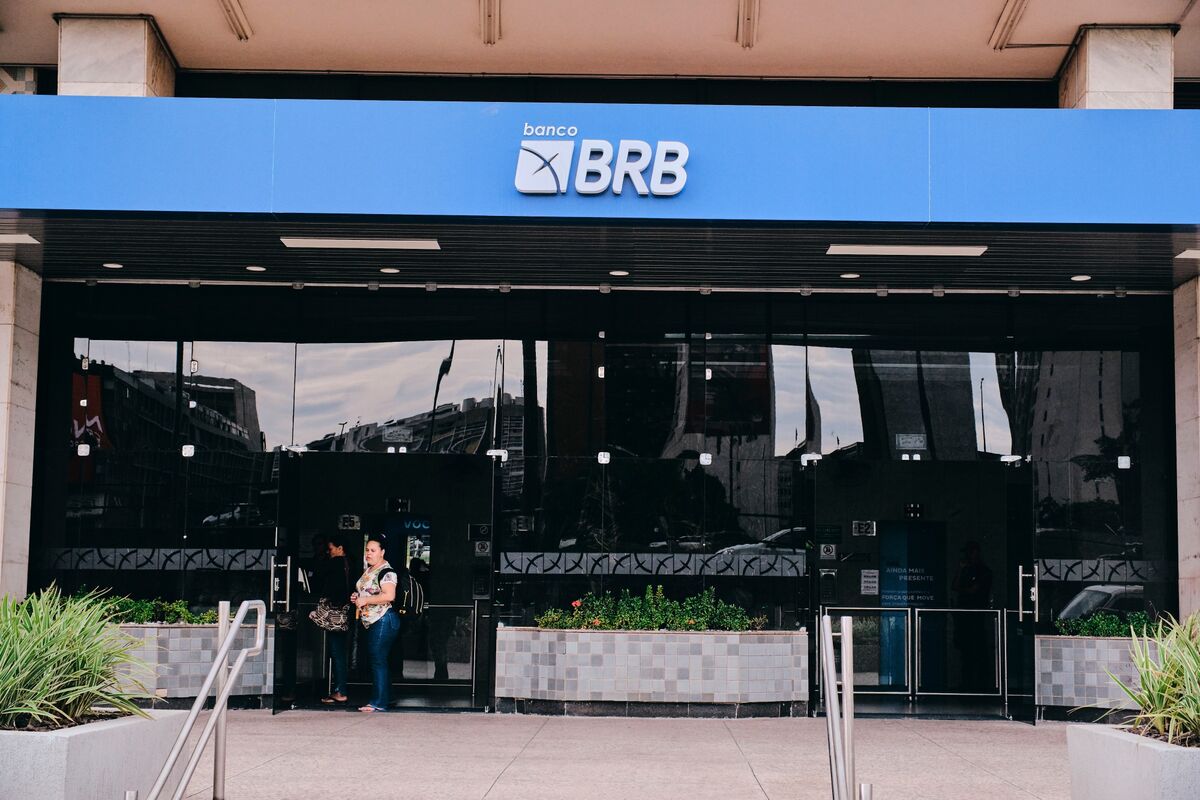
A Brasilia court barred the local government from transferring public real estate assets to Banco de Brasilia (BRB), blocking a proposed rescue option. The decision complicates BRB's efforts to fill a financing hole tied to transactions with failed Banco Master SA and raises funding/solvency uncertainty. Expect increased downside risk for BRB, potential pressure on regional bank credit spreads, and a need for alternative capital or government support measures.
This ruling removes a low-cost, politically palatable recap tool and shifts the likely adjustment path toward cash measures—deposit flight, forced asset sales, or a dilutive capital raise. Expect immediate market attention over the next 48-72 hours via higher short-term funding spreads for similarly sized regional lenders and wider interbank term rates as dealers re-price idiosyncratic legal risk into regional credit curves.
Second-order winners are large, well-capitalized universal banks that can credibly accept deposit inflows and widen lending share; losers are small banks, municipal credit instruments and any counterparties sitting on mark-to-market exposures tied to these lenders. Real-estate markets face a knock-on risk: if the bank liquidates collateral at pace, local commercial/residential values in the impacted micro-markets can see a 10-20% markdown versus broader national indices over 3-6 months, pressuring mortgage servicers and non-bank lenders.
Key catalysts: in days–weeks, headline-driven deposit movement and short-term funding repricings; in 1–6 months, private capital raises, asset sales or federal/wholesale liquidity backstops (or absence thereof) will determine survival value. A successful legal appeal or a federal policy tweak to allow alternative recap mechanisms would rapidly reverse spreads; conversely, a failed recap or a negotiated fire-sale would lengthen credit spread dislocations for quarters.
Monitor market signals: 3-month interbank spreads, secondary prices on regional bank debt (if available), and FX/sovereign risk premia. The most probable path is constrained municipal options forcing either dilutive capital or subsidized liquidity—both create asymmetric outcomes for equity and debt holders and open a narrow window for tactical volatility trades.
AI-powered research, real-time alerts, and portfolio analytics for institutional investors.
Request DemoOverall Sentiment
mildly negative
Sentiment Score
-0.40
