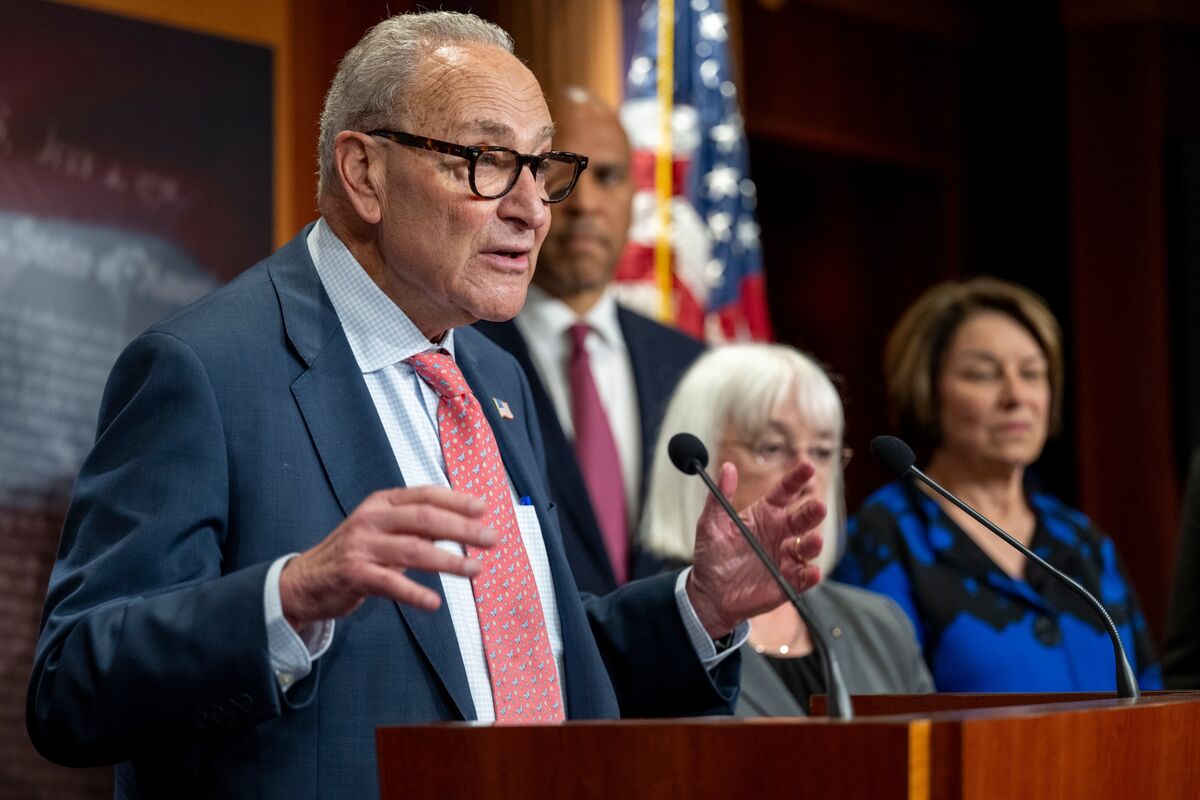
Democratic congressional leaders Chuck Schumer and Hakeem Jeffries have demanded a meeting with President Trump to address a looming government shutdown, following the Senate's failure to pass rival stopgap spending measures. With President Trump himself predicting a shutdown, the impasse signals significant political gridlock that could introduce market uncertainty and impact economic data releases.
The demand for a meeting between Democratic congressional leaders and President Trump underscores the significant political gridlock ahead of a potential U.S. government shutdown. This follows the Senate's inability to pass rival stopgap funding measures, signaling deep partisan division. The risk is amplified by President Trump's own statement predicting a shutdown is "likely," which contributes to the moderately negative sentiment and market uncertainty surrounding fiscal policy. The situation represents a material macroeconomic risk, as reflected by the market impact score of 0.6, with potential consequences including short-term market volatility and, critically, a halt in the release of key economic data, which would obscure visibility for investors.
AI-powered research, real-time alerts, and portfolio analytics for institutional investors.
Request DemoOverall Sentiment
moderately negative
Sentiment Score
-0.50
