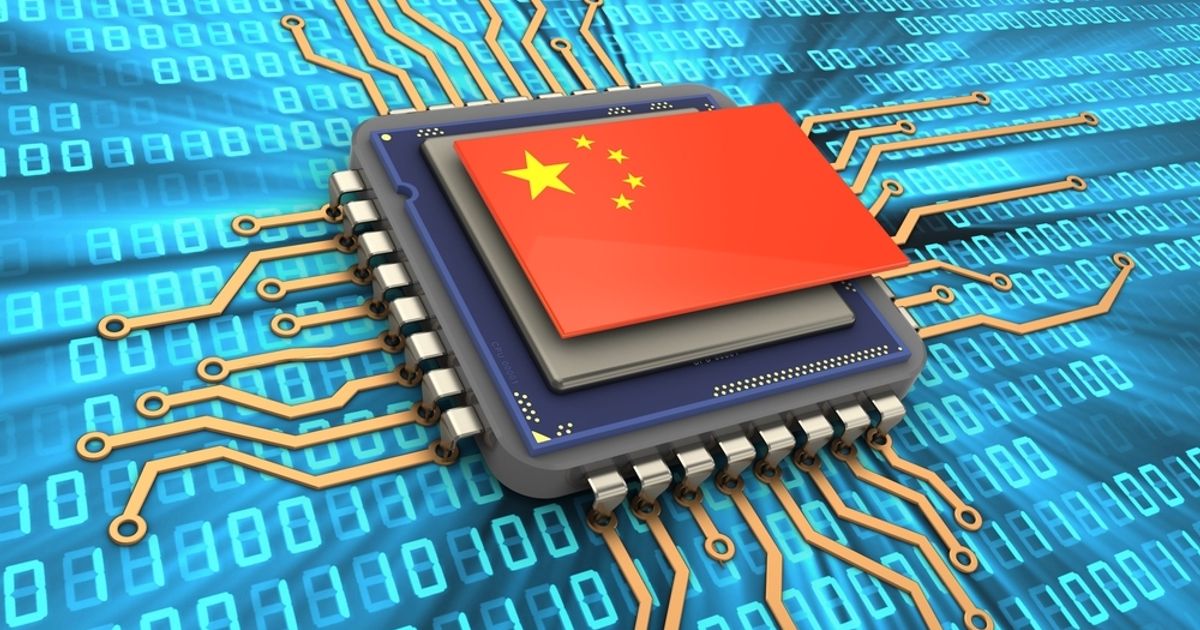
Chinese customs have been instructed that Nvidia's H200 AI chips are not currently permitted to enter China and domestic tech firms have been informally advised not to purchase them, effectively creating a de facto halt despite a recent U.S. export clearance with conditions. The move injects fresh uncertainty into U.S.–China tech relations and supply chains: the H200 markedly outperforms the prior H20 and domestic alternatives like Huawei’s Ascend, demand in China reportedly outstrips Nvidia’s supply, and officials may be seeking leverage or breathing space for domestic chipmakers.
Market structure: A China de-facto ban on Nvidia H200s is an immediate negative for NVDA’s China revenue and pricing power; expect 5–15% near-term revenue at risk in data-center segment if orders are delayed or cancelled, while AMD (AMD) and domestic Chinese chip vendors gain timing/market-share tailwinds for select workloads. Cloud providers (AMZN, MSFT, GOOG) face higher procurement friction and likely short-term capex re-phasing but retain bargaining power globally. Supply/demand: demand for high-end accelerators remains structurally strong, so a temporary channel choke will boost global allocation competition and implied volatility rather than remove long-term scarcity.
Risk assessment: Tail risks include full China-wide ban, US counter-restrictions widening decoupling, or a rapid Chinese subsidy program that accelerates competitive domestic alternatives — any could move NVDA by +/-20–40% over 3–12 months. Near-term (days–weeks) headline volatility and inventory revelations matter most; medium-term (quarters) hinge on formal Chinese policy and US diplomatic responses; long-term (years) is a contest between NVDA moat vs China’s industrial policy. Hidden dependencies: Nvidia’s revenue cadence depends on hyperscaler pre-orders and customs enforcement consistency; catalysts: Chinese formal policy, US Treasury/Commerce statements, NVDA sales disclosures and earnings.
Trade implications: Expect NVDA single-stock IV and event skew to spike; short-dated protective puts or put spreads capture this headline pain, while directional longs in AMD/other allowed suppliers capture share gains. Cross-asset: risk-off could push funds to US Treasuries (2s/10s flattening), strengthen USD/CNH downside, and temporarily depress commodity cyclicals tied to Chinese capex. Timing: act within 1–6 weeks for hedges and re-weights; wait for policy clarifications (>30–60 days) to take larger directional bets.
Contrarian angle: The market may over-penalize NVDA assuming permanent China exclusion — history (Huawei/2019 controls) shows short-term disruption with longer recovery; NVDA’s software/hardware ecosystem is hard to replicate, implying underpriced recovery optionality beyond 6–12 months. Conversely, the consensus underestimates how quickly Beijing could redirect tens of billions to domestic chips, creating a secular competitor over 2–5 years. Unintended consequences include accelerated global allocation to Nvidia outside China, keeping pricing tight for other customers and cushioning revenue diverted to different regions.
AI-powered research, real-time alerts, and portfolio analytics for institutional investors.
Request DemoOverall Sentiment
moderately negative
Sentiment Score
-0.40
Ticker Sentiment
