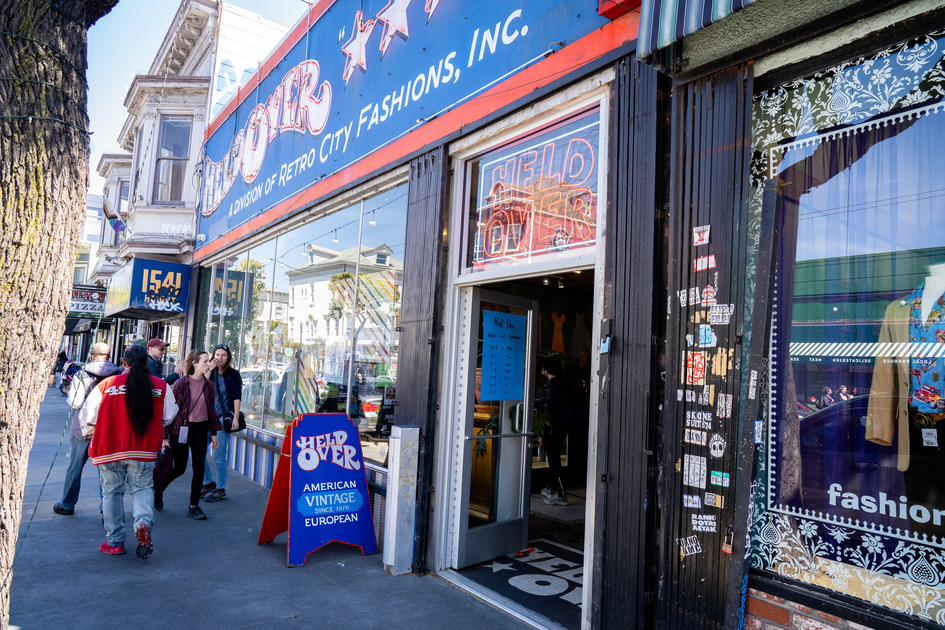
Held Over vintage in San Francisco is closing on Saturday, May 30, with all items discounted to $9 in a fire-sale event. The store's four employees will be laid off, and owner Cynthia Anderson cited slumping sales, high rent, and her inability to sign a new five-year lease as key reasons for the closure. Anderson said she plans to keep the brand alive online after moving inventory to two Mission warehouses.
This is a micro-signal for discretionary retail real estate, not a broad consumer demand shock. The immediate takeaway is that small-format, highly curated vintage and thrift concepts are structurally vulnerable when the operating model depends on low labor intensity, legacy leases, and owner-operator continuity; once that continuity breaks, the business can tip from resilient to unfinanceable very quickly. The likely winners are adjacent resale channels that can absorb displaced inventory at distressed prices, especially online marketplaces and larger thrift operators with better rent coverage and centralized sourcing.
The second-order effect is on neighborhood retail mix: when an anchor nostalgia merchant exits, nearby foot traffic typically decays faster than the lost sales alone would imply, because these stores function as destination nodes for low-frequency browsing trips. That hurts complementary small businesses more than the closing store itself. In a high-rent environment, the longer-run beneficiary is any retailer with higher inventory turns, stronger omnichannel capabilities, and less dependence on one physical location to monetize brand equity.
The contrarian read is that the closure is not a clean read-through on consumer weakness; it may instead be an idiosyncratic governance/transition failure amplified by estate issues, aging ownership, and lease reset risk. In other words, the market should not extrapolate this into a broad collapse in vintage demand. If anything, demand for secondhand fashion remains intact, but the value migrates from storefront rent economics to platform economics, warehouse liquidation, and social-commerce distribution.
For investors, the cleanest expression is to favor the consolidation winners rather than shorting the category. The tape should prefer operators that can source distressed inventory and move it online, while standalone urban niche retailers with near-term lease renewals remain exposed over the next 6-18 months. If macro spending weakens, the losers are the least differentiated physical stores first; if spending stabilizes, the closure still persists because the binding constraint is cost structure, not demand.
AI-powered research, real-time alerts, and portfolio analytics for institutional investors.
Request DemoOverall Sentiment
mildly negative
Sentiment Score
-0.35
