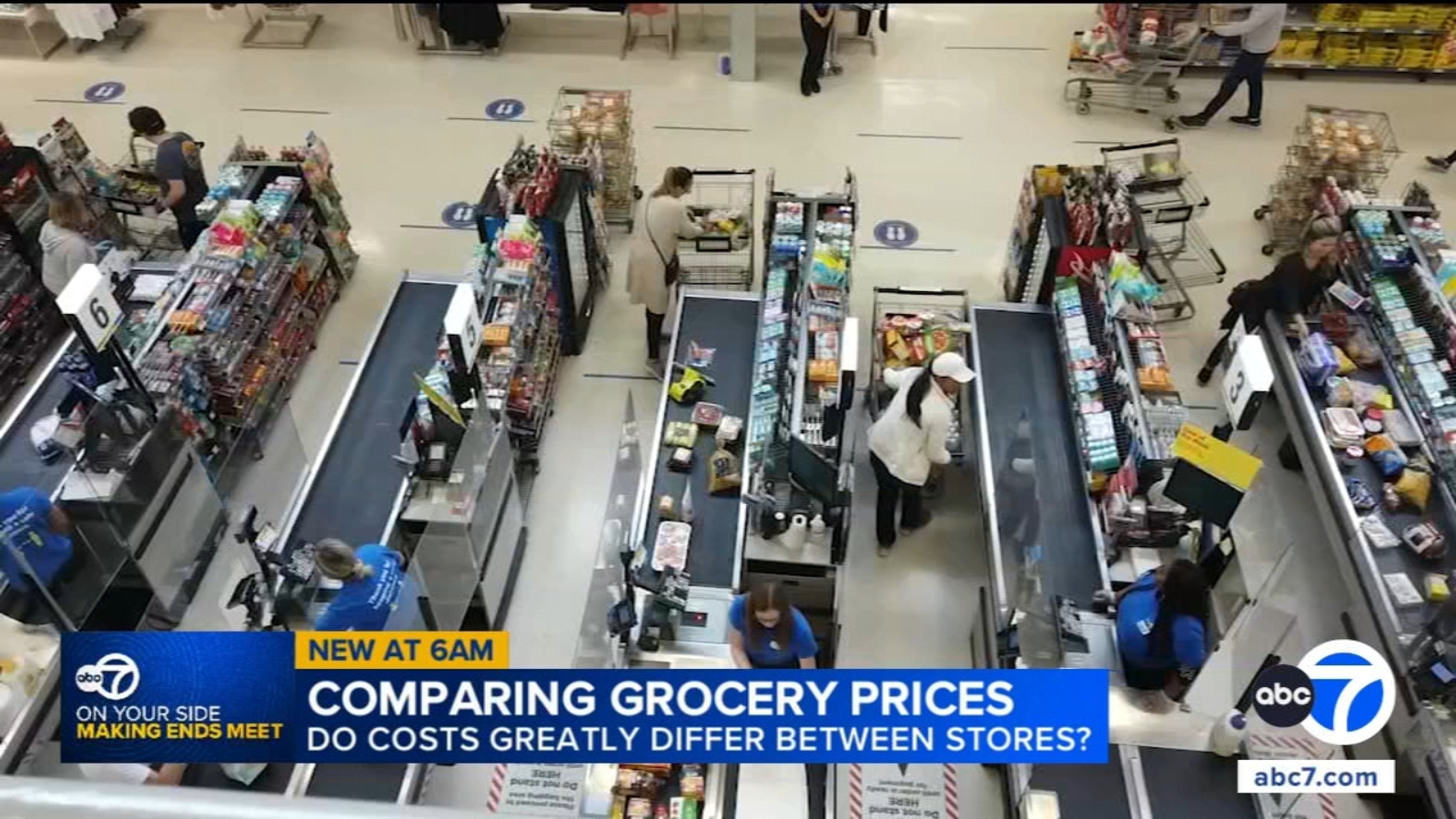
Grocery prices for five common staples were tightly clustered across retailers, with total baskets ranging from $19.93 at Costco to $25.26 at Ralphs. Grocery Outlet totaled $23.25 and Amazon Fresh $21.52, while Costco was cheapest but required larger package sizes and a membership fee. The piece highlights continued consumer sensitivity to food costs, but it is mostly a shopping comparison and likely has limited market impact.
The competitive read-through is that grocery pricing is becoming less about absolute inflation and more about basket architecture. Large-format, membership-based, and online-enabled players can keep headline prices tight by sacrificing margin on staples while monetizing frequency, household penetration, and fulfillment convenience elsewhere. That favors operators with scale and data-driven pricing, but it also means the apparent price war can mask margin compression in the most visible SKUs, especially if consumers become more item-specific and less loyal to a single banner.
For COST specifically, the low basket price is a demand signal, but not necessarily a free lunch. Costco’s edge is strongest when shoppers buy into the full trip economics; if consumers cherry-pick staples, the company gives up more margin leverage than conventional grocers because the economics depend on high renewal rates and larger baskets. The second-order risk is that sustained gas-price pressure and convenience-driven shopping could channel traffic toward closer-format and digital players, pressuring warehouse frequency over time even if unit share stays resilient.
The broader retail implication is that deflation in a narrow set of staple items is usually a lagging indicator of household stress, not a benign sign of easing inflation. That tends to help discounters and private-label-heavy grocers first, but it can also trigger more promotional intensity across the sector as operators defend traffic. The contrarian angle is that the market may be underestimating how long consumers will trade down if wage growth cools; if that persists for 2-3 quarters, margin pressure can show up in food retail before volume weakness becomes visible in reported comps.
AI-powered research, real-time alerts, and portfolio analytics for institutional investors.
Overall Sentiment
neutral
Sentiment Score
-0.05
Ticker Sentiment
