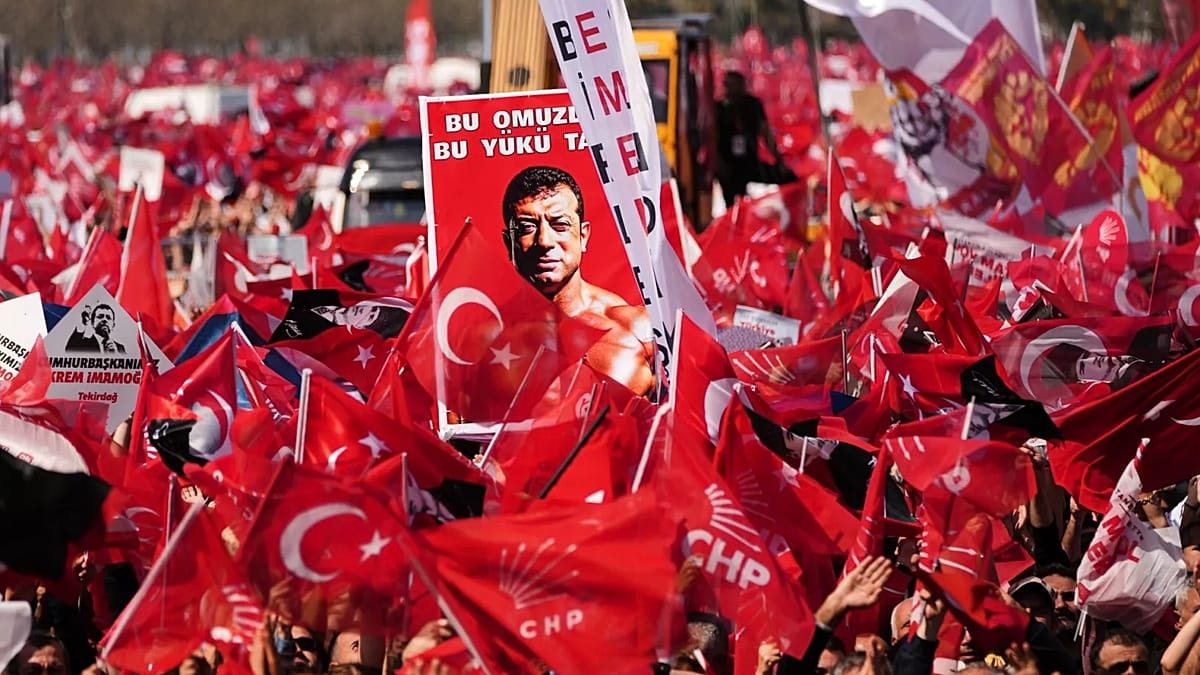
A Turkish court annulled the CHP’s November 2023 leadership election and ordered former chair Kemal Kılıçdaroğlu to serve as interim leader, escalating political pressure on the country’s main opposition party. The ruling triggered a drop of more than 6% in Istanbul’s BIST 100, indicating immediate market concern over political stability and governance risk. The case centers on alleged vote buying and comes amid broader legal pressure on opposition figures, including Istanbul mayor Ekrem İmamoğlu.
This is less about one opposition party and more about the regime re-pricing the probability distribution of Turkish governance over the next 6-18 months. If the judiciary can be used to destabilize the only credible electoral alternative, domestic investors will demand a higher political risk premium across lira assets, and foreign allocators will continue to treat any rally in Turkish risk as a fade rather than a trend. The immediate market move is likely only the first leg; the larger effect is a deterioration in forward capital formation, because corporates will hesitate to extend duration or add capacity when policy continuity looks contingent on court calendars.
The second-order winner is the central-government-backed status quo: state-linked banks, public contractors, and firms with pricing power and hard-currency revenues should outperform relative to domestic cyclicals. But even those names are not clean longs, because a deeper opposition crackdown raises the odds of capital controls, administrative interventions, or renewed FX management if lira weakness accelerates. The biggest medium-term loser is the domestic consumption complex: retailers, real estate, and leveraged industrials are exposed to a combination of weaker confidence, higher funding costs, and more aggressive policy tightening to defend the currency.
The key catalyst path is not the court ruling itself but the next 1-4 weeks of street reaction and any follow-on legal actions against CHP-aligned municipal figures. If protests broaden or the judiciary moves on İmamoğlu again, the market can see a second wave of de-risking that hits banks and the sovereign curve before equities fully reprice. The contrarian view is that this may ultimately reinforce Erdogan’s control but at the cost of policy orthodoxy; that is bearish for Turkey as an asset class even if it is superficially stabilizing for the ruling bloc.
AI-powered research, real-time alerts, and portfolio analytics for institutional investors.
Request DemoOverall Sentiment
strongly negative
Sentiment Score
-0.65
