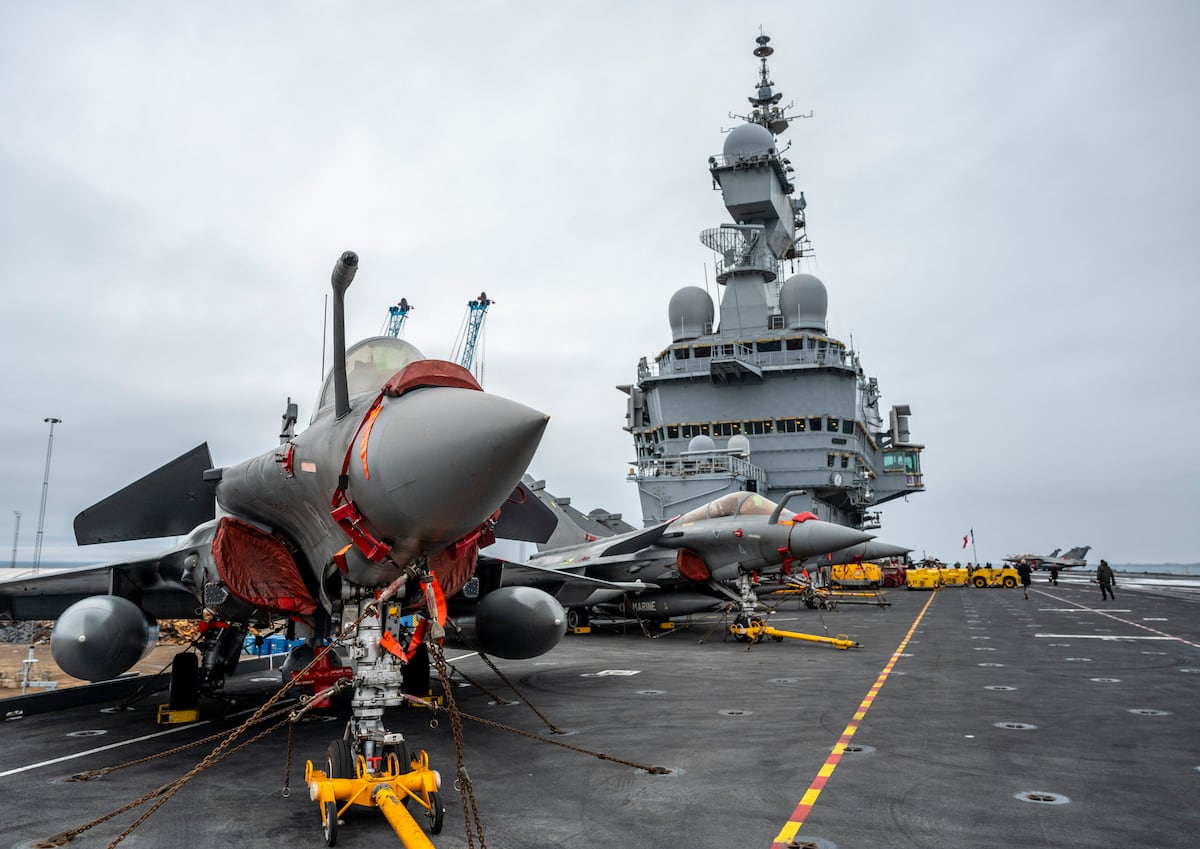
A Swedish Navy vessel intercepted and disrupted a drone suspected to be of Russian origin approximately 13 km from the French nuclear-powered carrier Charles de Gaulle anchored in Malmö; contact with the unmanned aerial system was lost after countermeasures and Swedish authorities launched an investigation into a probable violation of Swedish airspace. Swedish and French officials noted no disruption to the carrier’s operations, but open-source tracking spotted Russian-flagged vessels in the vicinity, including the U.S.-sanctioned Sparta IV; the episode underscores rising regional tensions, potential implications for defense procurement (including Sweden’s planned electronic warfare and drone-detection buys) and the operational context of ongoing NATO Orion 2026 exercises.
Market structure: This incident is a marginal but directional positive for defense primes and niche EW/drone specialists. Expect 6–18 month boost in procurement visibility for RTX, LHX, NOC and drone/EW names (KTOS, ESLT, SAAB-B.ST) as NATO/Sweden accelerate sensor and ship-based detection spend; pricing power for EW platforms can lift margins by 100–300bps in contract years. Commercial shipping/flagged cargo operators and insurers face incremental regulatory and insurance-cost pressure, compressing profitability in the short run.
Risk assessment: Tail risks include a larger NATO–Russia escalation that could spike European gas/oil by >15% and push FX volatility (EUR/SEK down >3% in 72 hours) and safe-haven flows into Treasuries/gold. Immediate (days): local risk-off and FX pain; short-term (weeks–months): RFPs and procurement budgets; long-term (1–3 years): sustained defense capex but execution and budget reallocation risks. Hidden dependency: actual contract wins lag political announcements by 3–12 months; counterparty sanctions or supply-chain export controls could delay deliveries.
Trade implications: Tactical winners—prime defense contractors and EW specialists; tactical losers—European small-cap shipping, leisure and insurers. Use concentrated, time-boxed exposure: 6–12 month directional plays into RTX/LHX/NOC and 3–9 month structured option exposures on KTOS/ESLT to capture re-rating without full equity downside. Cross-asset: buy short-dated gold as a tail hedge and be long USD/short SEK in event of escalation.
Contrarian angle: The market may over-index to headline risk; one intercepted drone is unlikely to trigger broad sanctions or immediate energy shock. This underpins a strategy of buying selective defense exposure through options (as insurance) rather than huge outright longs; conversely, avoid indiscriminate shorting of global shipping—only target names with direct Russia/Syria exposure or sanction risk. Historical parallels (Crimea/2014) show defense primes rerating by ~10–30% over 12–24 months, but only after confirmed procurement pipelines.
AI-powered research, real-time alerts, and portfolio analytics for institutional investors.
Request DemoOverall Sentiment
mildly negative
Sentiment Score
-0.25
