



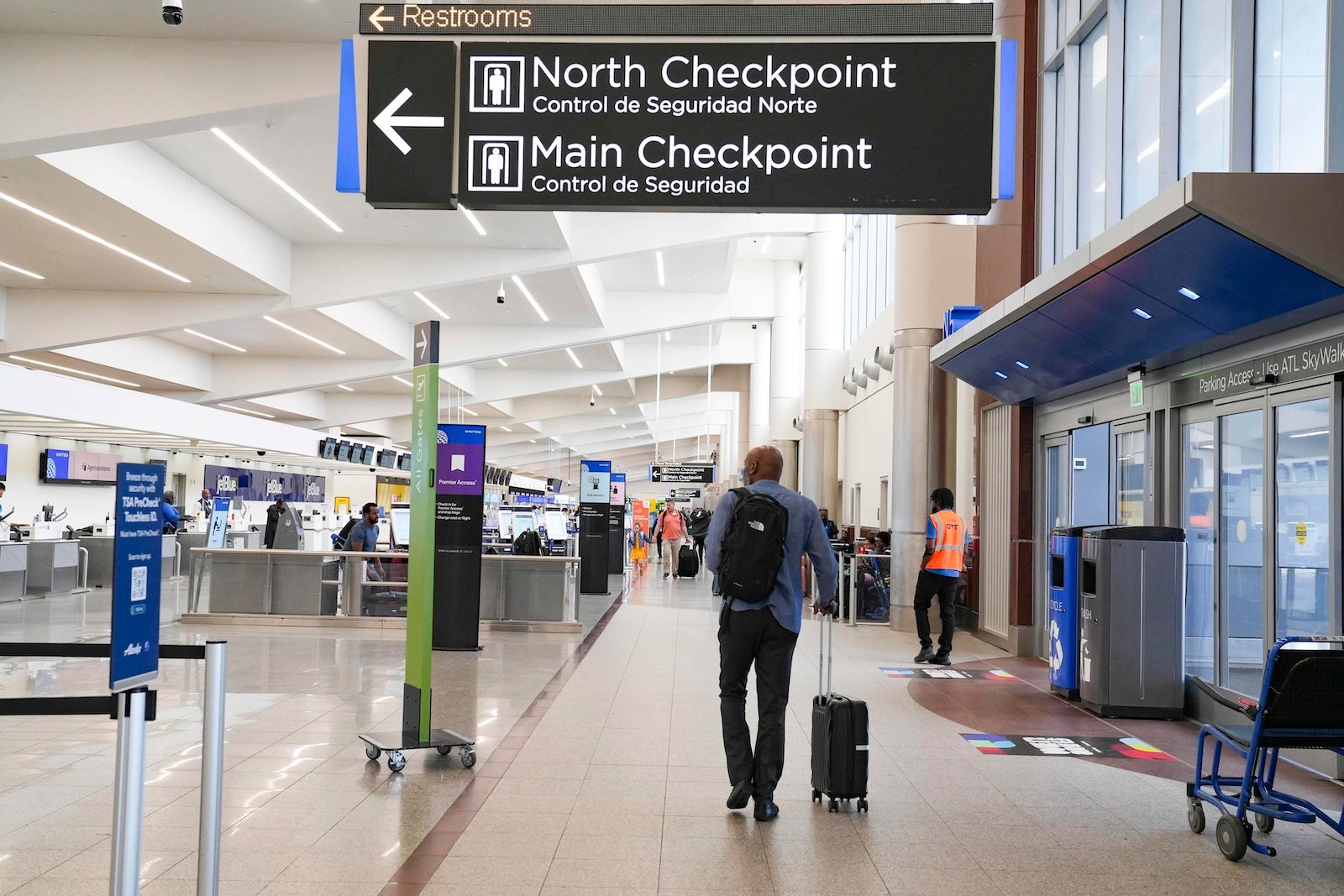
Atlanta Hartsfield-Jackson remained the world's busiest airport in 2025 with 106.3 million passengers, marking its 27th title in 28 years. Dubai ranked second at 95.2 million, while Tokyo Haneda rose to third and Chicago O'Hare climbed to sixth with an 11% increase in takeoffs and landings and 6% more passengers. Shanghai Pudong posted the biggest jump, rising from 10th to 5th, while Heathrow and Denver both slipped in the rankings.
The market takeaway is not “ATL is still #1,” it’s that U.S. hub concentration is becoming more valuable to the network carriers while the marginal airport winner is increasingly determined by schedule density rather than broad demand. ATL’s durability reinforces Delta’s ability to defend premium pricing and connection share, but the bigger second-order effect is that capacity additions at ORD are forcing a re-rating of domestic feed economics: when two carriers race for gates and slots, yields often get diluted before volume fully offsets it. That is a setup where the headline passenger gain can mask weaker unit revenue quality over the next 2-3 quarters.
The most actionable signal is the divergence between passenger counts and aircraft movements. ORD’s lift in takeoffs/landings implies more frequency, smaller average stage lengths, and potentially lower load-factor efficiency; that favors network-share gains for the incumbents only if they can avoid a fare war. If the FAA steps in to cap congestion, the first-order loser is the aggressive capacity builder, but the second-order loser is anyone relying on incremental ORD feed to sustain domestic margins into summer 2026.
The contrarian read is that Shanghai’s jump and the international-passenger leadership of non-U.S. hubs suggest a broader normalization of global travel patterns, which could be more supportive for long-haul premium demand than domestic U.S. traffic alone. That makes the current consensus too U.S.-centric: airline investors may be overreacting to domestic hub-share headlines while underappreciating that transpacific/transatlantic mix, not total passengers, is the cleaner profit driver. The risk is that if domestic capacity keeps expanding faster than demand, the industry sees a lagged yield reset rather than a benign volume rebalancing.
AI-powered research, real-time alerts, and portfolio analytics for institutional investors.
Request TrialOverall Sentiment
neutral
Sentiment Score
0.10
Ticker Sentiment
