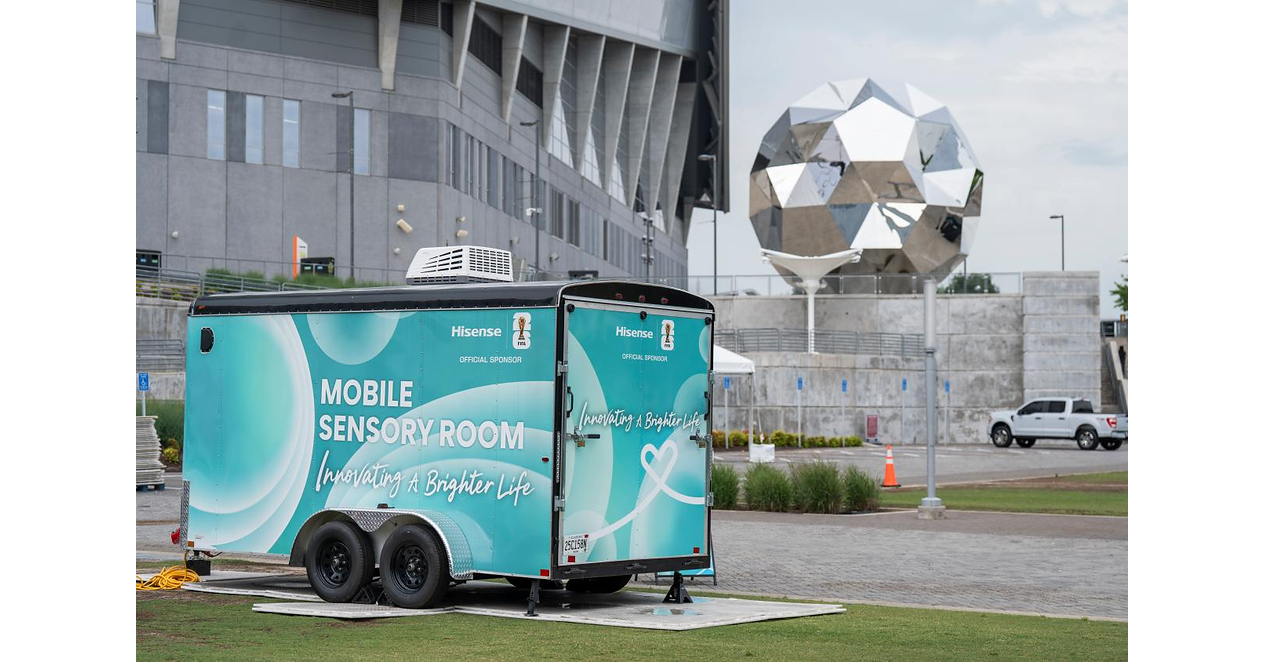
Hisense announced a FIFA 2026 partnership with KultureCity to improve sensory-accessibility in match days across all 16 host cities in China. The plan includes mobile sensory vehicles at stadium entrances and dedicated sensory rooms in commercial exhibition areas, supported by Hisense high-quality TVs showing relaxing ambient visuals for fans with autism and other sensory processing needs. The news is positive from an ESG/inclusion standpoint but is unlikely to materially move financial markets near term.
This reads as low-conviction brand activation, not a fundamental earnings event. The real mechanism is channel leverage: a visible, values-based sponsorship can help a consumer electronics vendor defend shelf space and negotiating power with North American retailers ahead of a global sports cycle, but the P&L impact is delayed and likely small unless it translates into measurable share gains in TVs and large-format displays.
Second-order, the more interesting effect is competitive positioning around “accessible venue tech.” If major events start treating sensory-friendly infrastructure as a standard sponsorship requirement, that creates a soft procurement tailwind for display, signage, and in-venue AV vendors; Samsung and LG are the obvious benchmarks to watch because they can monetize the same trend with higher brand credibility and stronger distribution. The contrarian view is that the market often overvalues ESG-flavored announcements: without channel inventory improvement, pricing discipline, or product pull-through, this remains reputational upside rather than a revenue inflection.
Catalyst-wise, the relevant window is 6-18 months, when World Cup marketing can influence retailer commitments and brand recall; the next 1-3 months should be treated as noise unless there is follow-on retail data, U.S. market share disclosure, or a new sponsorship announced by a rival. What would falsify the thesis is continued share loss in global TV/APpliance rankings or evidence that the event program is being used purely for PR with no incremental distribution or sell-through benefit.
AI-powered research, real-time alerts, and portfolio analytics for institutional investors.
Request TrialOverall Sentiment
mildly positive
Sentiment Score
0.18
