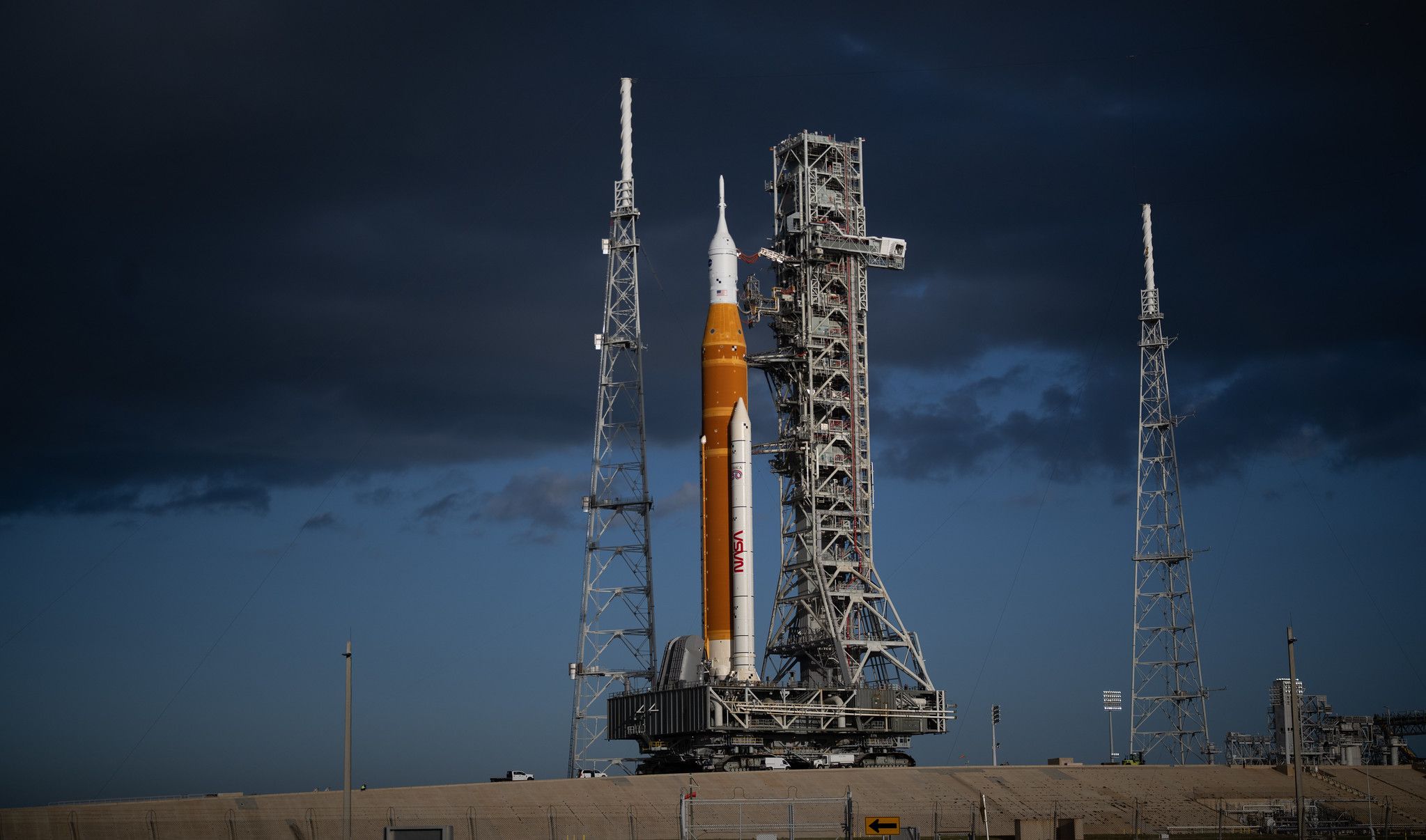
Artemis 2's SLS rocket was rolled to LC-39B on March 19 after an 11‑hour, 4‑mile crawler transit following weeks of VAB repairs to resolve an upper‑stage helium pressurization issue and replace flight batteries and an electrical harness. The 322 ft (98 m) stack weighs ~3.5 million lb dry and >5.75 million lb when fueled; NASA is targeting the April 1 launch window (opportunities through April 6 and another window April 30) for the 10‑day crewed lunar flyby, with final go/no‑go contingent on remaining prelaunch checks.
Large aerospace primes and specialized cryogenics/infrastructure suppliers are the immediate, under-acknowledged beneficiaries from sustained crewed lunar program execution: these firms convert program momentum into multi-year, high-margin service and retrofit work (think recurring ground systems, cryo-handling, and FTS harness replacements). Because these needs are capital-intensive and bespoke, incumbents with long-term NASA or DoD relationships capture outsized share and face high switching costs—translating to steady revenue visibility over the next 12–36 months even if launch cadence remains uneven.
A second-order industrial effect is the re-rating of heavy-haul logistics and niche engineering firms that maintain launchpads and crawler systems; demand for preservation, roadbed restoration, and precision battery/avionics swaps is less headline-grabbing but recurring. This raises the probability of predictable, contract-based cashflow for select mid-cap suppliers and engineering contractors versus lumpier launch-service names.
Key risks are concentrated and asymmetric: a single technical regression or a high-profile in-flight anomaly would rapidly reset political support and reprioritize funding within 60–180 days, while eventual competition from lower-cost, reusable commercial heavy-lift systems (3–5 year horizon) can erode the long-term program share. Helium supply tightness and specialty-electronics lead times create near-term execution risk that can force schedule slips and create option-like upside for supply-chain winners.
Consensus tends to treat each rollout as a binary PR event; investors should instead focus on the multi-year aftermarket for ground and cryo infrastructure. The mispriced opportunity is in high-quality suppliers with contracted or de facto capture of maintenance and retrofit spend—these names can compound returns even if headline launches slip.
AI-powered research, real-time alerts, and portfolio analytics for institutional investors.
Request DemoOverall Sentiment
mildly positive
Sentiment Score
0.20
