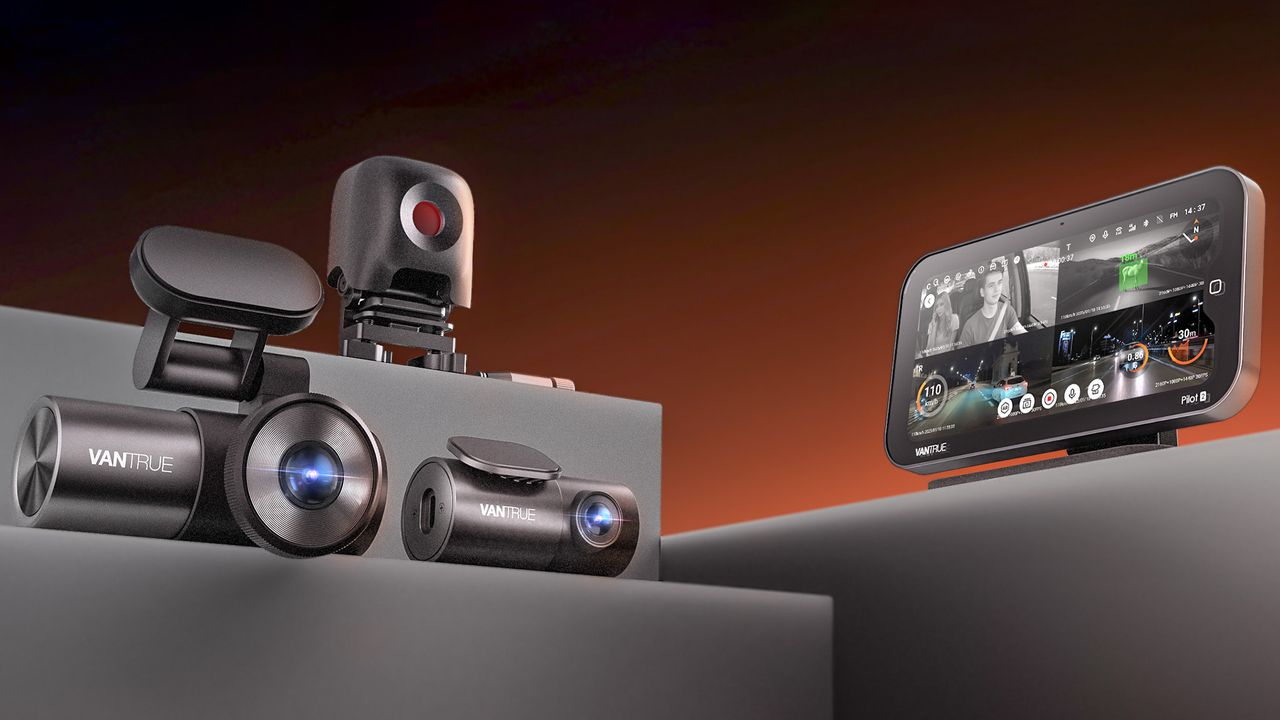
At CES 2026 Vantrue unveiled the Pilot 2, a four-component dashcam system consisting of a front dashcam, rear dashcam, 6.25-inch display and an external thermal module that provides night-vision hazard detection; the front/interior camera records at 1080p while the exterior and rear cameras record at 1440p. The unit also adds Apple CarPlay and Android Auto to older vehicles and is positioned as a lower-cost retrofit alternative to factory-integrated thermal systems found on ultra-premium EVs; pricing is unannounced but expected modestly above current four-channel dashcams (~$400).
Market structure: The Vantrue Pilot 2 mainly benefits aftermarket dashcam makers, thermal-sensor suppliers and retailers (Best Buy, AutoZone) by expanding TAM for premium safety accessories into older cars; OEMs that charge for built-in thermal systems (e.g., Cadillac/GM) face modest erosion of feature scarcity and pricing power. Expect pricing pressure on integrated-vehicle thermal premiums if compact, <$500 aftermarket units scale; suppliers of uncooled microbolometers could see order volatility and short-term ASP increases if demand surges by >20%.
Risk assessment: Tail risks include privacy/regulatory curbs (EU/CA data laws), product liability from false negatives, and supply-chain concentration for sensors (single-source microbolometer fabs). Immediately (days) market impact is limited to CES hype; over 3–12 months adoption and pricing reveal are key, while over 1–3 years platform integration (CarPlay/Android Auto support deals, retailer roll-outs) determines durable economics. Hidden dependency: the product’s value depends on Apple/Google compatibility and sensor lead times; a refusal/compatibility issue would materially reduce adoption.
Trade implications: Direct plays: long specialty sensor supplier exposure (Teledyne Technologies, TDY) and consumer retail/aftermarket (Best Buy BBY, AutoZone AZO) for 3–12 month adoption; consider limited short on ultra-premium OEM differentiation (GM) only if evidence shows >5% feature-share loss. Options: use 3–6 month call spreads on TDY/BBY to capture upside from adoption announcements while capping downside; size 1–2% portfolio per name. Rotate modestly into Consumer Electronics/Aftermarket Auto and out of a small slice of luxury-EV differentiation bets until adoption data confirms margin impact.
Contrarian angles: Consensus underestimates aftermarket ability to commoditize thermal sensing — if Vantrue prices near $400–600, demand could outstrip OEMs’ advantage and boost sensor suppliers by 10–25% over 12 months. Conversely, adoption may be overhyped: safety liability or poor real-world performance could kill demand quickly, creating a binary outcome; price discovery (first 60 days post-CES) is the make-or-break catalyst. Historical parallel: accessory camera waves (early dashcams, backup cams) saw rapid retail adoption that compressed ASPs but grew volumes; expect similar dynamics here.
AI-powered research, real-time alerts, and portfolio analytics for institutional investors.
Request DemoOverall Sentiment
moderately positive
Sentiment Score
0.40
Ticker Sentiment
