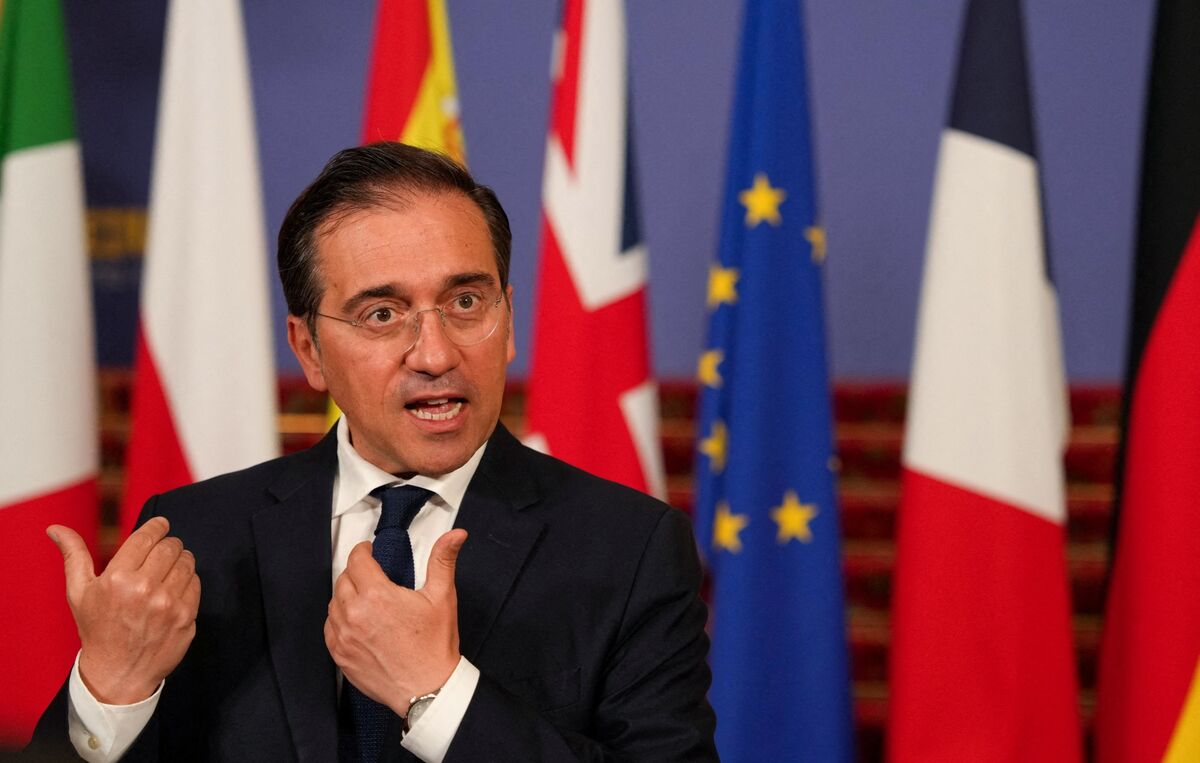
Spain renewed calls for the European Union to penalize Israel over its actions in Gaza, with Foreign Minister José Manuel Albares saying the bloc should tell Israel it must change course. The push may gain traction after Viktor Orban's election loss potentially removes a key obstacle to EU action. The article points to heightened geopolitical and policy risk, but no immediate market-moving decision was announced.
This is less about near-term EU policy and more about a slow-burning increase in Europe’s fragmentation risk premium. Even if Brussels cannot agree on hard measures, the signaling alone widens the gap between member states that prioritize human-rights enforcement and those that treat Israel ties as strategically indispensable, which tends to freeze decision-making rather than produce clean outcomes. The market implication is that the first-order effect is not a direct sector hit, but a gradual repricing of political volatility in European defense, industrial, and energy supply chains that rely on stable Mediterranean logistics and diplomatic coordination.
The bigger second-order risk is retaliatory policy drift. If the EU meaningfully escalates even symbolic measures, Israel is more likely to lean harder into non-EU trade relationships and faster domestic substitution, while firms with Israeli exposure face procurement delays, export-license friction, and higher compliance costs over the next 1-3 quarters. That matters most for defense electronics, cybersecurity, agritech, and dual-use industrial names with Europe-heavy revenue streams; the pain is usually not in headline sanctions, but in slower deal conversion and elongated cash cycles.
Catalyst-wise, the key watch item is whether the post-election balance in Europe converts rhetoric into any language around labeling, export restrictions, or targeted sanctions. If that happens, the move becomes much more actionable for markets within days, especially in sectors with licensing sensitivity; if not, this fades into headline risk and the trade is mostly about volatility compression. The contrarian view is that the consensus may be overestimating the odds of unified EU action: institutional veto points remain high, and the more aggressive the rhetoric gets, the more likely the outcome is a watered-down statement that creates noise without changing trade flows.
AI-powered research, real-time alerts, and portfolio analytics for institutional investors.
Request TrialOverall Sentiment
mildly negative
Sentiment Score
-0.25
