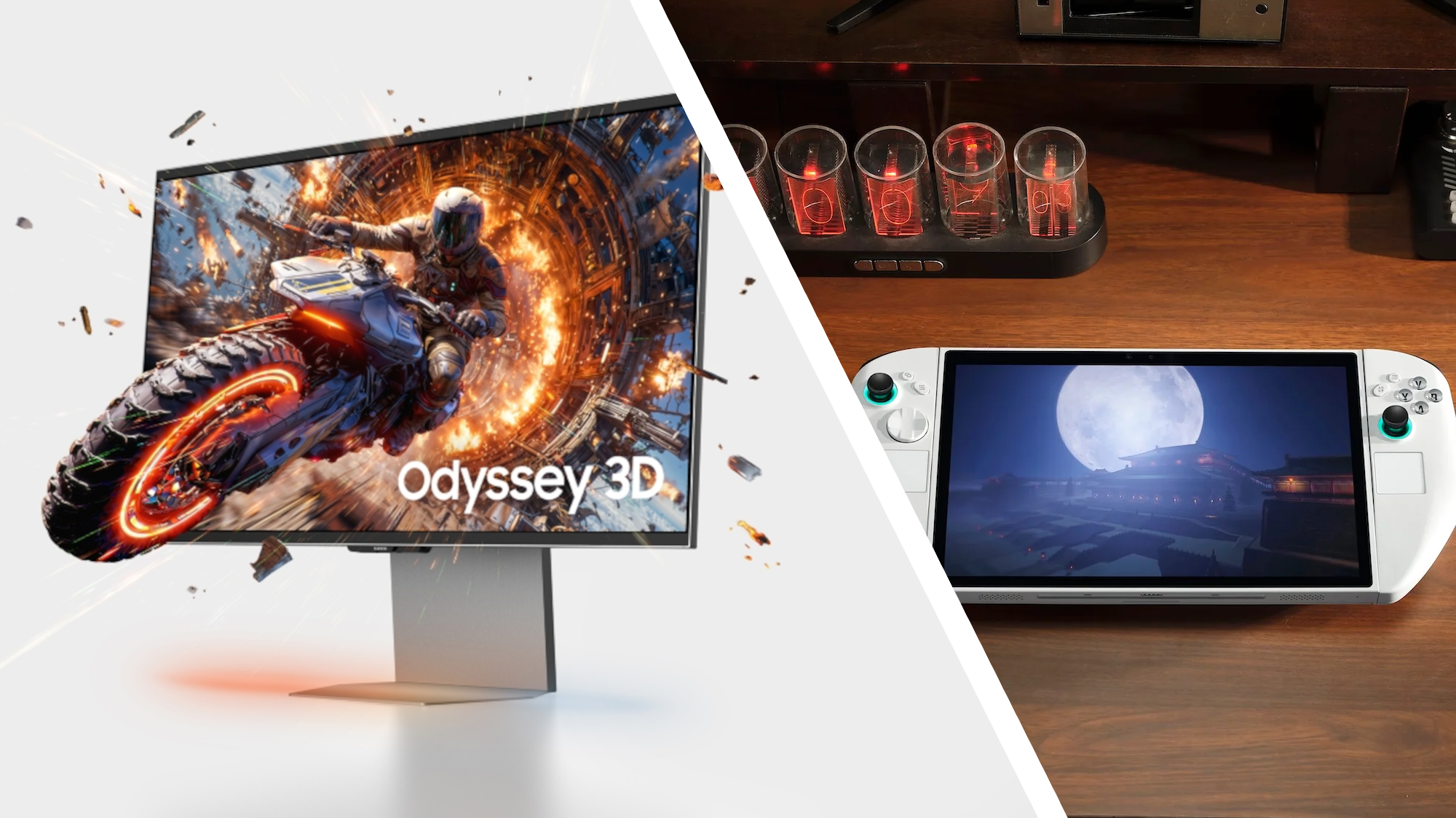
Samsung is set to fully unveil a glasses‑free 3D 6K gaming monitor with real‑time eye‑tracking at CES 2026, positioning the company at the forefront of a nascent resurgence in glasses‑free 3D displays. The device targets high‑end gamers and will drive incremental GPU performance requirements and likely premium pricing, but broad adoption may be constrained by limited native 3D game support and current PC resolution adoption trends (Steam data showing majority at 1080p/1440p).
Market structure: This revival of glasses-free 3D at 6K is a niche premium-product shock that primarily benefits high-end GPU vendors (NVDA), eye‑tracking/IP suppliers (TOBII.ST), and memory suppliers (MU, 000660.KS) due to outsized GPU and bandwidth requirements; mainstream monitor OEMs and mid-range retail channels (DELL, HPQ) may see inventory/mix pressure if adoption stays low. Competitive dynamics favor firms that control GPU features and developer toolchains (NVIDIA advantage via SDKs/AI upscaling); pricing power will be concentrated in the upper 5–10% of the monitor market while the 90% mass market remains unchanged.
Risk assessment: Tail risks include repeat of the 3D‑TV consumer flop, motion‑sickness-driven low adoption, or a patent/IP injunction that blocks mass production — low probability but >$1bn revenue impact for incumbents; regulatory risk is minor. Time horizons: immediate (days around CES for sentiment/stock moves), short (1–6 months for pre‑order conversion and shipment data), long (2–4 years to judge developer ecosystem and TAM expansion). Hidden dependencies: driver/API support, game engine integrations, and GPU supply/pricing; catalysts include CES hands‑ons, initial pre‑order volumes, and first‑party game patches.
Trade implications: Direct plays — take defined‑risk exposure to NVDA (beneficiary of high‑end GPU demand) and TOBII.ST (eye‑tracking IP); consider memory exposure (MU/000660.KS) if GPU orders accelerate. Use pair trades (long NVDA, short AMD) to express win‑rate of DLSS/driver ecosystem; employ call spreads to limit capital for CES volatility. Rotate away from mid‑tier monitor OEM exposure into semiconductors and niche peripherals over 1–6 months.
Contrarian angles: Consensus underestimates aftermarket and services revenue (licensing, calibration, SDKs) that could make eye‑tracking profitable even if panels sell slowly; conversely consensus may overrate addressable TAM for 6K 3D (echoes of 3D‑TV). Historical parallel: 3D TV adoption failed without content ecosystem — here faster GPU and AI upscaling is a wildcard that could change outcomes. Unintended consequence: fragmentation (only a handful of titles supporting 3D) could produce a sharp but short revenue spike then a collapse within 12–18 months.
AI-powered research, real-time alerts, and portfolio analytics for institutional investors.
Request DemoOverall Sentiment
neutral
Sentiment Score
0.05
