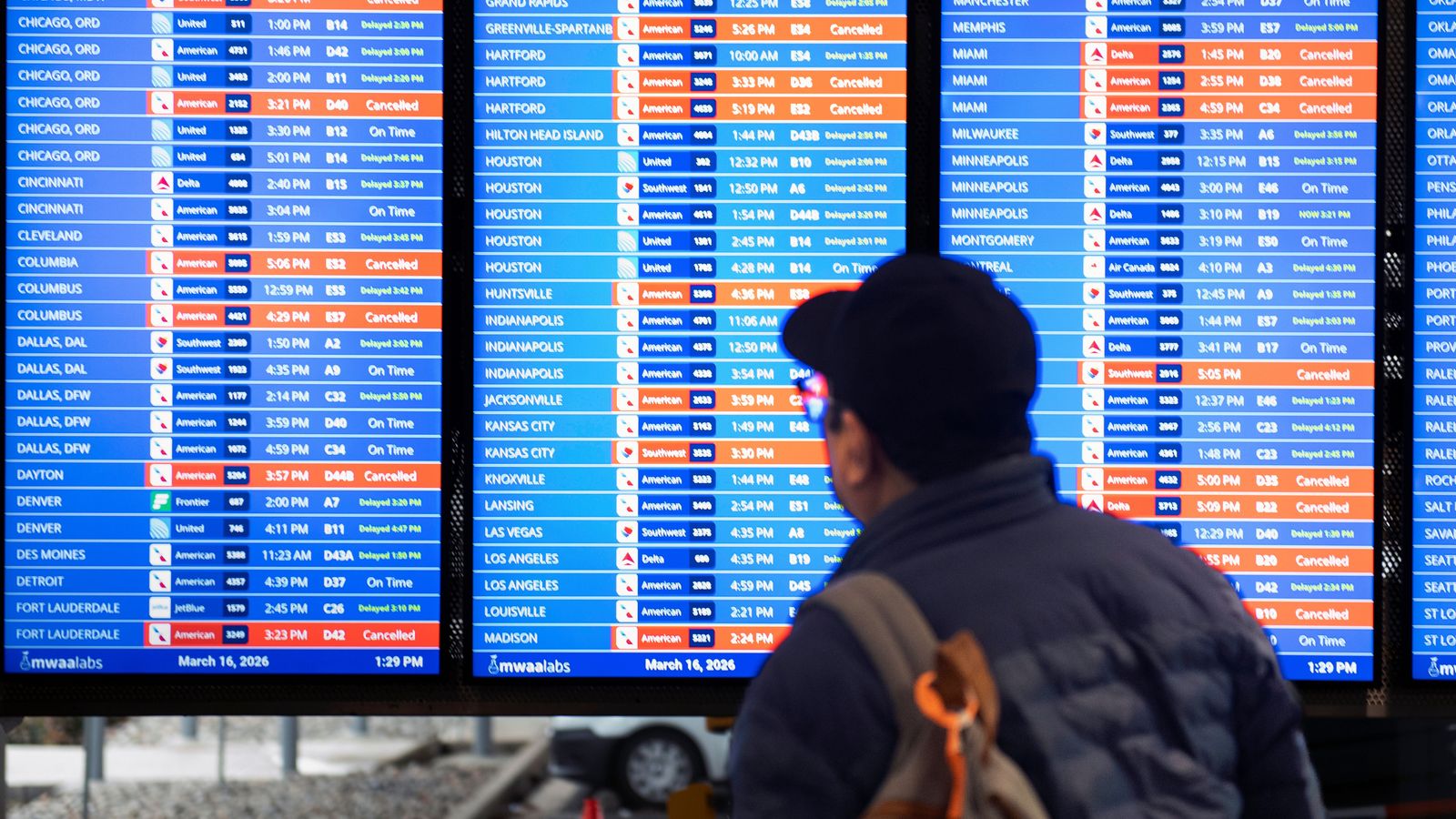
More than 10,000 flights have been cancelled or delayed and roughly 60 million people from northern Florida to New York are at risk of destructive winds and tornadoes, with the NWS issuing tornado watches across about 10 states and over 120 million under wind alerts. Expect short-term operational disruption for airlines and airports (potential low-single-digit percentage stock moves), elevated utility repair costs and localized insured losses as energy firms pre-stage crews and authorities enact ground stops and office closures.
Severe convective outbreaks are a short, high-impact shock that redistributes near-term demand and costs across transport, utilities, and contractors rather than creating a sustained demand impulse. Expect a two- to eight-week window where local labor/parts bottlenecks (linemen, bucket trucks, transformers) and expedited logistics (airfreight re-routes, truckload surges) push spot rates 10-40% above baseline in the most affected corridors, then normalize as crews complete restorations.
Regulated utilities with explicit storm-recovery riders are the primary structural beneficiaries: they convert extraordinary outage-driven capex into allowed rate bases over multi-year regulatory cycles, turning a near-term claim into multi-year earnings visibility. Conversely, non-regulated retail energy retailers and smaller muni/co-op balance sheets are exposed to immediate cash-flow and working-capital stress if customer-bill delinquencies and repair costs spike for several months.
Airlines and logistics operators suffer asymmetric operational costs — re-accommodation, crew and gate costs and cascade late-arrival penalties — which compress margins more than revenue loss would suggest; a 48–72 hour concentrated disruption typically inflicts a 2–6% EBITDA hit for network carriers due to propagation across their fleet. Insurers and reinsurers face idiosyncratic tail risk: convective events usually produce clustered small-to-medium claims that can aggregate into low-single-digit percentage earnings volatility for large diversified underwriters but can be material for specialty regional writers.
The market often over-simplifies these episodes as transitory consumer demand hits; the second-order effect is accelerated grid-hardening and contractor backlog, which benefits certain capex-exposed suppliers for 6–36 months. Monitor crew mobilization rates and the speed of regulatory filings for storm-cost recovery — those signal when market mispricings in utilities and services will correct.
AI-powered research, real-time alerts, and portfolio analytics for institutional investors.
Request DemoOverall Sentiment
mildly negative
Sentiment Score
-0.30
