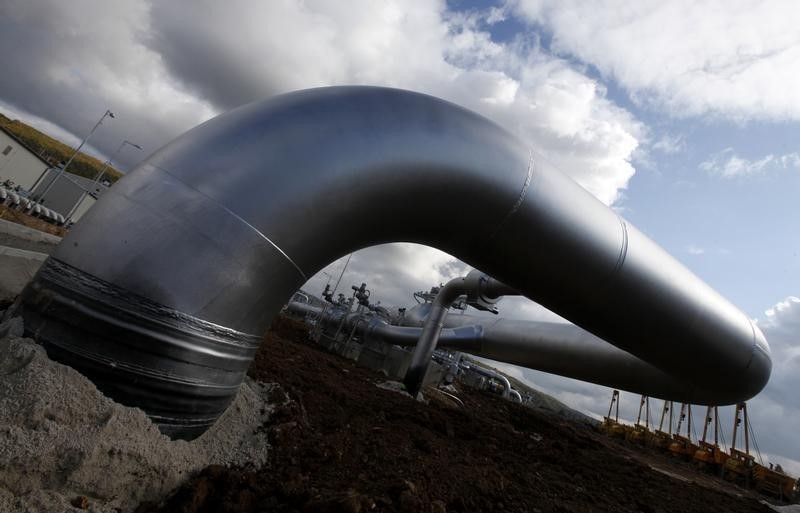
European wholesale gas prices rose 4.2% to 45.40 euros/MWh on colder weather forecasts and renewed geopolitical tensions around US-Iran peace talks. Iran’s seizure of two ships in the Strait of Hormuz lifted risk premia, even as benchmark EU gas prices remain about 39% below the March 19 peak of 74 euros/MWh. The move is more of a risk-on pricing adjustment for gas markets than a broad market event.
The Tesla read-through is not about the quarter itself; it is about the market re-pricing capital intensity. A capex step-up at the same time that the stock was benefiting from operational resilience suggests investors were leaning on a near-term earnings multiple expansion, and management just reminded them that the AI/autonomy narrative still consumes cash before it monetizes it. That tends to compress the stock’s “story premium” whenever rates are sticky or risk appetite fades, because the market starts discounting a longer duration path to returns.
Second-order, the signal is bearish for any adjacent supplier basket that has already been front-running Tesla volume recovery. If capex is being pulled forward, the winners are likely to be equipment, power electronics, and factory automation vendors; the losers are marginally exposed EV drivetrain and battery-chain names that depend on Tesla as a sentiment anchor. Over the next 1-3 quarters, this can also pressure TSLA relative to other mega-cap growth names because investors will ask whether the incremental spend is defensive maintenance or truly incremental optionality.
The contrarian view is that a higher capex bill can be constructive if it increases the probability of a step-change in autonomy/robotaxi readiness or manufacturing cost curve reduction in 2026. In that case, the market is underestimating long-dated payoff, and the first selloff should be bought if management confirms a clearer monetization timeline. The key risk is that execution slip turns capex into a margin headwind without visible product cycle acceleration, which would make the current pullback the start of a de-rating rather than a one-day reset.
AI-powered research, real-time alerts, and portfolio analytics for institutional investors.
Request DemoOverall Sentiment
mildly negative
Sentiment Score
-0.15
Ticker Sentiment
