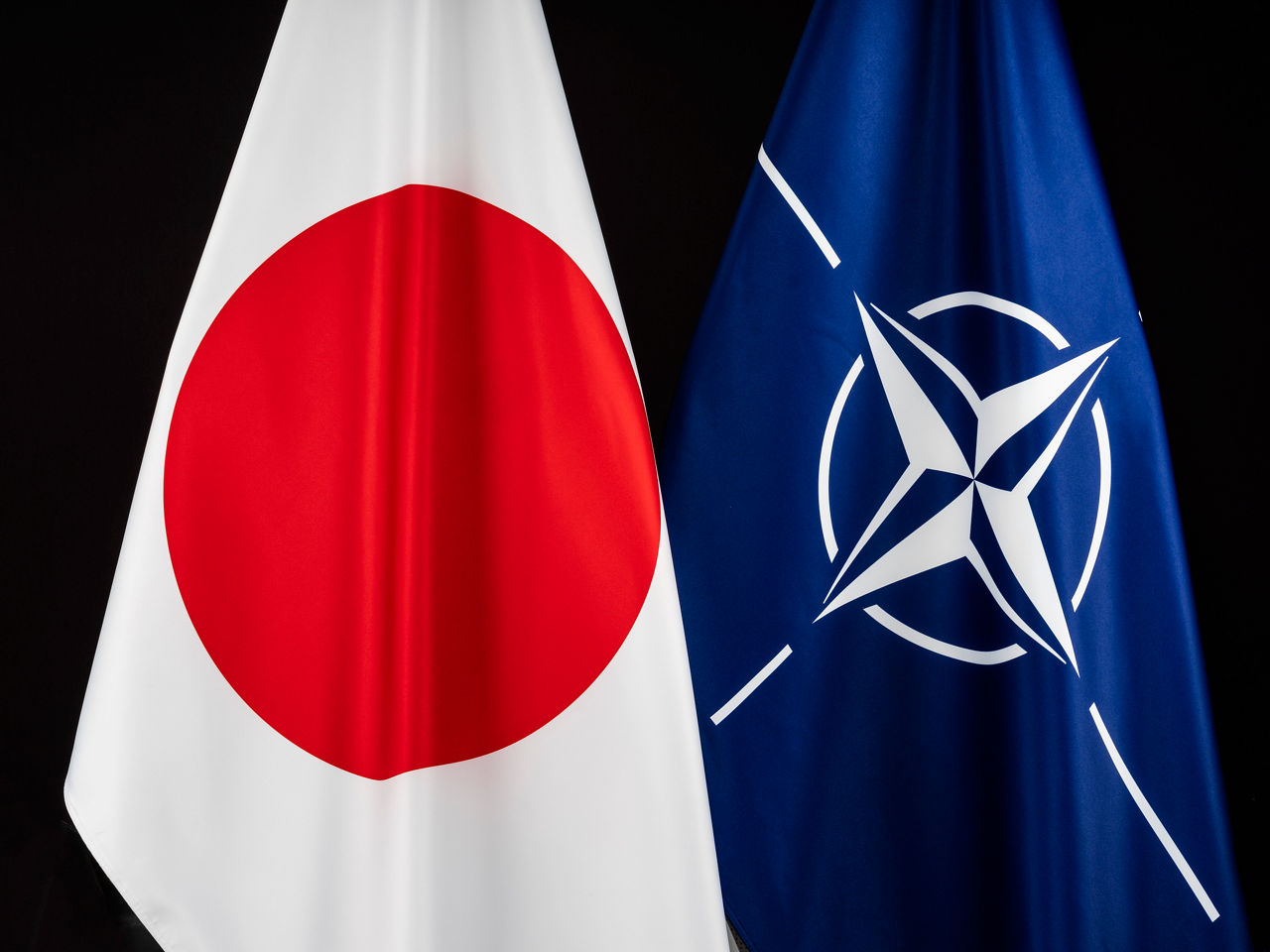
Japan finalized its personnel contribution to NATO's NSATU command in Germany, reinforcing support for Ukraine through coordination of equipment delivery and training. The article also highlights expanded NATO-Japan cooperation in cyber defense, technology and innovation, maritime security, and defense industrial cooperation. The development is strategically positive but largely diplomatic and unlikely to have immediate market impact.
Japan’s personnel contribution to NATO’s Ukraine support architecture is less about the headcount than the signaling effect: it further normalizes a Japan-EU security stack that can evolve into procurement, training, cyber, and dual-use tech collaboration. The second-order beneficiary is not just defense primes, but the ecosystem around secure communications, battlefield software, logistics, and training simulators where Japanese industrial capabilities can be re-rated as strategic supply-chain assets. Over a 6-24 month horizon, this broadens the investor base for Japanese defense and cyber names by making them more legible to Western buyers and partners.
The more important market consequence is that the Indo-Pacific/Euro-Atlantic linkage raises the probability of cross-theater budget coordination. That should support sustained demand for missile defense, maritime surveillance, satellite, and cyber resilience budgets in Japan, Europe, and the U.S., with the highest beta in companies that sell interoperable systems rather than platform-heavy legacy hardware. A subtle loser is any vendor dependent on China-exposed manufacturing or permissive export regimes, because closer NATO-Japan cooperation increases screening of trusted suppliers and accelerates reshoring of sensitive production.
Catalyst-wise, this is a slow-burn story over quarters, not days; the near-term trigger is additional bilateral agreements, exercises, or procurement announcements tied to Ukraine support or cyber defense. The tail risk is political reversal if domestic opposition in Japan or fiscal pressure in Europe forces the initiative to remain symbolic rather than budgeted. Another reversal risk is de-escalation in Ukraine, which could compress urgency for training/logistics spending, though cyber and Indo-Pacific cooperation would likely persist.
Consensus may be underestimating how much this benefits software and services versus pure hardware. The structural trade is that security cooperation increasingly rewards firms that can integrate data, training, and interoperability across allied forces, which typically carries higher recurring revenue and better margins than hardware-only defense exposure. The market is likely still underpricing this as a multi-year secular procurement theme rather than a one-off diplomatic headline.
AI-powered research, real-time alerts, and portfolio analytics for institutional investors.
Request DemoOverall Sentiment
neutral
Sentiment Score
0.15
