
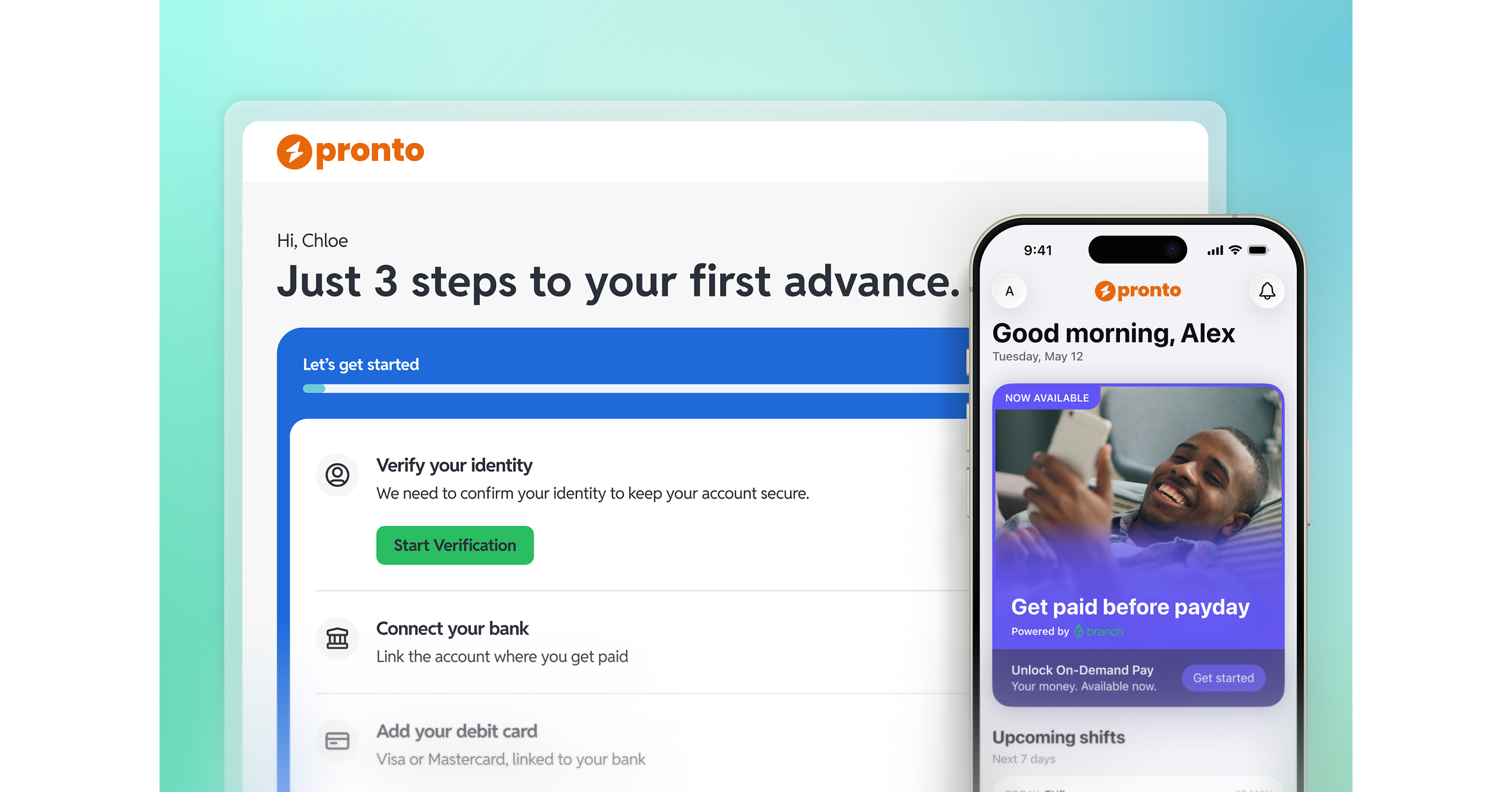
Branch announced its new “Flex” earned wage access (EWA) configuration, aiming to reduce embedded rollout engineering time by enabling companies to integrate EWA into existing scheduling/shift apps in weeks rather than months. Workers can receive earned wages to an existing debit card via Branch Direct/Branch App (with instant transfers for a small fee or within two business days at no cost), and Branch emphasizes no pre-funding required. The update positions EWA as a more widely adoptable workplace benefit and supports faster access to wages versus payday loans/overdraft fees, but it is a product announcement rather than a reported financial result.
The marginal economic upside is not in the headline feature set; it’s in distribution. By collapsing integration friction, Branch is trying to move EWA from a bespoke product into a bundled workflow capability, which should accelerate adoption but also commoditize pricing and shift bargaining power toward the platforms that control scheduling/payroll UX. The likely winner set is vertical SaaS, staffing platforms, and banks/rails that sit inside the payout flow; standalone EWA vendors face a slower path to differentiation once the feature becomes easy to replicate.
For MA, the direct financial impact is limited, but there is a small positive optionality if more workers choose instant debit-card delivery rather than ACH. That said, the bigger volume driver is not the wage advance itself but the downstream spending activity when funds land on a card, so any benefit is second-order and likely too small to move network revenue in the next 1-3 quarters. The more important question is whether EWA adoption reduces overdraft/short-term credit usage; that would be a modest negative for consumer credit economics and could even be disinflationary for household cash-flow stress.
Contrarianly, the market may overestimate how much TAM expands here. Easier integration does not create new demand so much as it lowers the cost of signing up existing demand, and the fee-free/low-fee path suggests monetization will skew toward B2B platform economics rather than rich consumer take-rates. The key falsifier is evidence that embedded EWA launches are translating into measurable debit purchase volume or retained active users; absent that, this is mostly a product story, not an earnings story.
AI-powered research, real-time alerts, and portfolio analytics for institutional investors.
Request TrialOverall Sentiment
mildly positive
Sentiment Score
0.28
Ticker Sentiment
