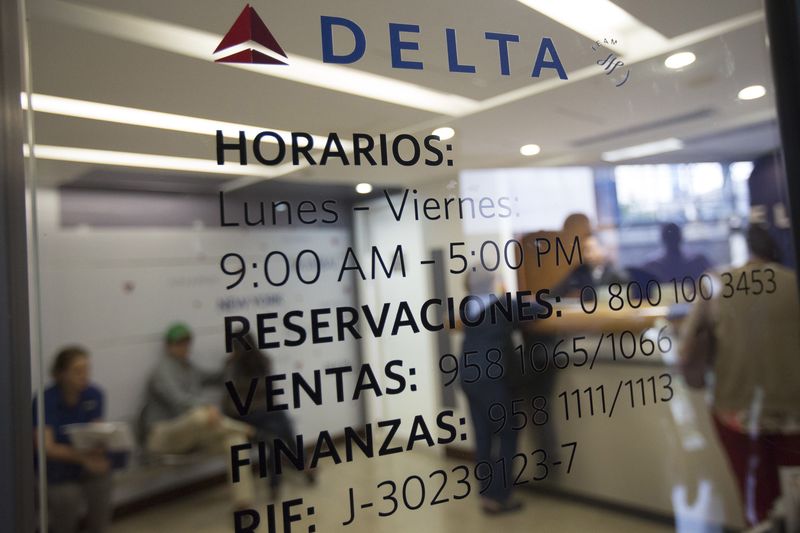
Oil prices are rising as Iraq’s Hormuz shipments collapse amid conflict, creating a potentially disruptive backdrop for energy and transportation markets. The article’s main company focus is Delta Air Lines, which was flagged as 48.73% undervalued at $43.83 and later reached $70.24, delivering a 63.61% return versus the initial $65.19 fair value estimate. The piece also cites improving fundamentals, including EPS rising to $6.89, revenue increasing to $65.2 billion, a $2.65 billion Berkshire Hathaway stake, and analyst targets of $70 to $83.
The market is likely underestimating how quickly a geopolitical oil shock can transmit into airline margins even if the headline move in crude is temporary. For DAL, the first-order hit is obvious, but the second-order risk is that higher jet fuel tends to compress booking visibility before it shows up in earnings, so the stock can de-rate well before reported results worsen. That makes the next few weeks far more important than the next few quarters: if energy stays bid, airline multiples usually contract faster than consensus EPS revisions catch up.
The bigger nuance is that this is not a clean bearish airline setup; it is a relative-value event. Legacy carriers with stronger loyalty revenue and premium mix can partially offset fuel via pricing, while lower-quality operators and thin-margin operators become the real losers as hedging, balance-sheet, and network flexibility matter more. If conflict disrupts Hormuz flows for more than a brief window, cargo, MRO, and airport throughput names can also see knock-on pressure from route changes and scheduling inefficiency, creating a broader transportation risk basket.
BRK.B is important here because it acts as a quality-holder rather than a direct trade: if the market rotates into defensive compounders on macro stress, Berkshire should attract flows while airlines remain under pressure. GS is the cleaner sentiment proxy for the financing and risk-asset channel; if crude spikes start to widen credit spreads or hit consumer confidence, deal activity and trading multiples can soften even without a recession. The consensus is too focused on DAL’s intrinsic value story and not enough on the fact that geopolitical energy spikes usually hit equities through discount-rate and margin channels before fundamentals fully adjust.
AI-powered research, real-time alerts, and portfolio analytics for institutional investors.
Request DemoOverall Sentiment
moderately positive
Sentiment Score
0.35
Ticker Sentiment
