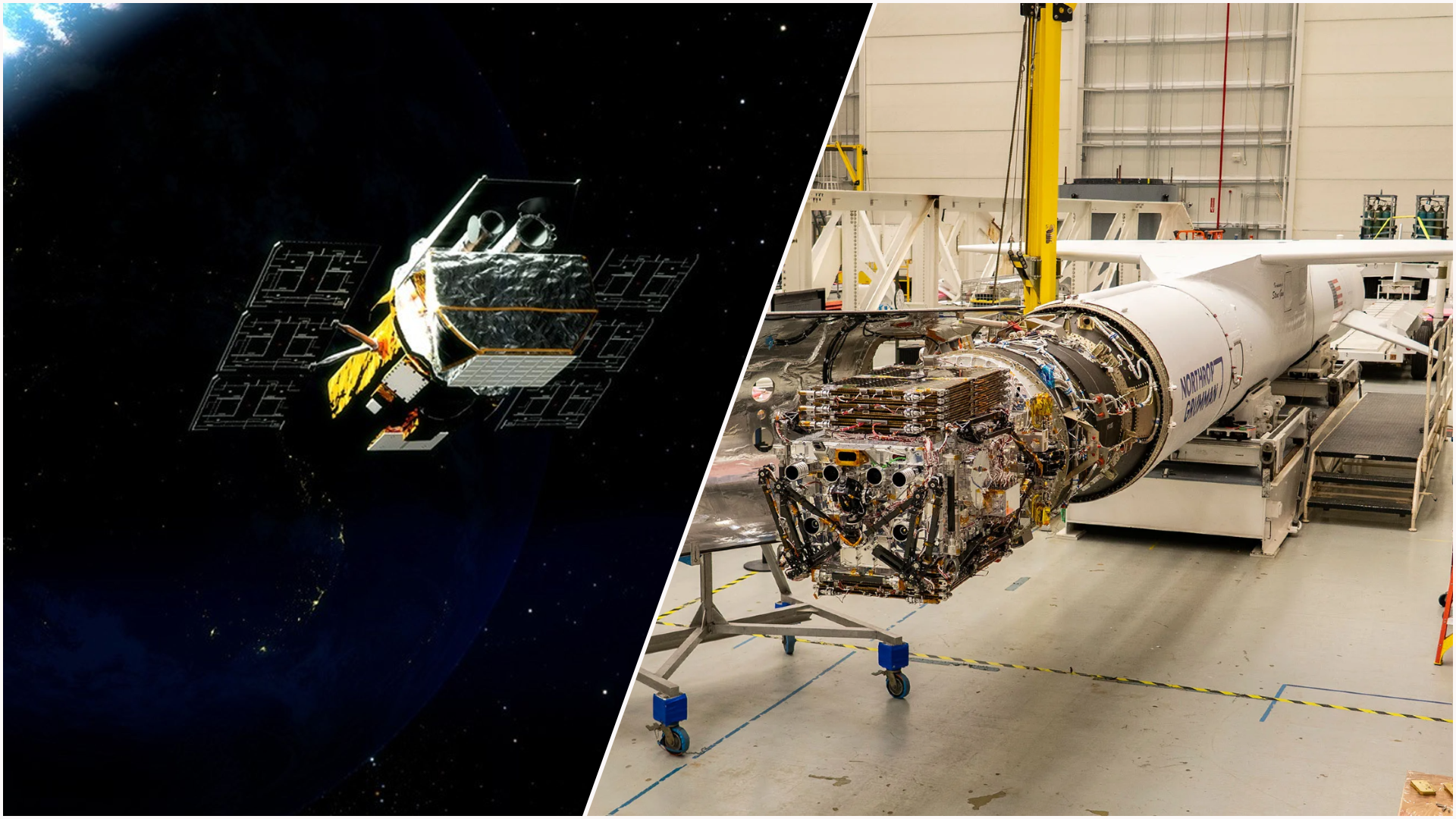
NASA is preparing a first-of-its-kind $30 million rescue mission to extend the life of the Swift space observatory, with Katalyst's Link spacecraft set to launch on June 27. Swift, launched in 2004, is expected to fall below 186 miles altitude by October without intervention, but a successful boost could add 5+ years of life and restore science operations by this fall. Katalyst also raised $12 million for its Nexus servicing platform, signaling growing commercial demand for satellite life-extension missions.
This is less a one-off rescue story than a proof-of-concept for an entirely new after-market in orbit: life-extension, relocation, and salvage of legacy assets. If successful, it creates a credible template for aging government and commercial spacecraft whose remaining scientific or economic value far exceeds the marginal cost of rescue, which should re-rate the serviceable-orbit ecosystem more than the single mission itself. The second-order winner is not just the builder here, but any company with autonomous rendezvous, docking, propulsion, or inspection IP that can become a subcontractor in a recurring servicing market.
The near-term market read-through for NOC is asymmetric but limited. A successful launch on its last-ever air-launched booster would be a symbolic positive for Northrop's launch heritage, but the financial impact is immaterial versus the operating businesses; the real relevance is reputational, not P&L. The larger competitive implication is that if commercial salvage works on a fragile, non-servicing-designed satellite, procurement agencies may become more willing to pay for extend-and-protect services instead of full replacement cycles, which favors primes and infrastructure-capable private players with in-space logistics exposure.
The risk is a narrow time window and a binary failure mode: a solar-weather shock, a commissioning issue, or robotic capture damage can erase the thesis quickly. That means the catalyst is days-to-weeks for launch optics, but months-to-quarter for actual value realization, with the key inflection being successful rendezvous rather than launch. The contrarian point is that investors may overestimate the revenue significance of the rescue while underestimating the option value of proving a repeatable servicing workflow; the latter is what can change long-duration budgets and create a procurement pull-forward across defense and civil space.
AI-powered research, real-time alerts, and portfolio analytics for institutional investors.
Request DemoOverall Sentiment
mildly positive
Sentiment Score
0.35
Ticker Sentiment
