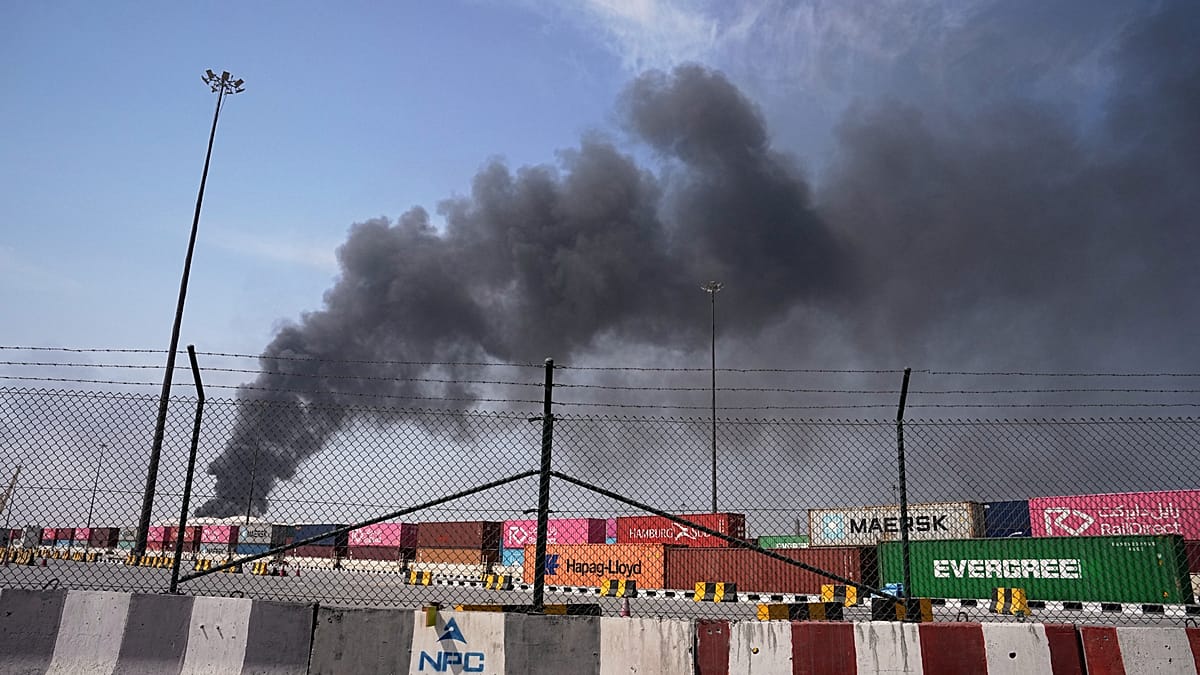
Iranian drones struck Saudi Arabia’s Ras Tanura oil refinery — a facility with capacity of over 500,000 barrels per day — prompting precautionary shutdowns of some operational units and visible fires after interceptions; Kuwait also reported intercepted drone attacks and alarmed U.S. embassy staff sheltered in place. The incidents, which include reports of U.S. F-15E and other U.S. warplane crashes with crews reportedly surviving and strikes on bases in the UAE (limited material damage to a French base), mark an escalation in Iran’s retaliatory campaign following earlier strikes and pose near-term downside risk to regional oil supply, logistics and investor risk appetite.
Market structure: The strikes raise a regional risk premium that should lift Brent/WTI and refining differentials for days-to-weeks; winners are oil producers, integrated majors (XOM, CVX) and energy infrastructure owners (KMI, OKE) who gain pricing power if crude rises >8%. Losers include Gulf-based refining & logistics operators, airlines/cruise operators (AAL, UAL, RCL) and insurers (ALL), with near-term capacity reductions at refineries like Ras Tanura tightening product supply and boosting crack spreads.
Risk assessment: Tail risks include escalation (Strait of Hormuz closure) driving Brent to $120–150/bbl and a global growth shock, or US/Gulf military losses prompting sanctions and insurance hikes that shut shipping lanes; probability low but impact extreme. Time horizons: immediate (48–72 hours) = volatility spikes and tactical shutdowns; short-term (1–3 months) = inventory draws and margin shifts; long-term (3–24 months) = capex repricing toward energy security and defense procurement.
Trade implications: Favor barbell: tactical energy longs and defense exposure, paired with short travel/leisure. Use options to size convexity — e.g., 3-month call spreads on XLE and 3-month puts on AAL/RCL. Cross-asset: expect USD and Treasuries to rally on risk-off and gold (GLD) to outperform as hedge.
Contrarian angles: The market often overshoots — prior Gulf incidents caused 10–25% oil blips that faded in 6–12 weeks once shipping rerouted and SPRs/reassurances arrived. If Brent rallies >15% quickly, scale into mean-reversion trades: sell short-dated oil volatility (OVX) or lighten energy exposure after price moves meet pre-set profit targets.
AI-powered research, real-time alerts, and portfolio analytics for institutional investors.
Request TrialOverall Sentiment
strongly negative
Sentiment Score
-0.65
