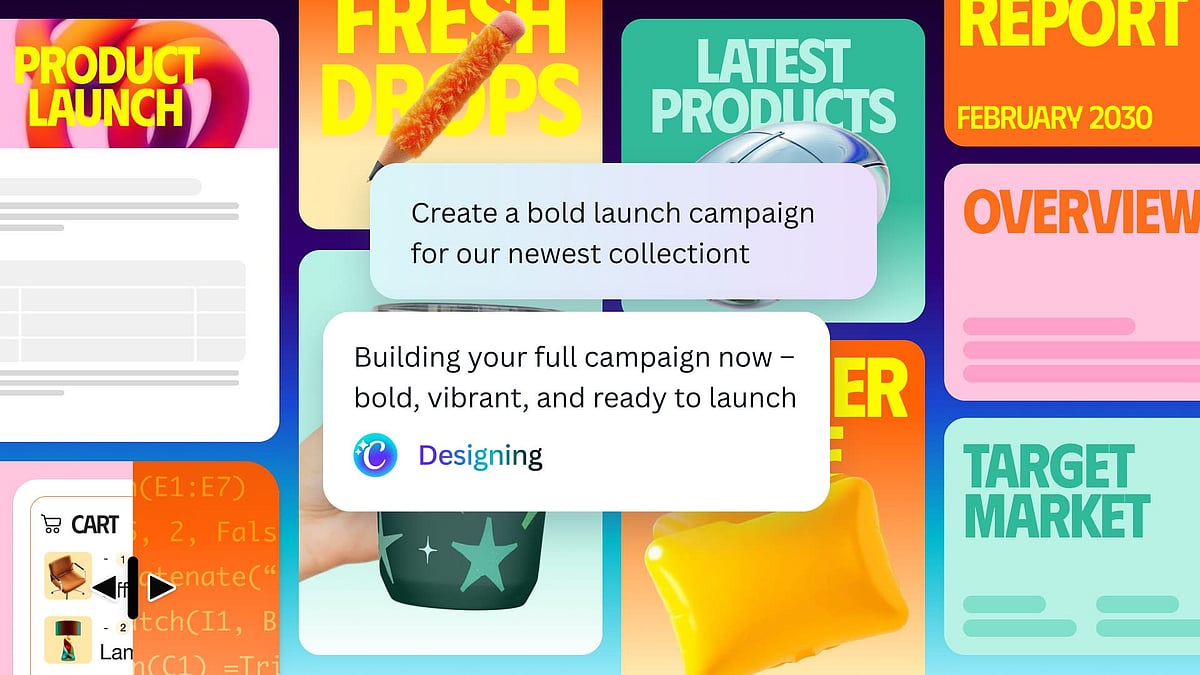
Canva has upgraded its AI assistant to automatically chain multiple tools together, enabling users to generate fully editable designs from simple text prompts. The update adds agentic workflows for layout creation, image generation and content placement, and fits Canva’s broader push into AI-powered website generation, spreadsheets and task automation. The move is strategically positive for Canva and reflects a wider industry shift toward end-to-end AI creative tools, though near-term market impact appears limited.
This is a structural negative for standalone design-software defensibility because the value proposition is shifting from interface quality to workflow ownership. The economic winner is whoever becomes the default orchestration layer for “idea → asset → distribution,” since that captures more of the customer’s budget and creates stickier switching costs; that is more important than incremental feature parity. For ADBE and FIG, the near-term read-through is not immediately lost seats, but a higher burden of proof that premium pricing survives once AI-generated output becomes commoditized across suites.
The second-order effect is margin pressure disguised as product expansion. Agentic workflows raise inference, storage, and compute costs while reducing the need for manual editing time that historically justified software pricing tiers; over 6-18 months, that can compress gross margin if usage monetization lags. The real competitive threat is not Canva alone, but adjacent creative stacks bundling AI into broader subscription ecosystems, which can slow net retention and increase discounting in enterprise renewals.
The market likely underestimates adoption speed in SMB and prosumer segments, where time-to-first-draft matters more than pixel-level control. That argues for a faster revenue mix shift than consensus expects, but with a delayed P&L impact because enterprise contract cycles will buffer the initial hit. The key catalyst window is the next 1-2 product cycles: if Adobe/Figma show meaningful AI workflow uptake without clear monetization, the stock reaction could be negative on multiple compression rather than outright revenue misses.
Contrarian view: this may be less about displacement and more about expanding the total market by turning non-designers into occasional creators. If that happens, seat counts and usage could rise enough to offset pricing pressure, especially for workflow-linked monetization. The bullish case is that AI becomes a demand generator; the bearish case is that it becomes a feature tax competitors can copy quickly.
AI-powered research, real-time alerts, and portfolio analytics for institutional investors.
Request DemoOverall Sentiment
mildly positive
Sentiment Score
0.20
Ticker Sentiment
