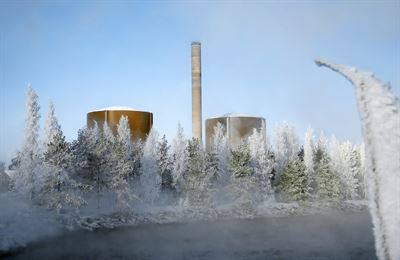
Fortum’s fully owned Loviisa nuclear plant produced 7.9 TWh in 2025 (≈10% of Finland’s electricity) with overall availability of 89.4% (Loviisa 1: 4.0 TWh, 89.9%; Loviisa 2: 3.9 TWh, 88.8%), despite extended outages, three short-term unplanned reductions and a temporary summer derating due to high seawater temperatures. The plant loaded a second batch of Westinghouse fuel into Unit 2 and Fortum is progressing an estimated ~€1 billion investment programme to secure operation until the government-granted 2050 licence, with major modernization projects (low-pressure turbines, turbine automation, main seawater pumps/motors) scheduled to start during the 2026 outage; Fortum’s Loviisa investments were about €70m (2024: ~€50m).
Market structure: Fortum (FORTUM.HE) and engineering suppliers (turbine vendors, pump manufacturers, Westinghouse fuel suppliers) are direct beneficiaries as the announced ~€1bn lifecycle program and immediate ~€70m annual spend signal multi-year procurement and service revenue. Electricity supply in Finland is structurally reinforced (Loviisa ≈7.9 TWh, ~10% of national supply) which should cap spikes in Nordic baseload prices but also compress merchant generator margins versus regions without nuclear capacity. Municipal/regional labor markets and contractor ecosystems in Loviisa gain, while marginal gas/oil peakers and merchant thermal generators lose short-term pricing power.
Risks: Tail risks include an extended unplanned outage (>3 months) or regulatory reversal that would spike Nordic spot prices and hit Fortum earnings; probability low but impact high (spot price moves >€50/MWh). In the immediate term (days-weeks) expect limited market reaction; over months (outage window in 2026) volatility rises; over years (to 2050) execution and fuel-conversion risk determine value capture. Hidden dependency: successful modernization depends on timely supplier delivery and seawater-temperature mitigation; failure increases forced outages and capex overruns.
Trade implications: Favor equity exposure to Fortum and select industrial suppliers (Siemens Energy ENR.DE, ABBN.S) ahead of 2026 procurement windows, size modest (1–3%) and scale into awarded-contract announcements. Consider macro pair: short Nordic 12‑month baseload forward vs long German Phelix Y+1 to reflect Finnish supply resilience; use small notional (≤1% portfolio) and set a mean-reversion target spread move of 1–3 €/MWh within 6–12 months. Use options to hedge execution risk: buy 3–6 month ATM puts on FORTUM.HE sized to 50% of equity position as tail protection.
Contrarian angles: Market may underprice climate-driven operational constraints — rising seawater temperatures could cause recurrent summer derates (if availability drops below 85% for a season, reassess long positions). The switch to western fuel is positive politically but operationally risky (requalification could force additional outages), so pure long-on-certainty trades are likely underdone. Historical parallel: modular modernization programs often front-load outages and cost; expect a 5–10% earnings variance first 12–24 months before quality of generation normalizes.
AI-powered research, real-time alerts, and portfolio analytics for institutional investors.
Request DemoOverall Sentiment
mildly positive
Sentiment Score
0.35
