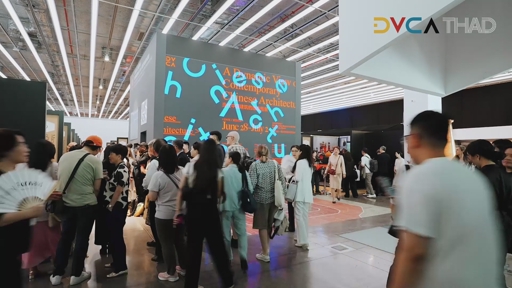
Der UIA-Architekten-Weltkongress in Barcelona eröffnete den China-Pavillon („A Dynamic View of Contemporary Chinese Architecture“, DVCA) mit über 350 Exponaten und 11 Themenkategorien; besonders hervorgehoben wurde, dass es sich um den ersten klimaneutralen China-Pavillon in der UIA-Historie handelt, der über Emissionszertifikate ausgeglichen und international zertifiziert ist. Die Ausstellung kombinierte recycelbare Verbundplatten, digitale Medientechnologie sowie eine eigene Cloud-Ausstellungsplattform mit >6.000 Besuchern vor Ort und >10.000 virtuellen Besuchern aus Dutzenden Ländern. Zudem kündigte Peking an, den Kongress 2029 erneut auszurichten.
This reads as soft-power signaling, not an earnings event. The investable read-through is that Chinese architecture is trying to reposition itself as carbon-aware and digitally native, which could modestly support longer-cycle demand for design software, BIM, digital-twin tooling, and recycled/low-carbon building materials; but the first-order financial impact is trivial. The more interesting second-order effect is reputational: by packaging climate-neutrality and AI-assisted design into a public international forum, China is building a procurement narrative that may help its firms win overseas public-works and cultural projects where ESG scoring now matters.
Near term, there is no clean trade unless you have direct evidence of budget follow-through. Any benefit to carbon-credit markets, recycled composite suppliers, or architecture software vendors is likely to show up only if this turns into actual municipal standards or state-linked procurement over the next 1-3 quarters. Absent that, the market should treat this as promotional content rather than a catalyst.
The contrarian view is that the headline may be over-interpreted as an ESG step-change. The offsetting of one pavilion does not prove any broader decarbonization of Chinese construction; in fact, it may simply indicate that symbolic projects are cheaper than structural change. The false signal to avoid is confusing international optics with real margin support for the building ecosystem. If Beijing 2029 comes with hard policy on green public buildings or digital design adoption, that would be the first verifiable catalyst; until then, this is mostly noise.
AI-powered research, real-time alerts, and portfolio analytics for institutional investors.
Request DemoOverall Sentiment
mildly positive
Sentiment Score
0.15
