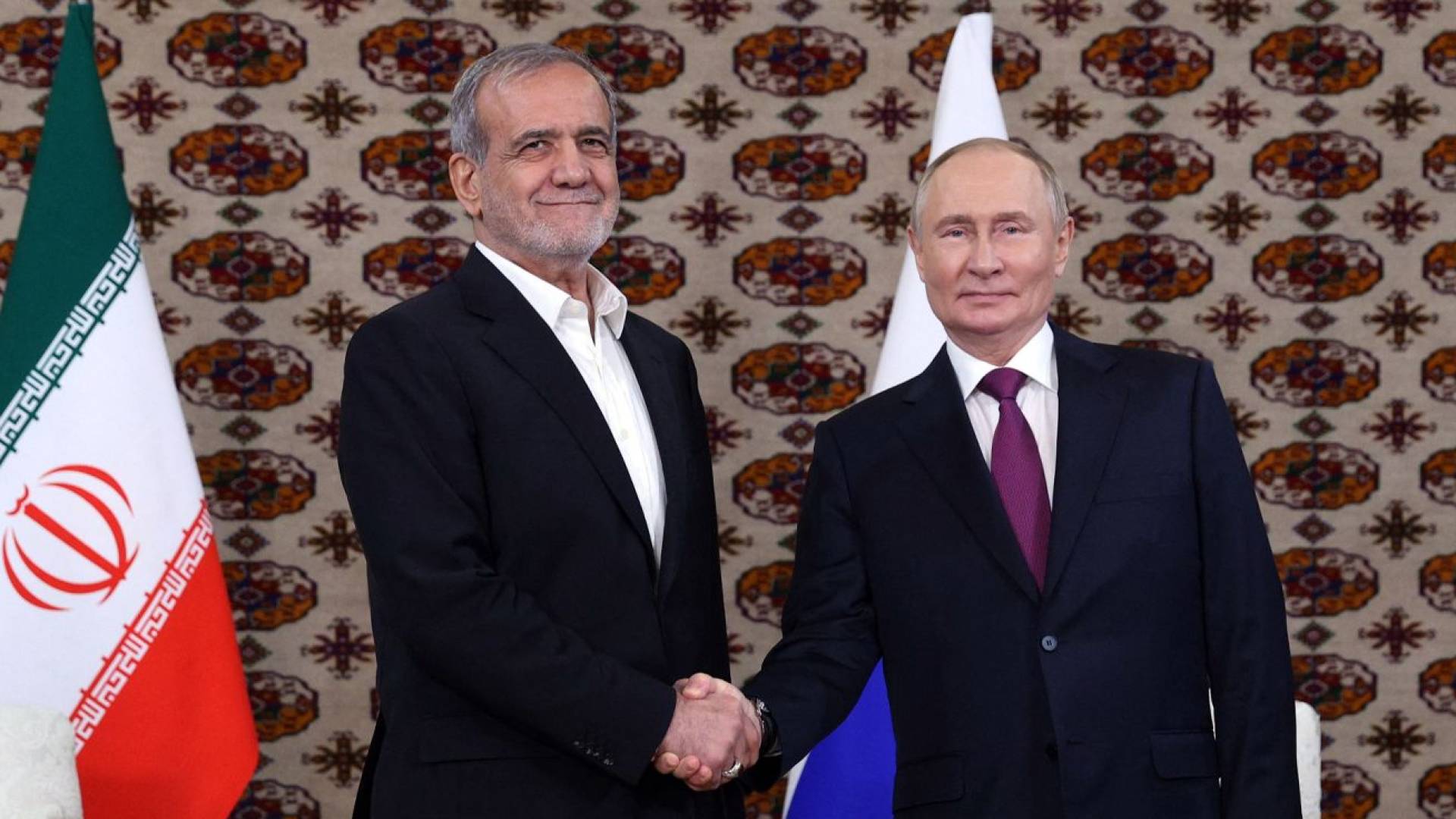
Russia is reportedly using the Caspian Sea to ship drone components and other military hardware to Iran, bypassing the Strait of Hormuz and the ongoing naval blockade in the Arabian Sea. Trade data, satellite imagery, and port records show a noticeable rise in cargo traffic between Russian ports such as Astrakhan and Iranian hubs including Anzali and Amirabad. The development signals a deepening Russia-Iran defense partnership and has implications for sanctions enforcement and regional security.
This is less about a single shipment lane and more about the creation of a sanctions-resilient logistics stack. A Caspian corridor is harder to interdict than Gulf transit, which means the marginal cost of enforcement rises sharply: every layer of pressure in the south pushes trade into routes with lower visibility, weaker maritime domain awareness, and more permissive regional politics. The immediate market implication is that export-control regimes may keep tightening rhetorically while becoming less effective operationally, especially for dual-use components that can be disassembled into civilian-looking cargo.
The second-order effect is that the defense-industrial feedback loop between Russia and Iran becomes more durable, not more fragile, under pressure. If Tehran can replenish drone and electronics capacity with Russian help, the relevant risk window is months, not days: battlefield attrition can be offset faster than sanctions regimes can adapt, and the real bottleneck shifts from “can they source components?” to “can they scale assembly and testing?” That tends to prolong regional volatility, supporting a higher floor on defense spending, counter-UAS procurement, and maritime security budgets.
The underappreciated winner is not necessarily either state actor, but the ecosystem that monetizes enforcement failure: sanctions consultants, compliance software, ISR/drone defense vendors, and non-Gulf logistics hubs that sit adjacent to constrained trade routes. Conversely, any company with meaningful exposure to Eurasian shipping, Black Sea/Caspian-adjacent freight, or third-country re-export channels faces rising counterparty and seizure risk. The consensus may be overestimating the immediacy of enforcement and underestimating how quickly sanctioned actors learn to route around chokepoints once a permissive corridor is proven viable.
AI-powered research, real-time alerts, and portfolio analytics for institutional investors.
Request DemoOverall Sentiment
mildly negative
Sentiment Score
-0.20
Ticker Sentiment
