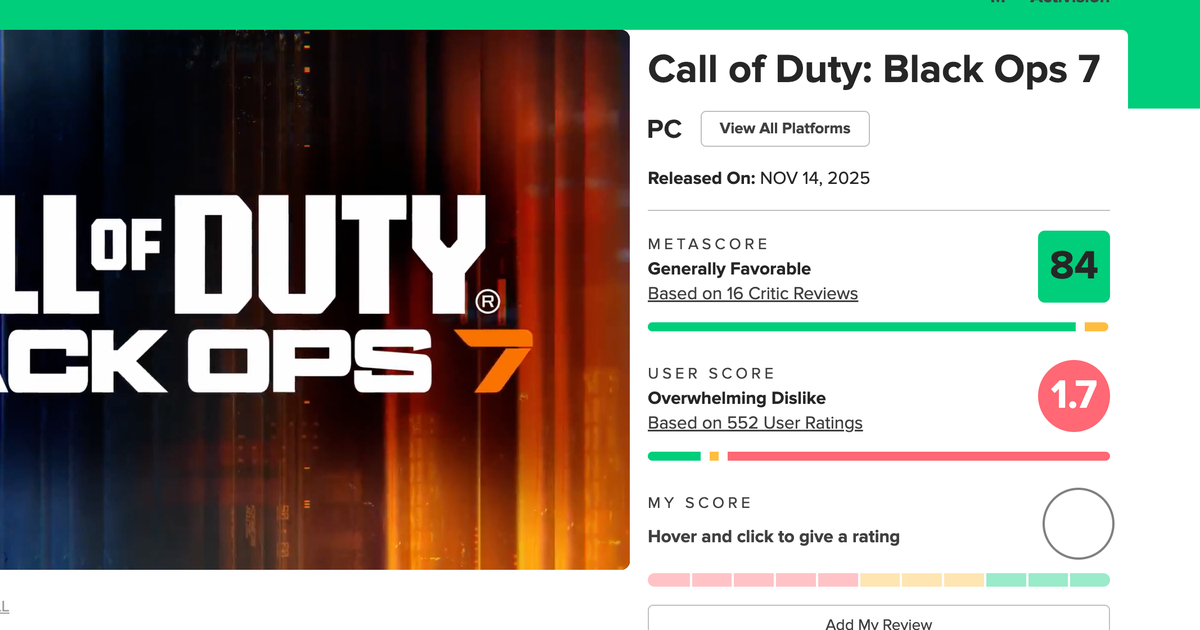
Call of Duty: Black Ops 7 has launched to historically low user scores on Metacritic and mixed reception on Steam, marking it as the franchise's most unpopular installment by player sentiment. Users cite significant dissatisfaction with the game's departure from core franchise identity, alleged use of generative AI for in-game assets, and fundamental gameplay issues. This widespread negative reception for a flagship title could impact future sales, long-term player engagement, and the brand equity of the Call of Duty franchise, a critical asset for Activision Blizzard and its parent company, Microsoft.
Call of Duty: Black Ops 7 has launched to an "Overwhelming Dislike" verdict on Metacritic, registering an unprecedented 1.7 user score with 85% negative reviews, and a "Mixed" reception on Steam with only 42% positive feedback. This starkly contrasts with the aggregated critic score of 84 on PC, indicating a significant divergence between professional and player sentiment regarding the franchise's latest installment.
Player dissatisfaction stems from the game's perceived deviation from core Call of Duty identity, fundamental gameplay issues such as the inability to manually pause or save the campaign, and the controversial use of generative AI for in-game calling cards. Users explicitly accuse the publisher of prioritizing "profit over passion" and delivering an "under-baked title," reversing the positive momentum seen with Black Ops 6.
The historically low user scores and widespread negative sentiment represent a material risk to the Call of Duty franchise's brand equity and future revenue streams for Activision Blizzard and Microsoft. Such a strong negative reception for a flagship title could lead to decreased player engagement, lower future sales, and potentially impact the long-term value of one of the gaming industry's most prominent intellectual properties.
This situation highlights the increasing importance of community feedback and product alignment with established franchise expectations, particularly in a competitive market. The controversy surrounding AI-generated assets also underscores emerging challenges and consumer perceptions regarding technology integration in creative industries.
AI-powered research, real-time alerts, and portfolio analytics for institutional investors.
Request DemoOverall Sentiment
strongly negative
Sentiment Score
-0.85
