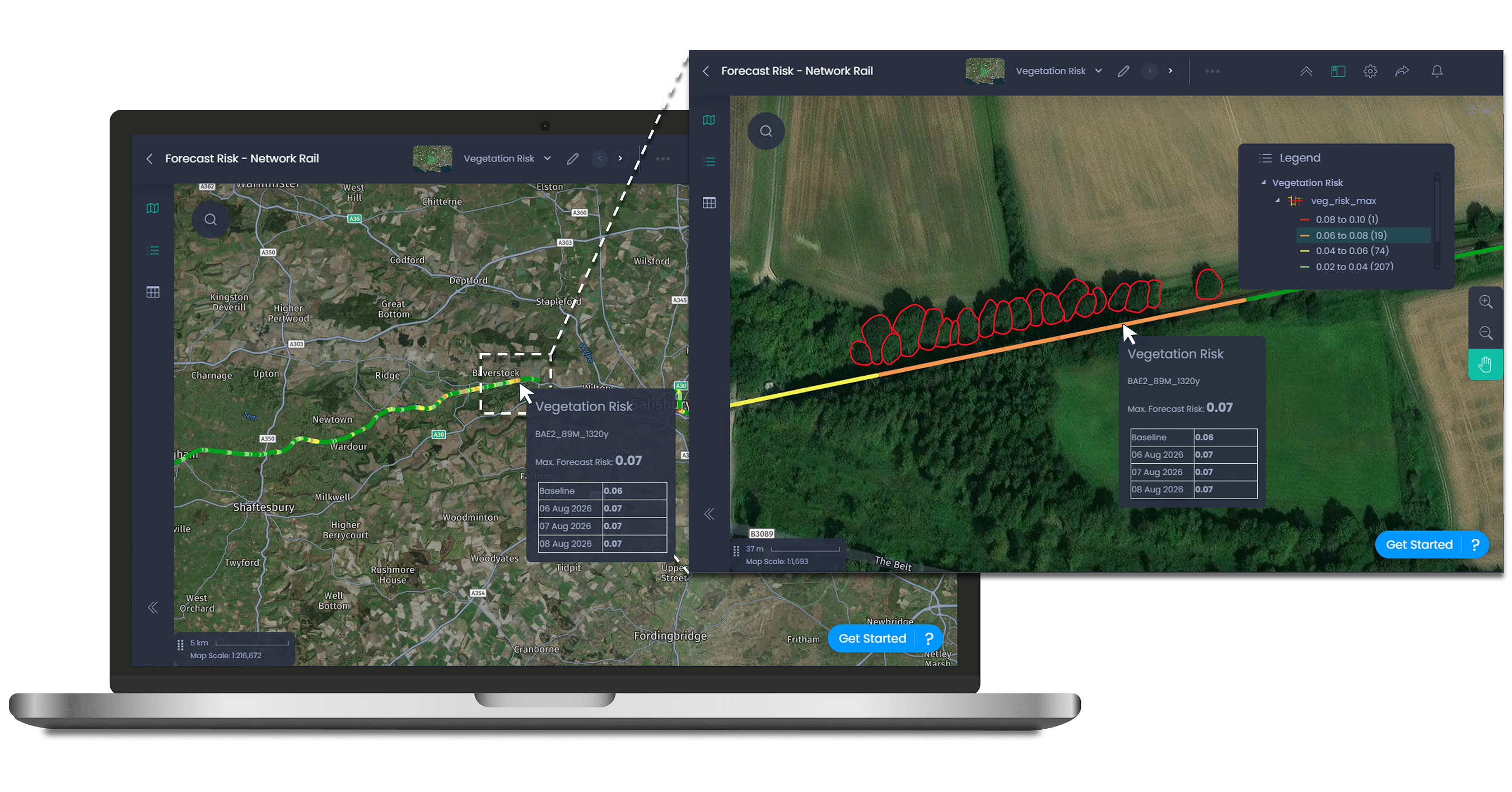
Network Rail and CATALYST completed a 12-week exploratory pilot on the Wessex line to combine satellite imagery (including InSAR), vegetation/water risk analytics, and weather forecasts to flag flood and vegetation risks up to 3 days ahead. The prototype integrates a baseline 3-year vulnerability assessment with a short-term meteorological “prognosis layer” and delivers daily updates via an interactive dashboard (traffic-light risk classification). Early operational feedback indicated the outputs largely match known risk areas, with insights such as higher value from identifying windfall tree risk.
This is a procurement-validation datapoint, not an earnings event. The investable read-through is that rail operators are shifting from reactive field inspections toward subscription-style decision support, which should gradually compress emergency maintenance spend and improve service reliability if the model actually lowers false positives. Near term, that favors geospatial analytics, SAR/optical data pipelines, and workflow software; it marginally pressures labor-heavy inspection and vegetation-survey vendors, but only if the workflow is operationally embedded rather than treated as a science project.
The key second-order effect is budget reclassification: climate resilience spend is likely to migrate from episodic capex into recurring opex/maintenance optimization. That is constructive for vendors with sticky data feeds and dashboards, but the monetization path is slow because public-infrastructure buyers validate tools for months before scaling. If the pilot is noisy, hard to integrate, or fails to reduce incidents, the thesis dies quickly; the main falsifier is no follow-on rollout or no mention of procurement in the next 1-3 months.
Contrarian view: the market may overestimate how fast "climate tech" converts into revenue. The first monetized use case is not a big logo win, but fewer disruptions, fewer callouts, and better prioritization of scarce crews. Over 6-18 months, any broader adoption across UK rail and utilities would matter more than this single pilot, which is why public EO names could get incremental benefit without a large immediate rerating.
AI-powered research, real-time alerts, and portfolio analytics for institutional investors.
Request DemoOverall Sentiment
mildly positive
Sentiment Score
0.25
