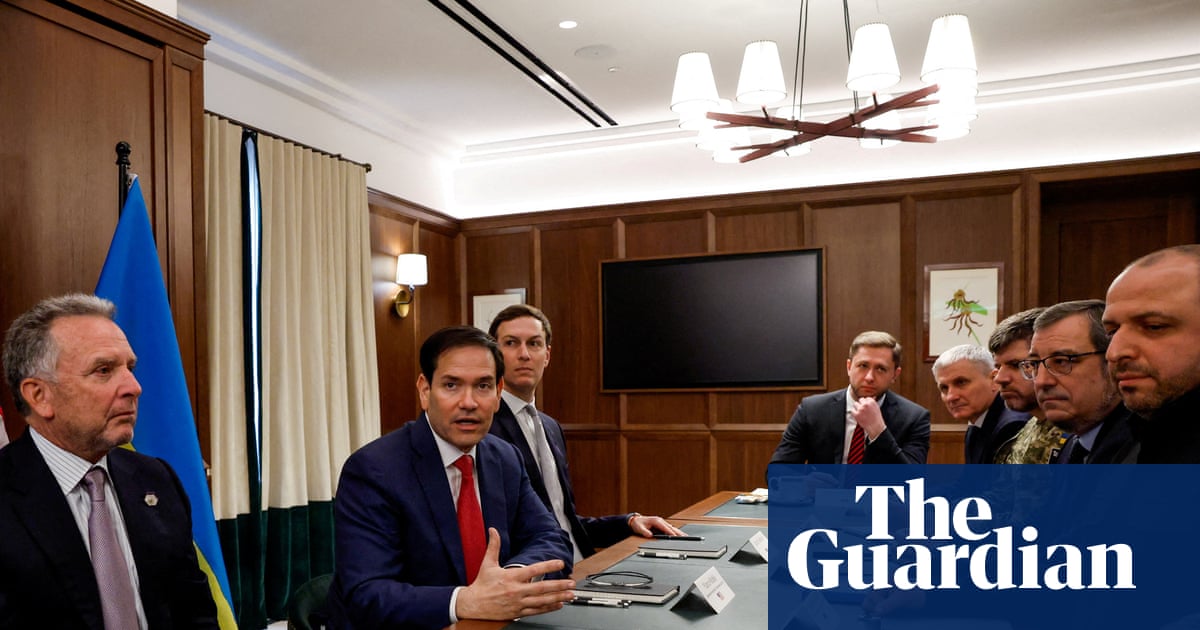
Senior Trump advisers Steve Witkoff and Jared Kushner held a third day of talks with Ukraine’s lead negotiator Rustem Umerov in Florida, reporting progress on a US-mediated security framework while urging Russia to demonstrate a serious commitment to long-term peace; the sessions follow envoys' discussions with Vladimir Putin in the Kremlin. European partners seek strong security guarantees, Macron said China showed willingness to contribute, but continued cross-border strikes — including Russian drone attacks that killed civilians and Ukrainian strikes on a Russian port and oil refinery — keep geopolitical risk elevated and leave markets sensitive to any substantive breakthrough or breakdown in negotiations.
Market structure: Near-term winners are defense primes (LMT, RTX, NOC), energy producers (XOM, CVX, XLE) and commodity exporters as risk premia rise; losers include European insurers, regional banks with EM exposure and logistics players tied to Black Sea grain flows. Pricing power will cyclically favor commodities and defense suppliers while European gas/utility spreads remain elevated — expect 5–15% intramroup swings in oil/gas if headlines worsen. Cross-asset: EM sovereign spreads and CDS should widen, EUR softens vs USD, VIX and oil volatility rise; Treasury tail bids push 2–10bp moves in 10y yields intraday into safe-haven flows.
Risk assessment: Tail scenarios include (A) a credible Russia-US-mediated ceasefire within 30–60 days that removes ~10–30% of near-term defense demand, and (B) asymmetric escalation or NATO entanglement that spikes oil +15–30% and defense revenues +20%+ in 1–3 months. Hidden dependencies: outcome hinges on US election calculus, Kremlin credibility and China’s mediation — any endorsement from Beijing is a major catalyst. Watch battlefield casualty reports, a Kremlin communique and Macron-Xi public language as 48–72 hour catalysts.
Trade implications: Direct plays: bias toward short-dated hedges and selective long defense/energy exposure sized 1–2% of portfolio; prefer call spreads on XLE and 3-month VIX calls rather than naked longs. Pair trades: long reconstruction/engineering (J, FLR, CAT) vs short defense (partial RTX hedge) conditional on explicit peace commitment inside 30–60 days. Time entries around confirmation events (Kremlin communiqué, US statement) and scale out over 3–12 months depending on deal durability.
Contrarian angles: Consensus prices persistent war; market underappreciates a rapid pivot to reconstruction winners (Jacobs, FLR, CRH) which historically re-rate 20–50% after peace commitments. Conversely, a premature peace announcement could produce 15–30% drawdowns in defense names — don’t be net-long defense without event hedges. Unintended consequence: a brokered deal that excludes Europe could fracture alliances and prolong regional risk premium — avoid one-way directional bets without event triggers.
AI-powered research, real-time alerts, and portfolio analytics for institutional investors.
Request DemoOverall Sentiment
mildly negative
Sentiment Score
-0.25
