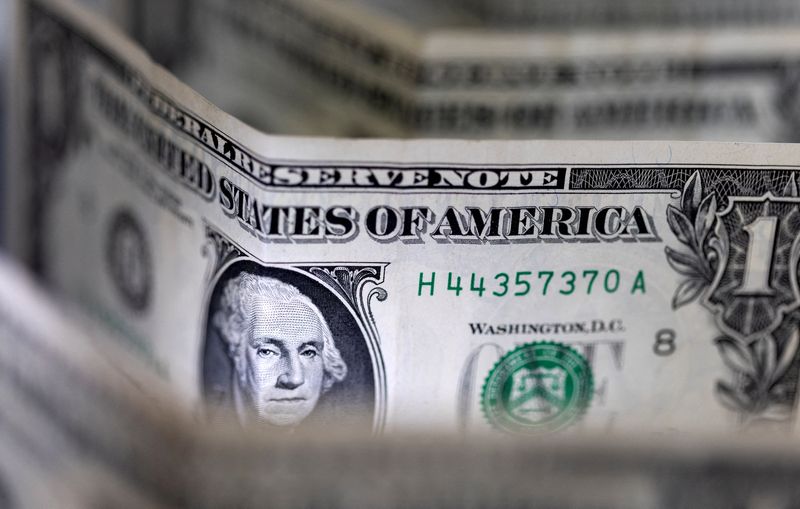
Asian markets were supported by a slight retreat in the dollar, with USD/CNY down 0.2%, USD/JPY down 0.3%, and AUD/USD up 0.2% as investors weighed de-escalation signals in the Iran conflict. China’s March trade data missed export and trade-balance expectations, while imports beat forecasts, and Singapore’s Q1 GDP also came in slightly below expectations despite a modest policy tightening by the MAS. U.S. PPI inflation data due later Tuesday remained a key catalyst for FX and rate expectations.
The immediate winner is not just Asia tech beta, but the subsector with the most leverage to a softer dollar and lower shipping friction: semiconductor supply chain names with Taiwan/Korea exposure and China end-demand optionality. A marginally firmer yuan plus better import data suggests Chinese buyers are still pulling forward chip/server capex, which supports near-term utilization for memory, foundry, and equipment vendors even if export volumes remain choppy. That mix is more bullish for upstream hardware than for consumer-facing China cyclicals, because the spend is being driven by infrastructure and inventory normalization rather than broad demand improvement.
The bigger second-order effect is that de-escalation in the Middle East could unwind the recent inflation impulse faster than consensus expects. If freight rates and energy risk premia retrace over the next 2-6 weeks, the market will likely price a cleaner disinflation path, which is supportive for duration-sensitive growth and Asia exporters via FX, but it also removes the support that has been helping commodity-linked EM currencies and defensives. In other words, the tape is currently rewarding “soft landing plus peace dividend,” but that trade becomes fragile if PPI surprises hot and re-anchors rate expectations.
Japan is the cleanest relative-value beneficiary if the dollar continues to fade, but the policy backdrop matters: the yen strength is more vulnerable to verbal intervention than to fundamentals. That creates a tradable asymmetry — carry-sensitive shorts in USD/JPY can work over days to weeks, but they are exposed to sudden reversals if U.S. yields jump on inflation or if Tokyo leans harder against FX volatility. Korea is the other levered leg: a won that stabilizes into a tech-led export cycle is constructive for semis, but if Chinese demand proves mostly inventory restocking, the won and KOSPI could give back quickly.
The consensus may be underestimating how quickly a geopolitical premium can bleed out once markets perceive a credible ceasefire path. If that happens, the “risk-on” impulse should show up first in FX and rates, then in high-beta Asia equities; the trade is less about absolute upside and more about the speed of mean reversion. The risk is a false dawn: one hot U.S. inflation print or a renewed shipping disruption would reprice the whole complex back toward higher energy, stronger dollar, and weaker Asia risk assets within days.
AI-powered research, real-time alerts, and portfolio analytics for institutional investors.
Request TrialOverall Sentiment
neutral
Sentiment Score
0.10
