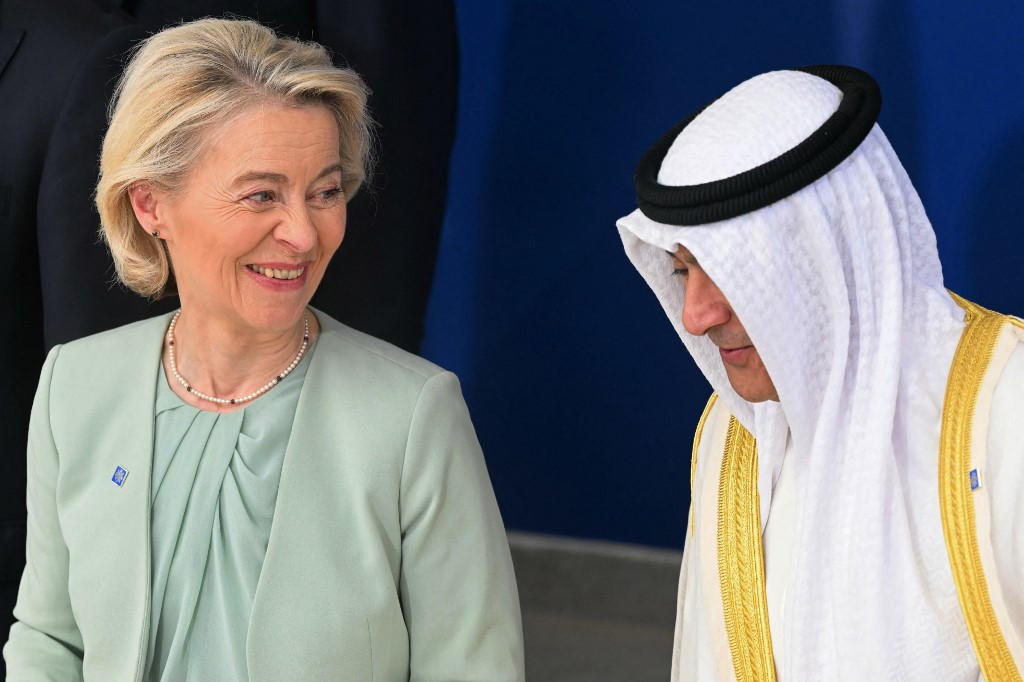
The article highlights an ongoing eight-week Persian Gulf shutdown and a nine-year low in European gas storage, underscoring sustained geopolitical pressure on energy markets. EU Commission President Ursula von der Leyen called for diversifying energy transit away from the Strait of Hormuz, including support for the India-Middle East-Europe Economic Corridor and rebuilding Gulf energy infrastructure. The developments point to higher volatility in European energy prices and broader supply-chain risk, with market-wide implications.
The market is starting to reprice a structural premium for non-Hormuz energy routing, and that premium will likely show up first in European gas and freight rather than in outright global crude. The key second-order effect is not just higher spot prices, but a wider dispersion between “secure” molecules and molecules exposed to single-point transit risk, which should support LNG logistics, storage, and pipeline-linked infrastructure over the next several quarters. Any corridor that reduces chokepoint dependence becomes an option on geopolitical de-escalation, but it also creates a capex cycle that benefits engineering, EPC, and defense-adjacent infrastructure names before the physical route is even live.
The immediate losers are European industrials with high energy intensity and weak pricing power, especially chemicals, glass, paper, and basic metals. Even if headline gas prices retrace, the larger problem is volatility: procurement teams will lengthen hedging horizons, increase inventory buffers, and require higher working capital, which compresses ROIC across the sector. That dynamic is more important than the absolute price level because it persists after the acute shock fades.
The contrarian setup is that the current move may be underestimating policy response speed. If Washington can force even a partial de-escalation or secure an interim maritime arrangement, the risk premium can unwind fast, while the EU’s longer-dated corridor agenda remains just that—long-dated. That argues for expressing the view with options and relative value rather than outright commodity length, since the asymmetry is in volatility crush if talks progress, not in sustained upside if the corridor rhetoric stays aspirational.
AI-powered research, real-time alerts, and portfolio analytics for institutional investors.
Request DemoOverall Sentiment
moderately negative
Sentiment Score
-0.30
