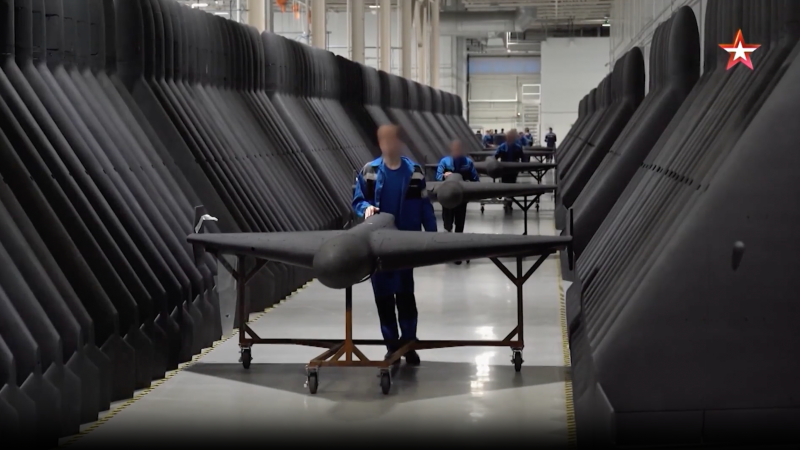
Russia's Alabuga factory, its primary attack drone production facility, is undergoing a rapid, large-scale expansion, with satellite imagery revealing numerous new production facilities and worker dormitories capable of housing up to 40,000 personnel. The facility has localized production of Iranian-designed Shahed drones, including engines, aiming for "technological sovereignty" and future global export, despite reports of utilizing teenagers for labor. This substantial ramp-up, publicly highlighted by Moscow, underpins Russia's escalating drone offensive against Ukraine, which has seen record attack numbers, signaling a long-term strategic commitment to high-volume, domestically produced drone capabilities.
Russia is executing a strategic, large-scale expansion of its Alabuga drone factory, signaling a long-term commitment to mass-producing unmanned aerial vehicles (UAVs) for both its war in Ukraine and potential global export. Satellite imagery confirms a rapid acceleration in construction since early 2024, with at least eight new production structures and a vast new housing complex capable of accommodating up to 40,000 workers. This physical expansion supports claims by the factory's director general that output is now nine times original plans. Critically, the facility has reportedly achieved 'technological sovereignty,' transitioning from assembling Iranian-supplied Shahed drone kits to a fully localized production line that includes manufacturing its own engines. This development significantly reduces Russia's reliance on foreign components and enhances its production scalability. The operation is staffed, in part, by teenagers and students recruited for both assembly and construction, a practice that has drawn US sanctions and indicates severe labor shortages within the Russian war economy. Moscow's decision to publicize the factory's operations is interpreted as a sign of confidence and a strategic advertisement to potential international buyers, with North Korea cited as a possible recipient of this technology, thereby increasing regional proliferation risks.
AI-powered research, real-time alerts, and portfolio analytics for institutional investors.
Overall Sentiment
moderately negative
Sentiment Score
-0.40
